Why Construction Zone Safety in Fort Worth Matters More Than Ever
Fort Worth isn’t just growing—it’s exploding. And with that growth comes a maze of construction zones that drivers, workers, and pedestrians navigate every single day. The reality is that work zone safety in Fort Worth requires a fundamentally different approach than what works in smaller markets or less congested metros. Between the unique traffic rhythms of I-35W, the challenges of working near cultural districts like the Stockyards, and the specific permitting demands of Tarrant County, generic traffic control plans simply don’t cut it. Here’s what’s really happening on Fort Worth’s roads and why professional, locally informed traffic control has become non-negotiable.
Construction zone safety in Fort Worth matters because the combination of rapid urban expansion, high-speed commuter traffic, and complex infrastructure projects has created a risk environment where standard precautions fall short. Without properly designed Maintenance of Traffic (MOT) plans and Temporary Traffic Control Plans (TTCPs) tailored to local conditions, both workers and the public face preventable hazards. Professional traffic control services that understand Fort Worth’s specific road geometries, permitting processes, and driver behaviors are essential for keeping everyone safe.
Looking for trusted service in the local area?
B2Z Enterprises is conveniently located at 900 S. Stewart Road. Ste 12, Mission, TX, 78572. We’re ready to help.
Contact Us or call 956-585-3773
What’s Driving the Surge in Fort Worth Construction Activity?
The Dallas-Fort Worth metroplex continues to be one of the fastest-growing regions in the country, and Fort Worth is absorbing a significant share of that population influx. New residential developments are pushing into areas like Walsh Ranch and along the Chisholm Trail Parkway corridor, while infill projects transform neighborhoods near the Medical District and downtown. This isn’t just about new homes—it’s about the entire supporting infrastructure that comes with them.
Major highway infrastructure projects are reshaping how people move through the city. The I-35W expansion through north Fort Worth, the I-30 improvements near the interchange with 820, and the Loop 820 reconstruction projects have created extended work zones that require sophisticated traffic management. These aren’t quick lane closures—they’re multi-year projects that demand ongoing, adaptive traffic control strategies.
Then there’s the City of Fort Worth’s bond-funded road improvement initiatives. The 2022 bond package allocated significant funding for street repairs, intersection improvements, and sidewalk construction across all council districts. These projects range from small, localized utility repairs to major arterial reconstructions, each requiring a tailored approach to traffic control. The sheer volume of active construction sites means that drivers encounter work zones daily, and the margin for error shrinks with every new project that breaks ground.
How Do Fort Worth’s Unique Traffic Patterns Increase Risk?
Fort Worth’s traffic patterns are unlike those in Dallas, Austin, or Houston. The city’s layout—sprawling, with major arteries that serve both commuter and industrial traffic—creates conditions where construction zones face unique pressures. I-35W, for example, carries not only daily commuters but also heavy truck traffic serving the distribution centers in north Fort Worth and Alliance logistics hub. When a construction zone narrows lanes on that corridor, the mix of high-speed passenger vehicles and loaded tractor-trailers creates a volatile environment.
Limited alternative routes compound the problem. When a section of I-30 or Loop 820 goes down to one lane for construction, drivers don’t have easy detours. Surface streets like Camp Bowie Boulevard, Vickery Boulevard, and Lancaster Avenue quickly become congested as commuters seek alternatives, turning residential neighborhoods into overflow routes. This puts pedestrians, cyclists, and school zones at higher risk.
Proximity to major event venues adds another layer of complexity. When there’s a rodeo at the Stockyards, a concert at Dickies Arena, or a game at the new Panther Island Pavilion area, traffic volumes spike unpredictably. Construction zones near these venues require traffic control plans that account for these periodic surges—something generic plans never do well.
Fort Worth also sees a high volume of out-of-town drivers, particularly those traveling through on their way to or from the western parts of Texas and New Mexico. These drivers may not be familiar with local road configurations, temporary closures, or the typical behaviors of Fort Worth commuters. Inconsistent driver behavior—locals who know the shortcuts versus travelers following GPS blindly—creates unpredictable situations in work zones.
What Are the Most Common Causes of Work Zone Crashes in Fort Worth?
Need expert help with Maintenance of Traffic (MOT) Plans?
B2Z Enterprises provides professional solutions tailored to your needs. No pressure — just honest advice.
Speeding through narrowed lanes is the number one cause of work zone crashes in Fort Worth. Drivers accustomed to 65 or 70 mph on I-35W often fail to reduce speed sufficiently when lanes narrow and concrete barriers close in. The transition from open highway to a constricted work zone requires a significant behavioral adjustment that many drivers simply don’t make.
Distracted driving is a close second. With mobile phones, navigation apps, and in-car entertainment systems competing for attention, drivers routinely miss critical cues like reduced speed signs, lane shift warnings, and flagger instructions. In Fort Worth’s construction zones, where the road geometry may change weekly as work progresses, that split-second of distraction can have serious consequences.
Improper lane merging and sudden braking create chain-reaction incidents. Drivers who wait until the last possible moment to merge—common at lane closures on 820 and I-30—force abrupt braking that can lead to rear-end collisions. Work zones require predictable driving behavior, and unpredictable merging is a recipe for crashes.
Inadequate visibility of flaggers and temporary signage is a factor that professional traffic control companies address directly. When signs are placed too close to the work zone, or when flaggers lack high-visibility equipment that meets OSHA construction safety standards, drivers don’t get adequate advance warning. In Fort Worth’s high-speed corridors, that warning distance is critical.
Failure to obey temporary traffic control devices rounds out the list. Despite clear signage and channelizing devices, some drivers ignore lane closures, drive through barriers, or disregard flagger instructions. This behavior is particularly dangerous in work zones where workers are operating heavy equipment just feet from live traffic.
Why Are Proper MOT Plans and TTCPs Critical for Fort Worth Projects?
A Maintenance of Traffic (MOT) plan isn’t just paperwork—it’s the blueprint for how drivers, workers, and pedestrians interact with a construction zone. In Fort Worth, where road geometries often include tight curves, limited sight distances, and complex interchange configurations, a one-size-fits-all plan is dangerous.
Legal compliance is the baseline. All projects in Fort Worth must meet Texas MUTCD (Manual on Uniform Traffic Control Devices) standards and TxDOT requirements. But compliance goes beyond checking boxes. The specific traffic control devices, taper lengths, and advance warning distances must be appropriate for the road type and speed limit. A plan that works for a 35 mph residential street in the Cultural District will fail on a 65 mph section of Loop 820.
Coordination with city and county permitting requirements is another critical factor. The City of Fort Worth’s Transportation and Public Works Department has specific requirements for lane closures, detour routes, and notification procedures. Projects that affect Tarrant County roads may have additional permitting steps. Working with a traffic control company that has established relationships with these permitting offices streamlines the process and reduces delays.
Reducing liability for contractors and project owners is a practical consideration. A properly designed and executed MOT plan documents that all reasonable precautions were taken. In the event of an incident, that documentation is invaluable. For contractors working on TxDOT projects, compliance with the specific standards outlined in the Texas MUTCD and the TxDOT Traffic Control Standard Drawings is non-negotiable.
Ensuring safe worker and driver passage through complex zones is the ultimate goal. Fort Worth’s construction zones often involve multiple phases of work, with lane configurations changing as projects progress. A TTCP that accounts for each phase—with appropriate transitions between them—keeps everyone safe from start to finish.
How Does Professional Flagging Reduce Accidents in Local Work Zones?
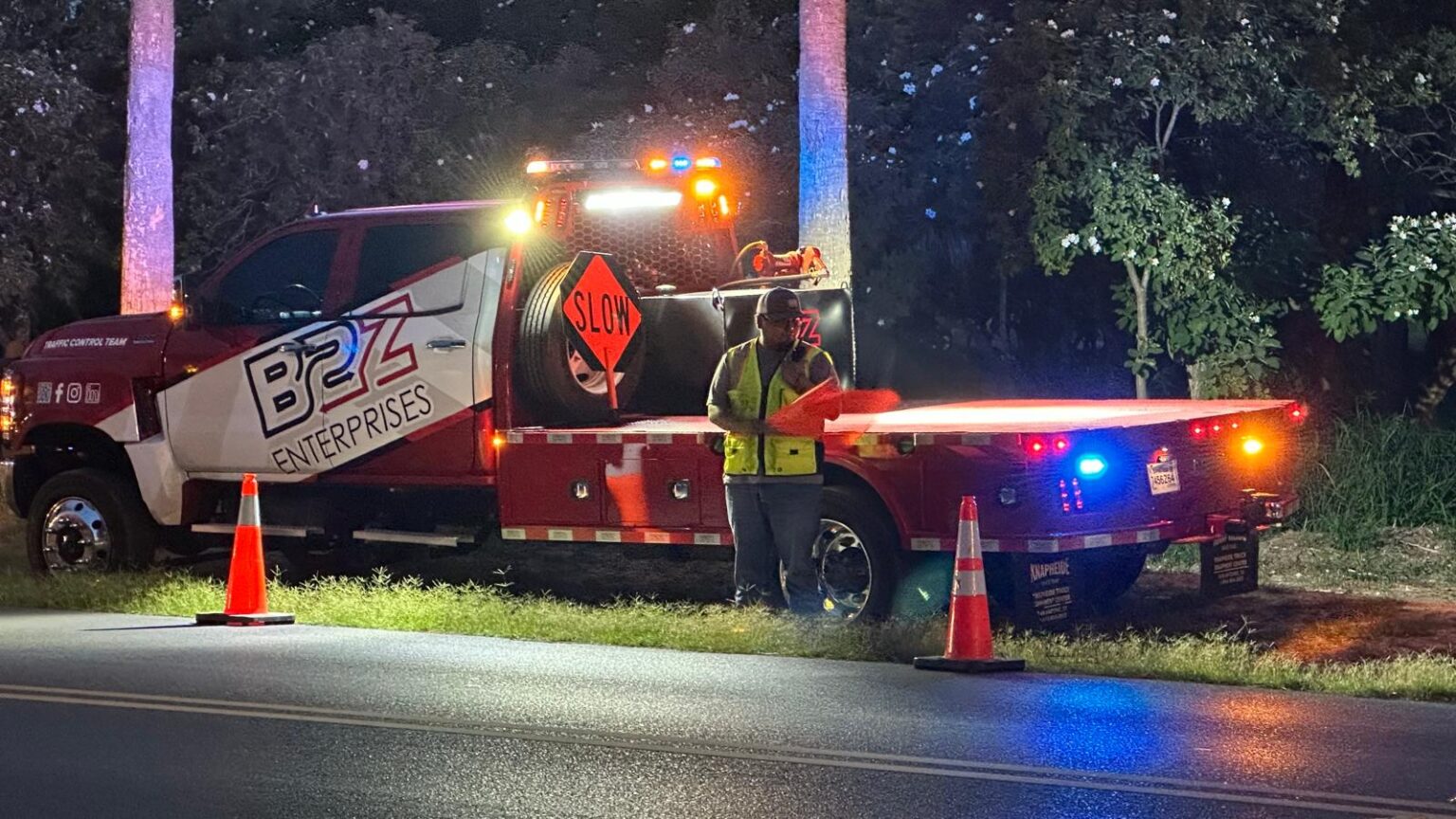
Professional flagging is one of the most visible elements of work zone safety, and in Fort Worth, it’s also one of the most misunderstood. Many people assume flaggers simply hold a sign—but trained flaggers are skilled traffic management professionals who communicate clear, consistent instructions to drivers under dynamic conditions.
Flaggers coordinate with temporary signals and pilot cars to manage traffic flow through single-lane closures, which are common on Fort Worth’s older roadways where full-width closures aren’t feasible. They make real-time decisions about when to release traffic based on actual conditions—not just a predetermined schedule. This responsiveness reduces both driver frustration and the risky behavior that comes with long waits.
In Fort Worth’s variable weather—from scorching summer heat to sudden thunderstorms—flaggers must maintain visibility and effectiveness under challenging conditions. Professional flagging companies provide appropriate gear, including high-visibility apparel that meets OSHA construction standards and ANSI 107 requirements, along with equipment designed for the specific visibility conditions of each site.
Multi-lane closures and intersection closures require particularly skilled flagging. When a major intersection like the one at I-30 and Beach Street needs to be partially closed for utility work, flaggers must coordinate multiple traffic streams simultaneously. Confusion at these complex closures leads to accidents—professional flagging minimizes that confusion.
What Role Do Lane Closures Play in Fort Worth Highway Maintenance Safety?
Lane closures are the most common traffic control measure on Fort Worth’s highways, but their effectiveness depends entirely on how they’re executed. Strategic timing is crucial—closures scheduled during peak commute hours on I-35W or 820 create backups that increase the risk of rear-end collisions and road rage incidents. Early morning and late night work windows are preferred for major closures, but not all projects can be scheduled that way.
Proper taper length is a technical detail that many non-specialists overlook. The Texas MUTCD specifies taper lengths based on posted speed limits and lane widths. On a 70 mph section of Loop 820, the merging taper must be significantly longer than on a 45 mph arterial like Bryant Irvin Road. Using the wrong taper length doesn’t just violate standards—it creates dangerous merging conditions.
Advance warning systems, including changeable message signs, give drivers time to adjust their speed and prepare for lane shifts. In Fort Worth, where construction zones may appear suddenly due to emergency repairs, these portable systems are essential. They provide the advance notice that static signs cannot.
Buffer zones and barrier protection are critical for worker safety. On high-speed roadways, errant vehicles can cross into work zones with little warning. Properly placed concrete barriers, truck-mounted attenuators, and adequate buffer space between the work area and live traffic reduce the severity of these incidents. For highway maintenance projects on 820 and I-30, barrier protection isn’t optional—it’s a necessity.
How Can Utility Installation Traffic Control Protect Workers and the Public?
Utility installation traffic control presents unique challenges because work zones are often narrow, confined, and located in residential or commercial areas where space is limited. In Fort Worth’s older neighborhoods—like those near the TCU campus or the Near Southside district—utility work may involve open trenches adjacent to sidewalks and bike lanes.
Pedestrian and cyclist considerations are paramount in these settings. When a utility crew is repairing a water main on a street like Magnolia Avenue, pedestrians must be safely routed around the work zone. This requires temporary walkways, clear signage, and sometimes designated crossing points. Cyclists using on-street bike lanes need advance warning and alternative routing.
Coordination with utility companies and emergency services is a logistical necessity. Gas, electric, water, and telecommunications companies may all have infrastructure in the same corridor, and emergency services need to know about closures that could affect response times. In Fort Worth, this coordination typically involves the city’s utility coordination office, and experienced traffic control companies navigate these relationships smoothly.
Night work lighting and reflective equipment requirements are especially important for utility installations. Unlike daytime highway closures that drivers can see from a distance, night work zones rely entirely on artificial lighting and reflective materials to be visible. Proper lighting design—including glare reduction for approaching drivers—is a specialized skill that professional traffic control companies bring to the table.
Want results like this? B2Z Enterprises can help.
How Does B2Z Enterprises Tailor Solutions for Fort Worth’s Road Network?
B2Z Enterprises brings 21 years of hands-on experience in Texas traffic control, and that experience is deeply rooted in the specific conditions of Fort Worth and Tarrant County. We know which intersections have recurring crash patterns, which corridors see the most unpredictable traffic surges, and which permitting offices prefer which formats for MOT plan submissions.
Our local knowledge of high-crash intersections and congestion patterns informs every plan we develop. We know that the I-35W and 820 interchange has different traffic dynamics than the I-30 and Beach Street corridor, and we design our traffic control plans accordingly. We don’t rely on generic templates—each plan is custom-built for the specific location, project scope, and traffic conditions.
We provide custom MOT plans for every project scale. Whether it’s a small utility repair on a residential street in the Ryan Place neighborhood or a major highway reconstruction on the Chisholm Trail Parkway, our plans are tailored to the specific road geometry, speed limits, and traffic volumes of that location. We also handle the coordination with the City of Fort Worth and TxDOT permitting processes, reducing the administrative burden on contractors and project owners.
Our flagging crews are licensed, insured, and certified with specific experience in Fort Worth’s work zones. They know how to manage the unique challenges of local intersections, including those near schools like Paschal High School or hospitals like John Peter Smith Health Network. They’re trained to adapt to changing conditions in real time, keeping traffic moving safely even when unexpected events occur.
We also provide rapid response for emergency lane closures and unplanned incidents. When a water main break on Camp Bowie Boulevard requires immediate traffic control, our team can deploy within hours with the appropriate signage, channelizing devices, and flaggers. We maintain ongoing compliance audits to adapt to changing TxDOT and city regulations, ensuring that every project remains compliant from start to finish.
What Should Contractors and Developers Look for in a Traffic Control Partner?
Choosing a traffic control partner in Fort Worth requires more than comparing hourly rates. The right partner brings local expertise, reliable execution, and a commitment to zero-accident work zones.
A proven track record with Fort Worth permitting and inspection processes is essential. The City of Fort Worth’s Transportation and Public Works Department has specific requirements for lane closures, detour routing, and notification of affected property owners. A traffic control company that has worked with these requirements for years will navigate them more efficiently than one learning on the job.
Comprehensive services—from planning through installation, flagging, monitoring, and removal—reduce coordination headaches. When one company handles the MOT plan design, equipment installation, flagging services, and final removal, there’s no finger-pointing if something goes wrong. The contractor has a single point of accountability.
24/7 availability is non-negotiable for projects that involve after-hours work or emergency response. Utility repairs, highway maintenance, and infrastructure emergencies don’t follow business hours. A traffic control partner that answers the phone at midnight and has crews ready to deploy is worth significantly more than one that only operates Monday through Friday.
Transparent pricing and reliable on-time performance protect project budgets and schedules. Unexpected traffic control costs can derail a project’s profitability, and delays caused by traffic control issues can push timelines. A partner who provides firm quotes and shows up on time every time is a partner you can count on.
A commitment to zero-accident work zones through training and technology is the hallmark of a professional traffic control company. Ongoing training for flaggers, regular equipment inspections, and the use of advanced traffic control devices—including temporary traffic signals and portable message signs—demonstrate a commitment to safety that goes beyond the minimum requirements.
When you’re planning your next construction project in Fort Worth—whether it’s a highway maintenance contract on I-35W, a utility installation in the Near Southside, or a residential development near Eagle Mountain Lake—the traffic control partner you choose directly impacts safety, schedule, and liability. The wrong partner creates risk. The right partner helps you deliver a safe, successful project.
B2Z Enterprises, based at 900 S. Stewart Road. Ste 12, Mission, TX, has been providing fully compliant work zone safety solutions for 21 years. We’re reachable at 956-585-3773 and we know Fort Worth because we live and work here. Our MOT plans, TTCPs, flagging services, and lane closure management are built on a foundation of local knowledge and regulatory expertise that generic providers simply cannot match. When safety and compliance matter most, experience matters most.
Have a question not covered below? We’re happy to help.
Contact Us or call 956-585-3773
Frequently Asked Questions About Construction Zone Safety in Fort Worth
What makes Fort Worth’s construction zones different from other Texas cities?
Fort Worth’s unique combination of high-speed commuter corridors, heavy truck traffic serving the Alliance logistics hub, and limited alternative routes creates conditions where construction zones face exceptional risks. The city’s sprawling layout means work zones are often located on roads that serve both local and through traffic, leading to unpredictable driver behavior. Additionally, proximity to major event venues like the Stockyards and Dickies Arena creates periodic traffic surges that require adaptive traffic control plans.
Do I need a separate MOT plan for each phase of a construction project in Fort Worth?
Yes, most projects in Fort Worth require phase-specific Temporary Traffic Control Plans (TTCPs) that address the changing conditions as work progresses. The Texas MUTCD and TxDOT standards require that traffic control be appropriate for the current configuration of the work zone. When lane configurations, closure locations, or traffic patterns change, the TTCP must be updated accordingly. The City of Fort Worth’s permitting office typically reviews these phase plans as part of the approval process.
How far in advance should I submit a lane closure request in Fort Worth?
For routine lane closures on city streets, plan on submitting requests at least two weeks in advance to allow for review and coordination with other planned closures. For closures on TxDOT-maintained roads like I-35W, I-30, or Loop 820, the lead time is typically longer—often 30 days or more—due to additional coordination requirements. Emergency closures for utility repairs or incident response can be expedited, but proper notification procedures still apply.
What training do flaggers need to work in Fort Worth construction zones?
Flaggers in Texas must complete training that meets the standards outlined in the Texas MUTCD, which includes instruction on hand-signaling techniques, proper use of STOP/SLOW paddles, coordination with temporary traffic signals, and nighttime visibility requirements. OSHA construction safety standards also apply. Professional traffic control companies like B2Z Enterprises ensure that all flaggers are certified and receive ongoing training specific to the conditions they’ll encounter on Fort Worth roads.
How do I know if my contractor’s traffic control plan is adequate for Fort Worth?
Review the plan against the specific requirements of the Texas MUTCD and the project’s permitting conditions. Key indicators of an adequate plan include proper taper lengths for the posted speed limit, appropriate advance warning distances, clearly defined buffer zones, and provisions for pedestrian and cyclist safety where applicable. Working with a traffic control company that has extensive experience in Fort Worth’s permitting processes provides additional assurance that the plan meets all requirements.
What should I do if I see an unsafe condition in a Fort Worth work zone?
Report unsafe conditions immediately to the project’s traffic control supervisor or the contractor managing the site. If the condition poses an immediate risk, contact local law enforcement or call 911. For ongoing concerns about work zone safety, you can also contact the City of Fort Worth’s Transportation and Public Works Department or TxDOT’s traffic safety division. Documenting the condition with photos and noting the specific location and time helps officials address the issue quickly.
Ready to get started with B2Z Enterprises?
Visit us at 900 S. Stewart Road. Ste 12, Mission, TX, 78572