
B2Z Enterprises
Navigating McAllen’s Road Closures: How Professional Traffic Control Services Keep Your Commute Moving During Utility Upgrades — Comprehensive Guide
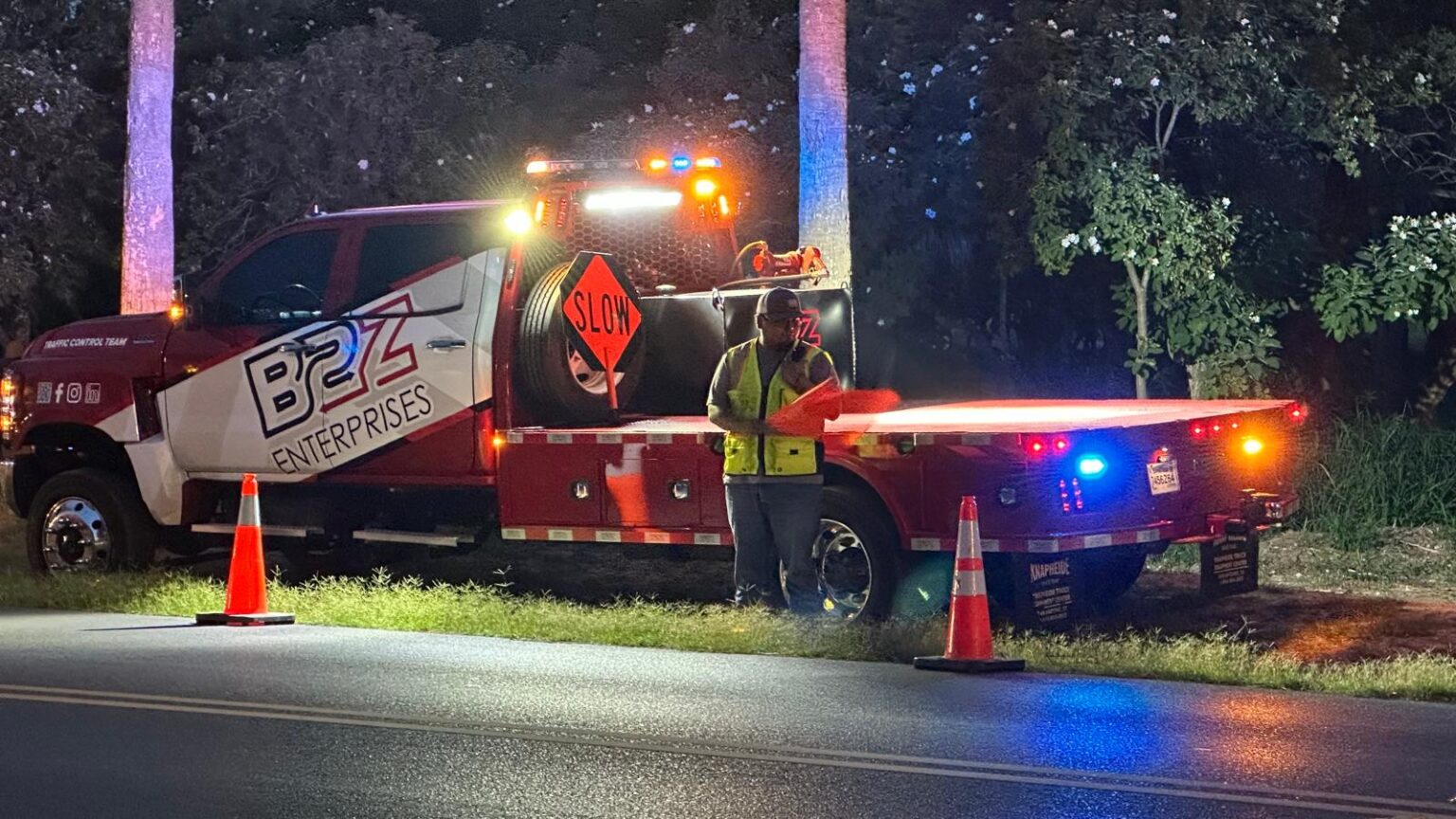
When a water main breaks near the McAllen-Hidalgo International Bridge or a fiber-optic crew starts digging along 23rd Street, the resulting lane closures can snarl traffic for hours. Professional traffic control services from a TxDOT-certified company like B2Z Enterprises keep vehicles moving safely through work zones by deploying trained flaggers, proper signage, and adaptive traffic plans that comply with the Manual on Uniform Traffic Control Devices (MUTCD). This guide explains exactly how utility-related road closures work in McAllen, what safety measures protect everyone on the road, and how you can plan around them.
What Causes Road Closures in McAllen During Utility Upgrades?
McAllen’s rapid growth means utility infrastructure is constantly being installed, upgraded, or repaired. The most common causes of road closures include:
- Water and sewer line repairs — Aging pipes under major corridors like Pecan Boulevard and 23rd Street require emergency or scheduled replacement.
- Electrical and natural gas installations — AEP Texas and other providers frequently trench across roads to bring service to new developments.
- Fiber-optic and broadband expansion — Companies laying high-speed internet cables often need to close lanes for directional boring or open-cut trenching.
- Storm drainage improvements — The City of McAllen Engineering Department oversees projects to reduce flooding, especially near the McAllen Convention Center and the low-lying areas along Bicentennial Boulevard.
- Emergency repairs — A sudden water main break or gas leak demands immediate closure, sometimes with no advance notice.
The city maintains an updated list of active closures on its Road Closures page, but many utility projects are managed directly by contractors who must coordinate with the City Engineering Department and utility providers.
Why Are Temporary Traffic Control Plans (TTCP) Essential for Utility Work?
A Temporary Traffic Control Plan (TTCP) is the blueprint for any work zone that affects traffic. Without one, everyone is at risk. Here is why a TTCP is non-negotiable for every utility job in McAllen:
Step 1: Find Your Expert in McAllen, TX, Edinburg, TX, Pharr, TX, San Juan, TX, Alamo, TX, Donna, TX, Weslaco, TX, Mercedes, TX, Harlingen, TX, San Benito, TX, Brownsville, TX, Rio Grande City, TX, Roma, TX, La Joya, TX, Palmview, and TX
B2Z Enterprises is your local resource. Here’s how to get started.
Call 956-585-3773
- Worker and public safety — A TTCP establishes clear zones for workers, vehicles, and pedestrians, drastically reducing the chance of injury.
- Regulatory compliance — Every TTCP must follow the MUTCD standards enforced by TxDOT. Violations can lead to fines, work stoppages, or legal liability.
- Traffic flow preservation — A well-designed plan minimizes congestion by timing lane closures during off-peak hours and maintaining predictable patterns.
- Liability reduction — Utility companies and contractors who skip or rush a TTCP face enormous exposure if an accident occurs.
- Real-time adaptability — Conditions change: a backed-up intersection, an emergency vehicle needing passage, or unexpected rain. A good plan includes contingencies.
According to the FHWA Work Zone Management Program, work zones account for approximately 24% of non-recurring freeway delay on U.S. roads. In a city like McAllen, where a single closure on 23rd Street can ripple through the La Vista neighborhood and affect commuters heading toward the international bridge, that delay adds up fast.
How Do Professional Flagging Services Improve Safety and Traffic Flow?
Step 2: Learn About Maintenance of Traffic (MOT) Plans
B2Z Enterprises can guide you through every detail. Reach out with questions.
Flaggers are the most visible element of any work zone. Their job is to direct vehicles safely through a single-lane closure or around an obstruction. Here is how professional flagging makes a measurable difference:
- Certified training — Our flaggers complete courses based on the Texas A&M Transportation Institute’s work zone curriculum and MUTCD standards. They know the hand signals, the proper use of stop/slow paddles, and how to communicate with two-way radios.
- Predictable traffic patterns — Instead of confused drivers hesitating or making dangerous maneuvers, a professional flagger creates a steady rhythm: one direction flows, then the other.
- Peak-hour management — For utility work near the McAllen Medical Center or along busy retail corridors like North 10th Street, we adjust flagger positioning and cycle times to prevent gridlock during morning and evening rush.
- Incident response — If a driver ignores signs or a minor accident occurs, our flaggers are trained to radio for help and redirect traffic immediately.
Want results like this? B2Z Enterprises can help.
What Are the Key Components of a Maintenance of Traffic (MOT) Plan?
A Maintenance of Traffic (MOT) plan is the operational playbook for keeping vehicles, pedestrians, and bicyclists safe while construction is active. Every MOT plan we design at B2Z Enterprises includes these elements:
- Site assessment — We survey road geometry, traffic volume, speed limits, sight lines, and existing utilities. A plan for a narrow residential street near the McAllen Nature Center looks very different from one for a four-lane arterial like Ware Road.
- Lane closure timing and duration — Whenever possible, we schedule closures for night work or between 9 a.m. and 3 p.m. to avoid peak traffic.
- Signage, cones, barrels, barriers, and advanced warning systems — Every device is placed according to MUTCD spacing requirements. We use crash cushions and attenuators in high-speed zones.
- Pedestrian and bicycle detour routes — Under the Americans with Disabilities Act (ADA) Title III, work zones must maintain accessible paths. We plan detours that comply with ADA standards.
- Emergency vehicle access protocols — Fire trucks, ambulances, and police cars cannot be blocked. Our plans designate a clear corridor or a rapid-release procedure.
- Communication plan — We coordinate with the City of McAllen Engineering Department, utility project managers, and local law enforcement so everyone knows the schedule and the contingency plan.
Research from the Texas A&M Transportation Institute confirms that work zone crashes drop significantly when all MOT components are in place and maintained throughout a project. This is not theory — it is the standard we apply on every job.
How Do B2Z Enterprises Coordinate Lane Closures for Utility Installation?
Coordination is where experience matters most. With 21 years of serving McAllen and the surrounding Rio Grande Valley, we have built relationships with the utility companies, the city engineers, and the emergency services that every project touches. Here is our process:
- Pre-project consultation — We meet with the utility crew and the city engineer to review the scope, the geometry of the road, and the traffic patterns. This step alone prevents most scheduling conflicts.
- Real-time traffic monitoring — Our supervisors drive the route during the first hour of a closure and adjust sign placement or flagger timing as needed.
- Portable traffic signals and temporary markings — For longer-term closures, we install signals that mimic normal traffic light patterns, reducing driver confusion.
- Night and weekend scheduling — When a job allows, we work between 8 p.m. and 5 a.m. on major roads like 23rd Street or McColl Road, then restore normal traffic flow before the morning commute.
- Rapid restoration — As soon as the utility work is complete, our team removes all devices, sweeps the area, and returns the road to its normal state — often within one hour.
This systematic approach keeps projects on schedule. When a utility contractor working near the McAllen-Hidalgo International Bridge needed to close a southbound lane for three nights, our team had the zone set up by 7 p.m. each evening and completely cleared by 6 a.m. the next morning — zero complaints from commuters.
What Work Zone Safety Solutions Protect McAllen Residents and Workers?
Work zone safety extends beyond signs and flaggers. It is a layered system that protects everyone who passes through or works in the zone. Our safety solutions include:
- High-visibility apparel and equipment — Every crew member wears ANSI Class 3 or 4 vests. Cones, barrels, and signs are retroreflective for nighttime visibility.
- Proper attenuator and crash cushion placement — In work zones with higher speed limits, we place truck-mounted attenuators (TMAs) and portable crash cushions to absorb impact if a vehicle strays into the zone.
- Speed reduction zones with radar feedback signs — These signs display a driver’s actual speed, encouraging voluntary slowdowns without requiring permanent enforcement.
- Regular safety briefings and compliance audits — Every crew starts the day with a JSA (Job Safety Analysis) that covers the specific hazards of that shift. We audit compliance against TxDOT, FHWA, and OSHA standards weekly.
- Coordination with McAllen Police and emergency services — For large projects, we notify the McAllen Police Department and McAllen Fire Department in advance so they can plan alternate routes and know exactly where our work zone boundaries are.
This layered approach is why our company has maintained an exemplary safety record across hundreds of utility projects. We do not cut corners — and that peace of mind matters to the families and businesses who rely on these roads every day.
How Can Commuters Stay Informed and Reduce Delays During Utility Upgrades?
Even the best traffic control plan cannot eliminate every delay, but commuters in McAllen can take several steps to reduce frustration and arrive on time:
- Follow city alerts and maps — Bookmark the City of McAllen Road Closures page and check it before your morning commute.
- Use navigation apps with real-time updates — Waze and Google Maps often reflect work zone slowdowns within minutes. Turn on voice alerts for route changes.
- Allow extra travel time — If you know a utility project is active on your route, add 10 to 15 minutes to your drive, especially during peak hours.
- Identify alternate routes — If 23rd Street is down to one lane, consider using McColl Road or Ware Road as a bypass. Knowing your alternatives before you leave saves stress.
- Report hazards — If you see a missing cone, a damaged sign, or a flagger in an unsafe situation, call the number posted at the work zone or contact the City of McAllen Engineering Department.
A little advance planning goes a long way. We have seen commuters in the La Vista neighborhood shave 20 minutes off their drive simply by using Bicentennial Boulevard instead of 23rd Street during a water line project.
Why Choose B2Z Enterprises for Traffic Control in McAllen?
There are traffic control companies, and then there are companies that know McAllen — its roads, its rhythms, its utility partners, and its regulations. B2Z Enterprises has been the trusted traffic control provider for the Rio Grande Valley for 21 years. Here is what sets us apart:
- Local expertise — We know that a closure on 23rd Street near the McAllen Convention Center behaves differently than a closure on a residential street. We plan accordingly.
- TxDOT-certified and fully insured — Our MOT plans and TTCPs meet all TxDOT, FHWA, MUTCD, and OSHA requirements. We carry comprehensive liability coverage that protects our clients.
- Proven track record — Utility contractors, city engineers, and private developers have relied on us for two decades. Our name comes up on every reference check.
- Customizable plans for any project size — Whether you need one flagger for a four-hour water line tap or a full MOT plan for a week-long sewer installation, we scale to fit.
- 24/7 availability — Utility emergencies do not wait for business hours. Our team can mobilize within two hours for any urgent closure.
We operate out of 900 S. Stewart Road, Ste 12, in Mission, but our service area centers on McAllen. Call us at 956-585-3773 to discuss your project — we will walk you through exactly what your work zone needs.
Our . . . rating from Google reviews reflects our commitment to quality, and our certifications with TxDOT and the National Utility Contractors Association (NUCA) prove we follow the highest industry standards. We do not just talk about safety — we practice it on every job, every shift.
As you can see, investing in professional traffic control services from a company that focuses on work zone safety is not an expense — it is a risk-management decision that protects your bottom line, your timeline, and the community of McAllen.
For more on why professional flagging and work zone safety matter in Texas, read our article on Construction Zone Safety in San Antonio: How Professional Flagging Companies Prevent Accidents During Roadwork and understand the stakes involved in every work zone. You can also explore Why construction zone safety matters more than ever for a broader look at the regulations and real-world consequences.
Frequently Asked Questions About Traffic Control and Road Closures in McAllen
How far in advance are utility road closures announced in McAllen?
Scheduled utility work is typically posted on the City of McAllen Road Closures page at least 48 hours in advance. Emergency repairs may close a road with less than one hour of notice. For planned projects, most utility contractors notify adjacent property owners and the city engineering department 7 to 14 days ahead of time.
What should I do if a work zone has no flaggers or signs?
If you encounter a utility work zone without proper traffic control devices or flaggers, do not proceed through the area. Stop safely, turn around if possible, and report the issue immediately to the City of McAllen Engineering Department at (956) 681-1100 or call the number posted on any nearby project signage. Uncontrolled work zones are dangerous for everyone.
How much does professional traffic control cost for a typical utility job in McAllen?
Costs vary based on the complexity of the closure, the number of flaggers needed, and the duration of the project. A standard single-lane closure with two flaggers typically ranges from $350 to $600 per flagger per day, including all signage, cones, and supervision. We provide free quotes for every McAllen utility project — call us at 956-585-3773 to discuss your specific needs.
Are utility companies required to use a certified traffic control company in McAllen?
While Texas state law does not explicitly mandate a separate traffic control contractor for every utility job, the City of McAllen requires that all work zones in the public right-of-way comply with the MUTCD standards adopted by TxDOT. In practice, most utility contractors hire a TxDOT-certified traffic control provider like B2Z Enterprises to ensure full compliance, avoid liability, and keep projects moving.
Can a lane closure be scheduled overnight to avoid daytime traffic?
Yes. Night work is common for utility installations on major McAllen roads like 23rd Street, Bicentennial Boulevard, and McColl Road. We coordinate with the city and the utility crew to schedule closures between 8 p.m. and 5 a.m. when traffic volume is lowest. Night work typically requires additional lighting and reflective devices, which we provide as part of our standard MOT plan.
What qualifications should I look for in a traffic control company?
Look for a company that is TxDOT-certified, carries general liability and workers compensation insurance, employs flaggers trained in MUTCD standards, and has a proven track record in the McAllen area. Check for memberships with organizations like the National Utility Contractors Association (NUCA) and ask for references from past utility projects. B2Z Enterprises meets all of these criteria and has served McAllen for 21 years.
Your Path to Success With B2Z Enterprises
Research
Compare
Contact
Get Started
Ready to Take the Next Step?
Now that you’re informed, let B2Z Enterprises put this knowledge to work for you.