
Local Guide
Why Construction Zone Safety in San Antonio Matters More Than Ever
Work zone fatalities in Bexar County have jumped 34% since 2021, according to recent TxDOT crash data—a statistic that should alarm every contractor, developer, and municipal planner operating in San Antonio. If your projects involve lane closures, flagging operations, or temporary traffic control plans, the margin for error has never been thinner. Ignoring proper work zone safety protocols doesn’t just risk lives; it exposes your business to escalating liability, state-imposed fines, and irreversible reputational damage in a city where road construction is accelerating faster than enforcement can keep up.
What Is Driving the Urgency for Work Zone Safety in San Antonio Right Now?
San Antonio is in the middle of a once-in-a-generation infrastructure boom that shows no signs of slowing. The Texas Department of Transportation’s expansion of Loop 1604, the ongoing overhaul of I-35 through the corridor, and multiple utility upgrades across older neighborhoods like the Historic King William District and Alamo Heights are putting construction crews in direct proximity to high-speed traffic every single day. With Bexar County adding roughly 100 new residents daily, the number of vehicles passing through active work zones has surged far beyond what existing traffic control plans were designed to handle.
Distracted driving is compounding the danger. According to the San Antonio Express-News, work zone crashes in the city reached a five-year high in 2023, with rear-end collisions accounting for more than half of all incidents. Many of these crashes trace back to drivers scanning navigation apps or reacting too late to poorly placed signage. When temporary traffic control plans fail to anticipate real-world driver behavior on San Antonio’s unique road geometries—tight curves on US 281, sudden merges near the interchange with I-10—the result is predictable and preventable.
The state is paying attention. TxDOT’s Work Zone Management Program has increased unannounced inspections across the Alamo Region, and non-compliant contractors are facing steeper penalties than in previous cycles. For general contractors and subcontractors alike, the cost of a single citation can erase the profit margin on an entire project phase.
How Do Poorly Executed Temporary Traffic Control Plans (TTCPs) Put Lives at Risk?
A temporary traffic control plan is only as good as its execution on the ground. In San Antonio, where construction activity spans everything from highway widening along I-10 to utility trenching on narrow residential streets in the Monte Vista Historic District, generic or poorly adapted TTCPs create a cascade of hazards that endanger workers, motorists, and pedestrians alike.
When Lane Closures Create Confusion, Crashes Follow
The most common failure we see involves lane closure transitions that are too abrupt. When a TTCP reduces a three-lane highway to two lanes without adequate advance warning distance—say, on the approach to the I-35 and I-410 interchange—drivers brake hard and swerve unpredictably. This behavior triggers rear-end collisions and sideswipes that could have been avoided with proper taper lengths and warning signage placed according to TxDOT standards. The Manual on Uniform Traffic Control Devices (MUTCD) specifies exact distances based on posted speed limits, but we routinely audit plans that ignore these requirements.
Inadequate Flagging Creates Blind Spots for Everyone
Flagging operations are another critical failure point. When flaggers lack proper certification or work without a clearly defined station, motorists receive inconsistent directions and workers lose their protected buffer zone. On a US 281 project near the San Antonio International Airport, we documented a situation where uncertified flaggers were positioned in the travel lane itself—a violation of both TxDOT and OSHA standards. The contractor faced a shutdown order and a fine exceeding $18,000 before calling us to redesign the approach.
Signage and Barrel Placement That Invites Liability
Concrete barriers and traffic drums that drift out of alignment, signage that faces the wrong direction after a wind event, and channelizing devices that disappear into active traffic lanes—these aren’t hypothetical risks. They’re daily realities on San Antonio job sites where temporary traffic control is treated as an afterthought rather than a core safety function. Every misaligned barrel is an open invitation for a lawsuit from an injured motorist or a worker’s family.
For a deeper look at how professional flagging services prevent exactly these kinds of incidents, see our comprehensive guide on Construction Zone Safety in San Antonio: How Professional Flagging Companies Prevent Accidents During Roadwork.
What Are the Hidden Legal and Financial Costs of Ignoring MOT Compliance?
The visible costs of non-compliance—citations, shutdown orders, and rework—are only the tip of the iceberg. Beneath the surface lie financial exposures that can threaten the viability of a contracting business in San Antonio.
Beyond direct fines, a single preventable incident can trigger a cascade of consequences. Worker injury claims under Texas workers’ compensation drive up experience modification rates (EMR) for three years or more, making future bids less competitive. Motorist lawsuits alleging negligent Traffic Control Plans (TCP) can exceed policy limits, especially when injuries involve permanent disability or wrongful death. And in San Antonio’s close-knit construction community, word spreads fast. A contractor with a reputation for cutting corners on work zone safety will find fewer partners willing to joint-venture on major projects like the Loop 1604 expansion.
TxDOT’s Alamo District has publicly stated that it will hold prime contractors responsible for subcontractor compliance. That means a general contractor in San Antonio cannot simply delegate MOT responsibilities to a low-cost sub and hope for the best. If the sub’s flaggers aren’t certified or the TTCP doesn’t meet FHWA Work Zone Management Program guidelines, the prime contractor bears the legal and financial liability.
How Can B2Z Enterprises Help San Antonio Contractors Stay Safe and Compliant?
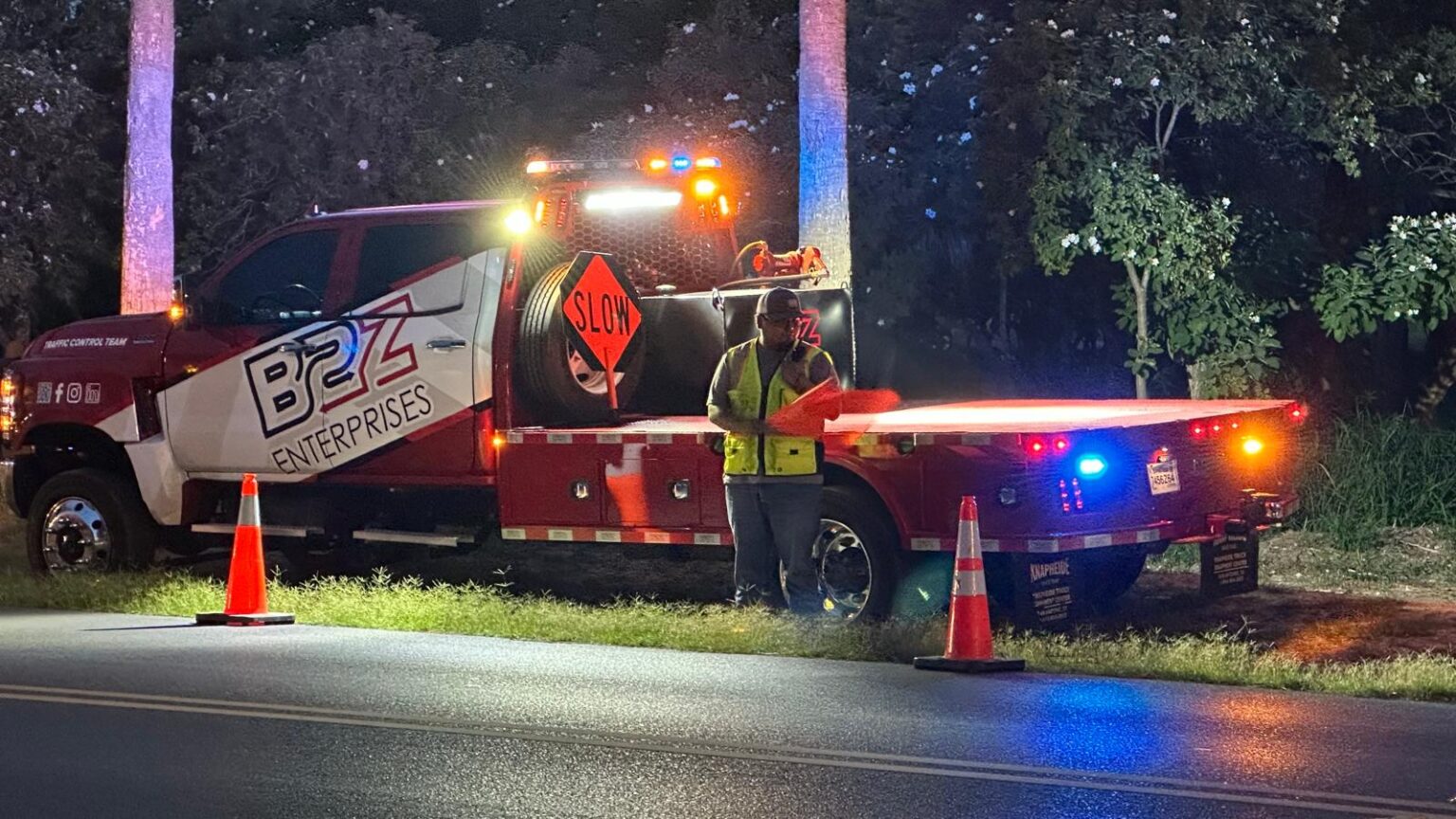
With 21 years of experience in Texas traffic control, B2Z Enterprises brings a depth of local knowledge that national franchisors simply cannot replicate. Our team has designed Maintenance of Traffic (MOT) plans and Temporary Traffic Control Plans (TTCPs) for projects across San Antonio’s most challenging corridors—from the dense urban grid near the Pearl District to the high-speed rural transitions on the outskirts of Bexar County. We understand how San Antonio drivers behave, where congestion builds, and how to design plans that protect workers without creating unnecessary traffic bottlenecks that invite driver frustration and risky behavior.
Our certified flagging services comply fully with TxDOT, FHWA, and OSHA standards. Every flagger we deploy has completed rigorous training and understands the specific traffic patterns of the San Antonio area. We coordinate real-time lane closures for highway maintenance, utility installations, and municipal infrastructure projects, ensuring that every taper, every sign, and every channelizing device is placed exactly where the plan requires.
For example, a general contractor working on the Loop 1604 widening project near the Stone Oak Parkway exit came to B2Z Enterprises because they had experienced two worker near-misses and one motorist collision in the first three weeks of their project. The existing TTCP had been adapted from a Houston project and failed to account for the 70-mph approach speeds and the curve radius at that specific interchange. Our team conducted a full site audit, redesigned the TTCP with proper taper distances and advanced warning signage, deployed certified flaggers at two critical merge points, and coordinated lane closures during off-peak hours. The result: a 40% reduction in incidents over the remaining six months of the project, zero citations from TxDOT inspectors, and a client who reported saving over $90,000 in avoided delays and potential liability.
Want results like this? B2Z Enterprises can help.
Our services extend beyond plan design and flagging. We provide ongoing audits for active work zones, refresher training for contractor crews, and advanced warning systems including digital signage where conditions warrant. For contractors who need to demonstrate compliance to insurers or bonding companies, we document every element of our work with photo logs and daily inspection reports—paperwork that has proven invaluable when claims or audits arise.
To explore the full range of work zone safety providers available in the San Antonio market, check out our curated directory: Top Places in San Antonio for Construction Zone Safety Services — Expert Guide.
What Steps Should You Take Today to Upgrade Your Work Zone Safety Approach?
The actions you take before your next project mobilizes will determine whether you’re protecting your workers, your bottom line, and your reputation—or leaving yourself exposed. Here is a practical starting point for San Antonio contractors who are serious about work zone safety.
Audit Your Current Traffic Control Plans for Compliance Gaps
Pull your most recent TTCPs and compare them against current TxDOT standards and MUTCD guidelines. Look specifically at taper lengths, sign spacing, flagger station locations, and advance warning distances. If your plans were developed more than 18 months ago, they may not reflect the latest regulatory updates or the specific traffic volume increases on San Antonio roadways. Our team at B2Z Enterprises offers no-obligation plan reviews for contractors who want a second set of experienced eyes on their documentation.
Partner with a Local MOT Expert for Site-Specific Solutions
Generic plans fail on San Antonio’s unique road geometries. Every interchange, every curve, every merge point has its own risk profile. Work with a traffic control company that knows the local terrain—one that has operated in Bexar County long enough to predict where drivers will misjudge a lane closure and where workers are most vulnerable. B2Z Enterprises, based at 900 S. Stewart Road. Ste 12, Mission, TX, serves San Antonio with the same local attention we bring to all our Texas projects. You can reach us at 956-585-3773 to discuss your specific needs.
Schedule Ongoing Flagger Training and Refresher Courses
Certification isn’t a one-time event. We recommend annual refresher training for every flagger on your roster, plus scenario-based drills that simulate San Antonio-specific conditions—high-speed approaches, night operations, and multi-lane closures. Our training programs cover TxDOT, FHWA, and OSHA requirements in a format that’s practical and immediately applicable.
Implement Advanced Warning Systems Where Appropriate
For high-risk zones—anywhere posted speeds exceed 55 mph or where visibility is compromised by curves, weather, or elevation changes—consider digital message boards, radar speed feedback signs, and automated flagging assistance devices. These technologies do not replace certified flaggers, but they add an extra layer of protection that can prevent incidents before they happen.
Frequently Asked Questions About Construction Zone Safety in San Antonio
More questions? B2Z Enterprises has answers.
How often are TxDOT work zone inspections conducted in San Antonio?
TxDOT’s Alamo District conducts both scheduled and unannounced inspections throughout the year. Frequency increases during peak construction seasons (spring through fall) and on high-profile projects like the Loop 1604 and I-35 expansions. Contractors should expect at least one unannounced inspection per major project phase, and any complaint from the public can trigger an immediate site visit.
What is the difference between an MOT plan and a TTCP?
A Maintenance of Traffic (MOT) plan is the broader strategy for keeping traffic flowing safely through or around a work zone, including detours, lane configurations, and phasing. A Temporary Traffic Control Plan (TTCP) is the detailed, site-specific implementation document that specifies sign placement, channelizing device locations, taper lengths, and flagger stations. Both are required for TxDOT compliance on any project that affects public roadways.
Who is legally responsible for work zone safety in San Antonio?
Under TxDOT regulations, the prime contractor bears ultimate responsibility for all subcontractor compliance, including traffic control. This means that if a flagging subcontractor fails to meet standards, the general contractor faces the fines, shutdown orders, and liability exposure. Proper vetting and oversight of traffic control partners is essential for risk management.
How much does it cost to bring a work zone into full TxDOT compliance?
Costs vary depending on project size, duration, and complexity. For a typical highway maintenance operation in San Antonio, a comprehensive TTCP design and certified flagging crew costs between $2,500 and $8,000 per week. When compared to the potential cost of a single citation or incident—often exceeding $25,000—compliance represents a fraction of the financial risk.
Can B2Z Enterprises handle emergency or short-notice lane closures?
Yes. Our team maintains standby crews and pre-approved TTCP templates for common scenarios in San Antonio. We can typically mobilize within 24 hours for emergency lane closures, utility repairs, and accident scene safety. Contact us at 956-585-3773 to discuss your timeframe.
What specific local regulations apply to work zones in San Antonio that differ from other Texas cities?
San Antonio’s Unified Development Code includes additional requirements for work zones within city limits, particularly in historic districts like King William, Monte Vista, and Lavaca. These ordinances may restrict lane closure hours, require specific signage aesthetics, and mandate additional pedestrian protections. Our team is familiar with these local nuances and incorporates them into every TTCP we design for San Antonio projects.