
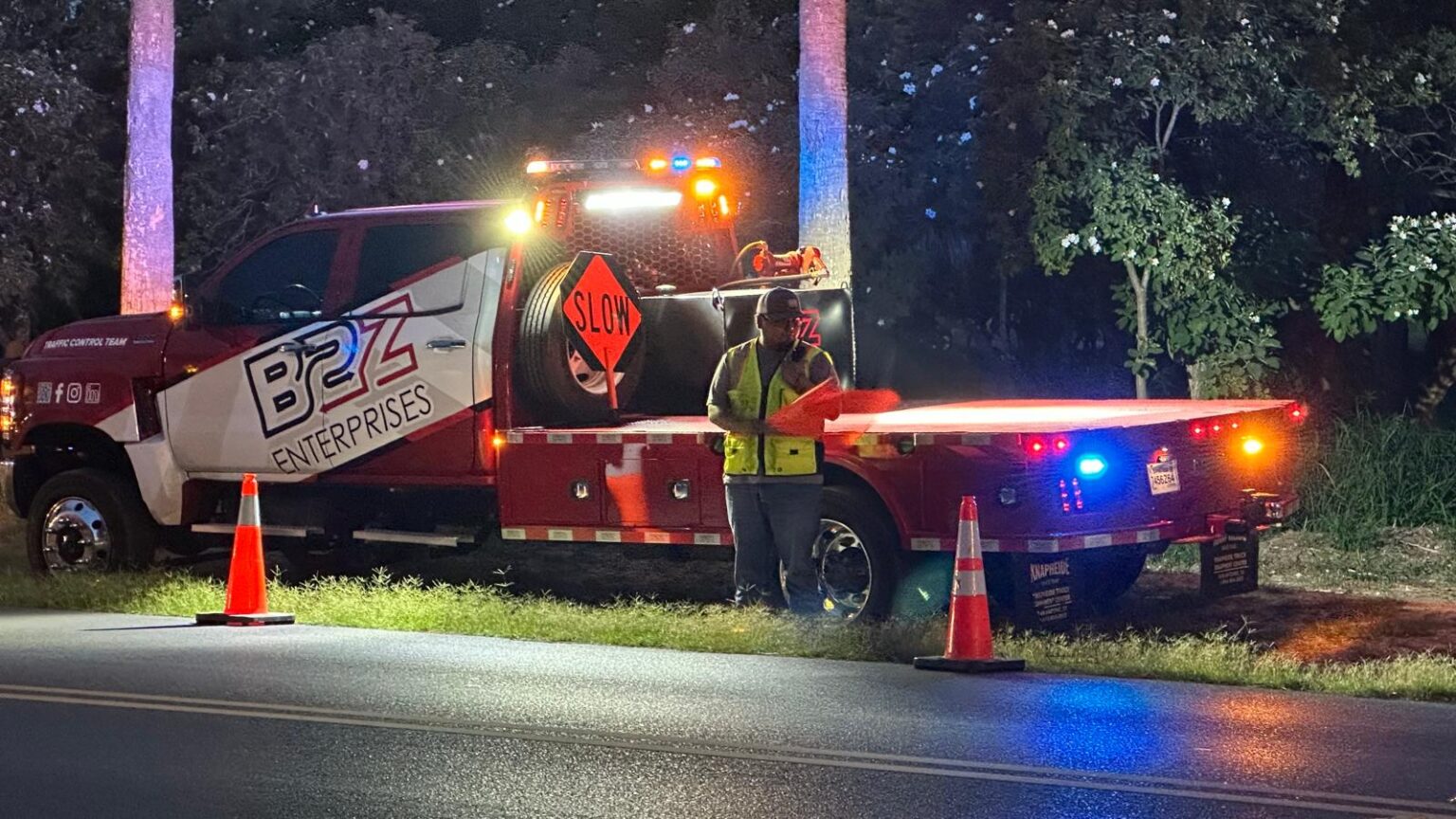
Construction Zone Safety in San Antonio: How Professional Flagging Companies Prevent Accidents During Roadwork — Comprehensive Guide
Most people assume that the majority of construction zone accidents are caused by reckless or distracted drivers. While driver behavior plays a role, the data tells a different story: inadequate traffic control planning and poorly executed flagging operations are far more often the root cause. In San Antonio, where highway expansions, utility upgrades, and residential development are reshaping the city, professional flagging services are the critical line of defense between a safe work zone and a catastrophic incident.
Why Is Construction Zone Safety Critical in San Antonio’s Growing Infrastructure?
San Antonio is in the midst of a sustained infrastructure boom. With major highway projects along I-10, I-35, and US-281, plus ongoing utility installations and residential development across the city, the number of active work zones has increased dramatically over the past decade. According to the National Work Zone Safety Information Clearinghouse, over 800 people are killed annually in work zone crashes nationwide, and Texas consistently ranks among the top states for work zone fatalities.
The consequences extend beyond human tragedy. A single serious accident in a work zone can delay a project by weeks, trigger expensive litigation for contractors and municipalities, and damage a company’s reputation beyond repair. San Antonio’s high traffic volumes—particularly on corridors like Loop 1604 and I-35—mean that even a minor disruption can cascade into gridlock, compounding the risk of secondary collisions.
B2Z Enterprises — Local Experts in the local area
Ready to get started? Reach out today for prompt, professional service.
or call 956-585-3773
Professional flagging addresses these risks head-on by ensuring that drivers receive clear, consistent guidance through work zones, reducing confusion and the likelihood of aggressive or erratic behavior. When flaggers are trained to anticipate driver mistakes and respond instantly, the entire work zone becomes safer for everyone—crews, motorists, and pedestrians alike.
What Makes a Professional Flagging Company Essential for San Antonio Roadwork?
Flagging may appear straightforward, but in practice it requires deep expertise in traffic control design, local regulations, and real-time decision-making. A professional flagging company brings all of these elements together in a way that improvised or unskilled flagging simply cannot match.
What Training and Certifications Should San Antonio Flaggers Have?
Certified flaggers in Texas must be trained in the Texas Manual on Uniform Traffic Control Devices (TMUTCD), which governs everything from sign placement to hand-signal protocols. This is not a one-time certification; it requires ongoing education to stay current with updates to federal and state standards. At B2Z Enterprises, every flagger we deploy is certified and trained to anticipate the specific challenges of San Antonio roadwork, including high-speed merge zones on highways and narrow lane closures on older residential streets.
How Do Professional Flagging Companies Coordinate with Local Authorities?
Effective work zone safety requires seamless coordination with multiple agencies. In San Antonio, this means working directly with San Antonio Public Works, the TxDOT San Antonio District, and often local law enforcement for traffic control on high-volume roads. Professional flagging companies bring established relationships with these entities, which streamlines permitting, inspection, and compliance processes. When we manage a lane closure on a state-maintained road like US-281, we follow protocols that have been refined over years of collaboration with TxDOT engineers and safety officers.
How Do Flagging Services Prevent Accidents in Work Zones?
Interested in Highway Maintenance Traffic Control?
B2Z Enterprises delivers quality results every time. Let’s talk about your needs.
The mechanics of flagging are deceptively simple—two-way radio communication, hand signals, and paddle control—but the execution requires constant vigilance and split-second judgment. Here is how professional flagging services systematically reduce accident risk in San Antonio work zones.
What Communication Protocols Reduce the Risk of Collisions?
Every flagger is in constant communication with their teammates and the construction crew via two-way radio. This allows them to coordinate traffic breaks, warn each other about aggressive drivers, and adjust the traffic pattern in real time when conditions change. For example, if a driver misses a merge sign and continues at speed toward a closed lane, the flagger can immediately halt opposing traffic to create a safe buffer. This level of coordination is impossible with unskilled flaggers who lack reliable communication equipment and training.
How Does Strategic Placement of Flaggers Improve Safety?
Flaggers are not stationed arbitrarily. Their positions are determined by a site-specific risk assessment that accounts for sight distances, traffic speed, pedestrian crossings, and the geometry of the work zone. On a curve near a school zone, for instance, flaggers are positioned well in advance of the actual work area to give drivers time to slow down and merge safely. On a straight highway section with high traffic volume, flaggers are placed at both entry and exit points to manage the flow of vehicles through the taper zone. Every placement is deliberate and backed by TMUTCD guidelines.
What Equipment and PPE Do Professional Flaggers Use?
Visibility is the cornerstone of flagger safety. Our crews wear high-visibility ANSI Class 3 clothing, use illuminated paddles for night work, and deploy automated flagging assistance devices (AFADs) where appropriate. Advanced warning signs, portable message boards, and channelizing devices are all part of the system. When a driver sees a well-illuminated flagger with the proper equipment, they instinctively slow down and pay attention—a critical psychological effect that reduces approach speed and reaction time.
What Is a Temporary Traffic Control Plan (TTCP) and Why Does It Matter?
A Temporary Traffic Control Plan (TTCP) is the blueprint for how traffic will be managed through a construction zone. It specifies the location and type of signs, channelizing devices, flagger stations, tapers, and buffer zones needed to protect both workers and road users. In San Antonio, TTCPs must comply with TxDOT standards and local ordinances, including the City of San Antonio’s Complete Streets Policy, which requires that traffic control plans account for pedestrians, cyclists, and transit users—not just motorists.
A well-designed TTCP includes a site-specific risk assessment that considers traffic volume, speed limits, road geometry, and pedestrian access. For example, a utility installation near the Pearl District requires a different approach than a highway maintenance project on I-10, because the traffic patterns, pedestrian activity, and surrounding land uses are fundamentally different. Professional flagging companies like B2Z Enterprises develop TTCPs that reflect these nuances, ensuring that safety measures are tailored to the actual conditions of each site.
How Do Lane Closures and Utility Installation Traffic Control Affect Safety in San Antonio?
Lane closures and utility installations present distinct safety challenges that require specialized traffic control strategies. On San Antonio’s high-speed corridors, a poorly executed lane closure can cause rear-end collisions, sideswipes, and even head-on crashes when drivers try to bypass the closure. Proper taper lengths, advanced warning signs, and merge guidance are not optional—they are mandated by TxDOT standards for a reason.
What Are the Specific Risks of Utility Installation Work Zones?
Utility installation often involves partial road closures, trenching, and temporary crosswalks. These work zones are particularly dangerous because they sometimes occupy sidewalks and shoulders, forcing pedestrians into the roadway. In areas like Southtown or near San Antonio International Airport, where pedestrian and vehicle traffic are both high, the risk of conflicts increases significantly. Professional flagging companies manage these risks by coordinating traffic breaks that allow pedestrians to cross safely, and by using pilot car operations to guide vehicles through single-lane closures without confusion.
How Do Professional Flaggers Minimize Disruption While Maintaining Safety?
The goal of professional flagging is not just to prevent accidents—it is to keep traffic moving as smoothly as possible. Experienced flaggers know how to balance the competing demands of crew safety and traffic flow. They adjust the timing of traffic breaks based on real-time congestion, use pilot cars to maintain a steady speed through work zones, and communicate with construction crews to coordinate work activities with traffic patterns. This minimizes delays for motorists while ensuring that crews can work safely without unexpected vehicle incursions.
What Should You Look for When Choosing a Flagging Company in San Antonio?
Selecting a flagging company is a decision that directly affects project safety, compliance, and cost. Not all flagging services are equal, and the wrong choice can lead to accidents, fines, and project delays. Here are the specific criteria you should evaluate when choosing a flagging partner for your San Antonio project.
What Certifications and Insurance Coverage Are Non-Negotiable?
Valid certifications from ATSSA (American Traffic Safety Services Association) and OSHA are the bare minimum. A professional flagging company should also carry comprehensive general liability and workers’ compensation insurance, and they should be willing to share their safety record and experience modification rate (EMR). At B2Z Enterprises, we have a 21-year track record of maintaining a low EMR and zero major incidents on our projects. We are TxDOT-certified and fully compliant with OSHA’s construction safety standards, as outlined in OSHA’s Construction Safety and Health regulations.
Why Is Local Experience Important for San Antonio Projects?
San Antonio’s road network has unique characteristics that a company from outside the region might not understand. The congestion patterns on I-35 during peak hours, the pedestrian traffic along the River Walk extension projects, and the specific requirements of TxDOT’s San Antonio District for temporary traffic control are all factors that a local company knows intimately. B2Z Enterprises has been serving San Antonio for two decades, and our flaggers are familiar with the neighborhoods, the traffic patterns, and the regulatory landscape that define this city.
What Service Levels Should You Expect from a Professional Flagging Company?
Professional flagging companies should offer 24/7 availability for emergency and night work, because construction and utility projects do not always happen during daylight hours. They should also provide turnkey solutions—MOT plans, TTCPs, full work zone safety services—so that you have a single point of accountability for all traffic control needs. When you work with us, you get a dedicated project coordinator who handles the permitting, the planning, and the on-site execution, so you can focus on the construction work itself.
To help you evaluate the difference, here is a comparison of what professional flagging services deliver versus relying on unskilled or self-managed flagging:
| Factor | Professional Flagging Service | Unskilled / Self-Managed Flagging |
|---|---|---|
| Flagger certification | ATSSA, OSHA, TMUTCD-compliant | Often uncertified or expired |
| Communication equipment | Two-way radios, illuminated paddles, AFADs | Hand signals only or cell phones |
| Site-specific TTCP | Developed by trained traffic engineers | Generic or copied from other projects |
| Coordination with authorities | Established relationships with San Antonio Public Works, TxDOT | Limited or ad hoc |
| Insurance & liability coverage | Full coverage, low EMR, transparent records | Minimal or unknown coverage |
| Real-time incident response | Immediate communication and corrective action | Delayed or absent response |
| Pedestrian & cyclist accommodation | Integrated into TTCP per Complete Streets Policy | Seldom considered |
How Does B2Z Enterprises Deliver Work Zone Safety Solutions for San Antonio Projects?
At B2Z Enterprises, we have been providing professional flagging and traffic control services in Texas for 21 years. Our approach is rooted in the conviction that every work zone can be made safe if the right expertise, planning, and equipment are applied. We develop custom MOT plans that account for San Antonio’s specific traffic patterns, congestion times, and pedestrian corridors. Our flaggers are trained to the highest standards, and we use only equipment that meets or exceeds TxDOT and FHWA requirements.
Let us illustrate with a real example. For a major utility installation project along Broadway near the historic Alamo Quarry district, the contractor faced a complex challenge: a four-lane arterial road with high traffic volume, frequent pedestrian crossings, and adjacent commercial properties. The work required closing two lanes for trenching while maintaining access to businesses and pedestrian walkways. Our team developed a comprehensive TTCP that used phased lane closures with alternating traffic patterns, illuminated signage for night work, and dedicated flagger stations at every pedestrian crossing. The result was zero incidents over the entire 12-week project, minimal delay to motorists, and full compliance with TxDOT and City of San Antonio requirements.
Want results like this? B2Z Enterprises can help.
We maintain a strong safety record that we are proud to share with every client. Our EMR is consistently below the industry average, and we have never had a lost-time incident on a San Antonio work zone. We are TxDOT-certified, OSHA-compliant, and fully insured. When you choose B2Z Enterprises, you are choosing a partner with deep local knowledge, proven systems, and a genuine commitment to protecting workers and the public.
Frequently Asked Questions About Construction Zone Safety and Flagging in San Antonio
Skip the FAQ — talk to a real person at B2Z Enterprises
What qualifications should San Antonio flaggers have beyond basic certification?
Beyond ATSSA and OSHA certification, San Antonio flaggers should have local knowledge of TMUTCD standards, experience with high-volume urban corridors like I-10 and US-281, and training in pedestrian and cyclist accommodation per the City’s Complete Streets Policy. B2Z Enterprises ensures all flaggers meet these criteria and undergo regular refresher training.
How much does professional flagging services cost for a San Antonio road project?
Costs vary depending on project duration, traffic volume, number of flaggers needed, and equipment requirements. For a typical two-week utility installation on a residential street, expect between $3,000 and $6,000 for full-service flagging including TTCP development. Highway projects with multiple lane closures and night work cost more due to additional equipment and personnel. Contact us for a site-specific quote.
Can a flagging company help with the TTCP permitting process for San Antonio projects?
Yes. Professional flagging companies like B2Z Enterprises handle the entire TTCP development and permitting process, including coordination with TxDOT’s San Antonio District and San Antonio Public Works. We prepare the plan, submit it for approval, and revise it as needed based on inspector feedback. This saves contractors significant time and ensures compliance from day one.
What should I do if a driver ignores a flagger in a San Antonio work zone?
Immediately report the incident to local law enforcement. Professional flaggers are trained to de-escalate situations, but a driver who deliberately ignores flagging signals creates a serious safety risk. Document the vehicle information and provide it to the San Antonio Police Department. Our crews are trained to prioritize worker and public safety, but enforcement of traffic laws requires police involvement.
How do I know if a flagging company is reliable for night work on San Antonio highways?
Look for a company that has experience with TxDOT night work specifications, uses illuminated equipment (lighted paddles, vehicle-mounted warning lights, portable message boards), and can provide references from similar projects. B2Z Enterprises has completed numerous night work projects on I-35 and Loop 1604, and we have the equipment and protocols to maintain safety in low-visibility conditions.
Why is pedestrian safety included in work zone traffic control plans in San Antonio?
San Antonio’s Complete Streets Policy requires that all transportation projects accommodate pedestrians, cyclists, and transit users. This means TTCPs must include safe pedestrian detours, temporary crosswalks, and flagger stations at pedestrian crossings. Professional flagging companies integrate these requirements into their plans to ensure compliance and protect all road users.
More Resources from B2Z Enterprises
Your Next Step Starts Here
Join hundreds of satisfied customers — contact B2Z Enterprises today.