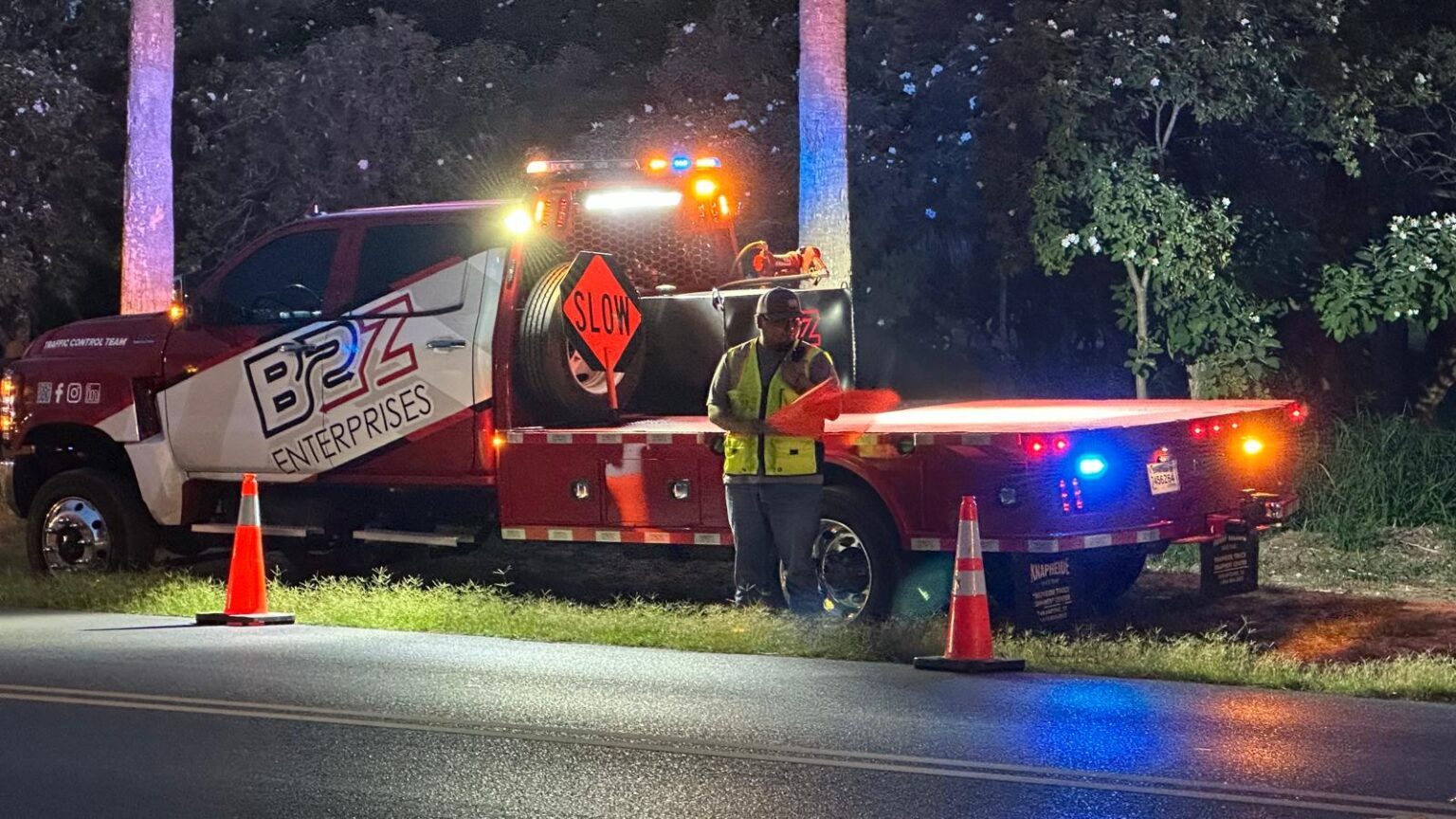

Why a Traffic Control Company in Austin Matters More Than Ever
Austin’s breakneck growth has turned every road project into a high-stakes negotiation between construction progress and traffic flow. Unlike other Texas cities where work zones are straightforward, Austin’s narrow downtown streets, high-speed corridors like SH 130, and dense pedestrian activity near the University of Texas campus create a uniquely complex safety environment. Without a certified traffic control company managing your work zone, you risk fines from the City of Austin and TxDOT, weeks of permit delays, and liability exposure that can erase a project’s profit margin entirely.
What Makes Austin’s Traffic Safety Demands Unique Right Now?
The Austin metropolitan area has grown by over 30% in the last decade, according to the Texas A&M Transportation Institute’s Urban Mobility Report, making it one of the fastest-growing regions in the country. This population boom means more road projects, more utility installations, and more construction across a city that was never designed for this volume of activity. Unlike suburban sprawl projects in other parts of Texas, Austin’s construction zones intersect with high-density pedestrian corridors, bike lanes, and public transit routes—creating a layered safety challenge that demands sophisticated traffic control solutions.
Major highway expansions on I-35, MoPac, and SH 130 have created complex work zones where traditional traffic management approaches fall short. These corridors carry hundreds of thousands of vehicles daily, and any disruption ripples through the entire regional network. Meanwhile, the city’s push for multi-modal transit—including light rail expansions along the Capital Metro lines and new bike lanes on Congress Avenue—means construction zones increasingly overlap with pedestrian and cyclist routes. The Texas A&M Transportation Institute’s Urban Mobility Report further notes that congestion costs in the Austin region have risen sharply, making efficient work zone management even more critical. Add to this the growing number of utility installations for water, gas, and fiber on streets that were already congested, and you have a recipe for chaos without proper planning.
B2Z Enterprises — Trusted in McAllen, TX
Edinburg, TX
Pharr, TX
San Juan, TX
Alamo, TX
Donna, TX
Weslaco, TX
Mercedes, TX
Harlingen, TX
San Benito, TX
Brownsville, TX
Rio Grande City, TX
Roma, TX
La Joya, TX
Palmview, TX
or call 956-585-3773
How Do Professional MOT Plans Prevent Costly Delays and Fines in Austin?
Maintenance of Traffic (MOT) plans are the backbone of any compliant work zone in Austin. These detailed documents specify how traffic will be managed through a construction area, including lane closures, signage placement, pedestrian detours, and flagging protocols. A professionally developed MOT plan ensures compliance with TxDOT standards, City of Austin ordinances, and the Federal Highway Administration’s Manual on Uniform Traffic Control Devices (MUTCD).
The City of Austin and Travis County have specific permitting requirements that go beyond state minimums. Without a customized Temporary Traffic Control Plan (TTCP) that addresses local conditions, contractors face last-minute permit rejections that can delay projects by weeks. We’ve seen projects stalled for up to three weeks because the submitted plan didn’t account for Austin’s unique intersection configurations or pedestrian traffic patterns near the Rainey Street district. Strategic lane closure scheduling is another critical element. By coordinating closures during off-peak hours—typically after 9 a.m. and before 4 p.m., and after 7 p.m. for night work—we keep projects on time without creating gridlock. Our team at B2Z Enterprises, operating from our base at 900 S. Stewart Road. Ste 12, Mission, TX, brings deep local knowledge of Austin’s traffic patterns to every project, which speeds approval times and keeps your timeline intact. Accurate plan sets reduce liability from accidents or unauthorized detours, protecting both your workers and the public. For a deeper dive into the liability risks contractors face, see our guide on how Austin contractors can reduce liability by partnering with a certified traffic control company.
Why Are Flagging Services Critical for Safety in High‑Volume Austin Corridors?
Certified flaggers are the frontline defense in narrow work zones where there’s no room for error. On downtown side streets near Congress Avenue and in the Rainey Street district, where right-of-way is limited and pedestrian traffic is constant, trained flaggers manage one-way and two-way traffic with precision. Real-time communication between flaggers and crew members prevents worker-driver conflicts that can lead to serious injuries. On high-volume corridors like Lamar Boulevard, South Congress, and Riverside Drive, effective flagging reduces rear-end crashes—the most common type of work zone accident. According to data from the Texas Department of Transportation, work zone crashes in Travis County have increased by 15% over the past five years, with rear-end collisions accounting for nearly half of all incidents.
B2Z Enterprises provides trained flaggers who understand Austin’s aggressive driver behavior and can adapt their techniques accordingly. Proper flagging also protects cyclists and pedestrians in shared-lane zones, which are increasingly common in Austin’s urban core. We’ve had clients call us at 956-585-3773 for emergency flagging support on utility installations where inadequate planning had created dangerous conditions for workers and road users alike.
What Role Do Lane Closures Play in Balancing Construction Efficiency and Traffic Flow?
Phased lane closures allow utilities and highway maintenance crews to work safely without shutting down entire roads. This approach is essential on corridors like I-35 and US 290, where a full closure would paralyze the city. By closing only the lanes necessary for the work zone and maintaining traffic flow in adjacent lanes, we keep projects moving without creating impossible commutes for Austin drivers. Night and off-peak lane closures are particularly effective for minimizing commuter frustration. On I-35, where daytime volumes exceed 200,000 vehicles per day, night work is often the only viable option. Dynamic lane closure plans that adapt to real-time traffic volumes—using data from the Austin Transportation Department’s traffic monitoring systems—allow us to adjust our approach based on actual conditions.
| Traffic Control Approach | Permit Approval Time | Average Fine Risk | Liability Exposure | Project Delay Risk |
|---|---|---|---|---|
| Professional MOT Plan (B2Z Enterprises) | 1–2 weeks | Low (no citations) | Minimal (full compliance) | Low (on-time start) |
| Self-Managed or Non-Compliant Plan | 2–6 weeks (with rejections) | High ($500–$5,000 per citation) | Significant (accident liability) | High (stop-work orders possible) |
B2Z Enterprises creates detailed closure schedules that coordinate with emergency services access routes, ensuring that fire trucks and ambulances can always reach their destinations. Proper signage and taper lengths following MUTCD standards reduce speed reduction incidents in work zones, which are a leading cause of secondary crashes.
How Does Work Zone Safety Technology Reduce Risks on Austin’s Fastest Roadways?
Traditional traffic control methods are no longer enough on high-speed arterials like SH 130, where posted speeds reach 80 mph. Automated flagger assistance devices (AFADs) provide consistent, predictable traffic control that eliminates the variability of manual flagging in high-speed environments. Radar-speed feedback signs alert drivers when they’re traveling too fast through work zones, reducing the likelihood of crashes before they happen. Temporary traffic signals are essential for complex intersections like Braker Lane and Airport Boulevard, where multiple traffic streams converge with construction zones. These signals coordinate with existing traffic infrastructure to maintain safe flow patterns. Intrusion alarms and smart cones that detect vehicle encroachment into work zones provide an additional layer of protection for crews. When a vehicle veers into a work zone, these devices alert workers immediately, giving them precious seconds to react. B2Z Enterprises integrates these technologies with traditional Temporary Traffic Control Plans (TTCP) to create comprehensive safety solutions that protect both workers and the public. We don’t believe in a one-size-fits-all approach; every work zone has unique risks that require tailored solutions.
For example, a general contractor working on a utility installation project in the East Austin neighborhood near Holly Street came to B2Z Enterprises because they had received two citations from the City of Austin for inadequate traffic control on a water line installation. Their previous traffic control provider had set up basic signage but hadn’t accounted for the high pedestrian traffic in the area or the nearby bike lane on Holly Street. Our team conducted a full site assessment, developed a compliant TTCP that included pedestrian detours and bike lane protection, deployed certified flaggers for the intersection, and managed the lane closure schedule to minimize disruption. The contractor completed the project within the original timeline and received zero additional citations—saving an estimated $12,000 in potential fines and avoiding a stop-work order that would have cost them $8,000 per day in crew idle time.
Want results like this? B2Z Enterprises can help.
Why Choose a Local Austin Traffic Control Company Like B2Z Enterprises?
We understand Austin’s regulatory landscape because we work in it every day. Our team has deep knowledge of the permitting processes at the City of Austin, Travis County, and TxDOT. We know exactly what each jurisdiction requires and can prepare plan sets that get approved on the first submission. This saves our clients weeks of back-and-forth with permitting agencies and keeps their projects on schedule. Our relationships with local utility companies, general contractors, and city planners mean we can respond quickly when emergencies arise. A water main break on South Lamar at 5 p.m. needs immediate traffic control—not a plan that takes three days to develop. We’ve built our reputation on being able to deploy crews within hours for emergency utility installations and highway maintenance needs.
Our track record on major projects speaks for itself. We’ve provided traffic control services for the I-35 Expansion project and Capital Metro improvements, managing complex work zones that required coordination with multiple contractors and agencies. We offer comprehensive traffic control services under one roof—MOT plans, TTCPs, flagging, lane closures, and work zone safety solutions—which means our clients don’t have to juggle multiple vendors. For a broader view of the Austin market, our guide to top traffic control services in Austin offers a compliance-focused comparison of the city’s most reliable providers.
Don’t see your question? Ask B2Z Enterprises directly.
Frequently Asked Questions About Traffic Control in Austin
What are MOT plans and why do I need one in Austin?
Maintenance of Traffic (MOT) plans are detailed documents that specify how traffic will be managed through a construction zone. In Austin, these plans must comply with TxDOT standards, City of Austin ordinances, and the federal Manual on Uniform Traffic Control Devices (MUTCD). You need an MOT plan for any construction or utility work that affects traffic flow, including lane closures, sidewalk closures, and pedestrian detours. Without an approved plan, you risk citations, stop-work orders, and liability for any accidents that occur in your work zone.
How long does it take to get a TTCP approved in Austin?
A properly prepared Temporary Traffic Control Plan (TTCP) typically takes one to two weeks for approval in Austin when submitted through the correct channels. However, plans that don’t meet local requirements can face rejections that add weeks to the timeline. Working with a company familiar with Austin’s permitting process—like B2Z Enterprises—significantly speeds up approval because we know exactly what the City of Austin and TxDOT reviewers are looking for.
What happens if I don’t use a certified traffic control company in Austin?
The risks are substantial. You face fines from the City of Austin and TxDOT ranging from $500 to $5,000 per citation, depending on the severity. More importantly, if an accident occurs in your work zone and your traffic control doesn’t meet regulatory standards, you could be held liable for injuries and property damage. Courts in Travis County have awarded significant damages against contractors who failed to maintain proper traffic control. Additionally, you risk stop-work orders that can delay projects by days or weeks, costing thousands of dollars in crew idle time.
Do I need flagging services for a small utility installation in Austin?
Yes, in most cases. The City of Austin requires certified flaggers for any work zone that impacts traffic flow, regardless of project size. Even a small utility installation on a residential street can create safety hazards if traffic isn’t properly managed. Flaggers are especially critical on Austin’s narrow streets where there’s no room for vehicles to pass safely without guidance. Our team can assess your specific project and determine the appropriate flagging requirements based on traffic volume, street width, and pedestrian activity.
How do lane closures work with TxDOT on highways like I-35?
Lane closures on state highways require coordination with TxDOT’s district office in Austin. Typical restrictions include no lane closures during peak hours (6–9 a.m. and 4–7 p.m.), minimum taper lengths based on posted speed limits, and specific signage requirements at every closure point. Night closures are common on high-volume corridors like I-35. B2Z Enterprises handles all coordination with TxDOT, including submitting closure schedules, obtaining permits, and ensuring compliance with all regulatory requirements. We also coordinate with emergency services to maintain access routes throughout the closure.
What work zone safety technology does B2Z Enterprises recommend for Austin roads?
For high-speed roads like SH 130, we recommend automated flagger assistance devices (AFADs) and radar-speed feedback signs. For complex intersections like those near Braker Lane and Airport Boulevard, temporary traffic signals with coordination to existing infrastructure are essential. Intrusion detection systems, including smart cones and alarms, provide an added layer of protection for crews working in high-traffic areas. We assess each work zone individually and recommend technologies based on site-specific risks. The goal is always to provide the maximum level of protection without creating unnecessary complexity or cost.