
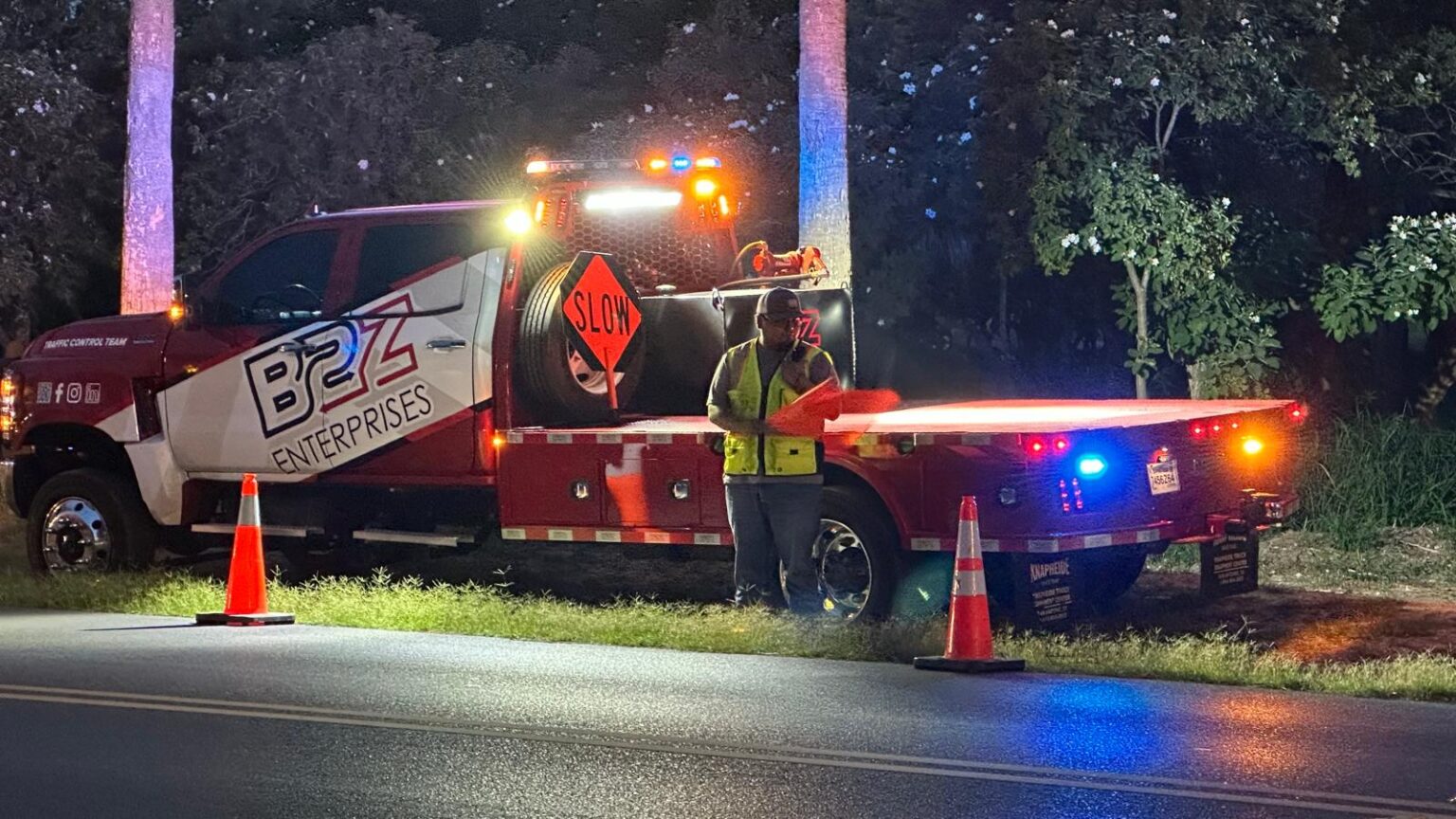
Utility Installation Traffic Control in La Joya: Ensuring TxDOT Compliance for Seamless Infrastructure Upgrades — Comprehensive Guide
If you are a utility contractor working in La Joya, you need a Temporary Traffic Control Plan (TTCP) that satisfies TxDOT’s Pharr District standards. Without it, your project faces fines up to $10,000 per violation per day from the Texas Department of Licensing and Regulation (TDLR), plus potential liability lawsuits if a motorist is injured in your work zone. At B2Z Enterprises, we have spent years navigating these exact regulations in Hidalgo County, and we know that proper traffic control is the difference between a smooth utility upgrade and a costly, dangerous disruption.
Why Is TxDOT Compliance Essential for Utility Installation Traffic Control in La Joya?
TxDOT compliance isn’t just a bureaucratic checkbox; it’s the legal framework that protects everyone on the road. For utility installation specifically, failing to meet these standards can result in immediate work stoppage orders from the Pharr District office. This is especially critical in La Joya, where many utility upgrades occur along state-maintained roads like US-83 and FM 2220, which fall directly under TxDOT jurisdiction. Liability for accidents in non-compliant work zones can run into the millions of dollars, and your insurance premiums—or your bonding capacity—will reflect that risk. We often see contractors who try to save a few hundred dollars on signs and flaggers, only to face a $5,000 TDLR fine and a week-long project delay. TxDOT’s Standard Specifications for Construction and Maintenance, specifically Item 502, outlines the exact requirements for traffic control during utility installations, and ignorance of these rules is never an acceptable defense.
What Are the Key Components of a TxDOT-Compliant Traffic Control Plan for Utility Work?
A proper traffic control plan for utility work in La Joya is built on a few critical elements. First, the Maintenance of Traffic (MOT) Plan must be tailored to the specific road classification—La Joya has a mix of high-speed rural arterials and low-speed residential streets, each with different taper lengths and advance warning requirements. The Temporary Traffic Control Plan (TTCP) needs to detail phasing, showing exactly how traffic will be moved during each stage of the excavation, installation, and restoration. This includes certified flagging services for any single-lane closure, which is common when working on narrow right-of-ways along FM 2220. Lane closure configurations must follow MUTCD Part 6 guidelines, with proper taper lengths—for a 45-mph road, you need at least 330 feet of taper. And you cannot forget pedestrian and cyclist accommodations: La Joya has growing pedestrian traffic near the schools along 5th Street, and ADA-compliant detours are required by TxDOT. The City of La Joya Public Works department also requires coordination for any work that affects city-maintained streets, which often have different signage requirements than state roads.
| Plan Component | DIY / In-House Approach | Professional Service (B2Z Enterprises) |
|---|---|---|
| TTCP Development | May lack latest TxDOT updates; generic templates often fail inspection | Custom plans referencing current TxDOT Standard Specifications and MUTCD 11th Edition |
| Certified Flaggers | Risk of using untrained workers; TDLR can fine $2,000 per incident | All flaggers hold ATSSA certification and have local route knowledge |
| Signage & Tapers | Common errors in sign spacing and taper length | Pre-measured layouts verified against road speed limits |
| Night Work | Often fails lighting requirements under TxDOT Night Work plans | All lighting meets TxDOT minimum 8-footcandle standards |
| Plan Approval | Can take 2-4 weeks of back-and-forth with TxDOT | We handle submission; average approval time is 72 hours |
| Total Cost for 3-Day Utility Project | ~$2,500 (equipment rental + unskilled labor) + $2,000 risk of rework | ~$4,500 (all inclusive, guaranteed first-pass approval) |
How Do Local Conditions in La Joya Affect Traffic Control Planning?
Interested in Flagging Services?
B2Z Enterprises brings modern expertise to every engagement.
La Joya presents unique traffic control challenges that generic plans cannot address. The US-83 corridor, which runs through the heart of town, carries over 30,000 vehicles per day, according to TxDOT traffic counts. A lane closure here during peak hours—7:00-9:00 AM and 4:00-6:00 PM—would cause mile-long backups. Then there’s FM 2220, which serves as a primary route for agricultural trucks hauling produce from local farms. During harvest season, a poorly planned closure can block access for 18-wheelers. The proximity to La Joya Independent School District means that closures near schools like Lloyd Bentsen Elementary must account for bus and parent pickup traffic between 7:15-8:00 AM and 3:00-4:00 PM. And because La Joya has limited alternate routes—you basically have US-83 or a few residential cut-throughs—any closure needs to be scheduled with surgical precision. We have also seen that seasonal events, like the La Joya Rodeo in February, dramatically increase traffic on local roads, and we always check the city calendar before scheduling any lane closures.
B2Z Enterprises — McAllen, TX
Edinburg, TX
Pharr, TX
San Juan, TX
Alamo, TX
Donna, TX
Weslaco, TX
Mercedes, TX
Harlingen, TX
San Benito, TX
Brownsville, TX
Rio Grande City, TX
Roma, TX
La Joya, TX
Palmview, TX
Modern solutions for today’s challenges. Let’s build something great.
or call 956-585-3773
What Specific Roadway Characteristics Should Be Considered in La Joya?
The most critical roads in La Joya for utility work are US-83 (a six-lane divided highway with frontage roads), FM 2220 (a two-lane undivided arterial), and the collector streets near the La Joya Municipal Court. US-83 requires phased lane closures with at least 1,500 feet of advance warning due to 65-mph speeds. FM 2220 has narrow shoulders and no median, so we often need full road closures with detours when working near the La Joya Medical Center. Residential streets near La Joya Housing Authority require 48-hour advance notice to residents and must maintain access for emergency vehicles at all times. We have also coordinated with the Hidalgo County Drainage District when utility installation intersects with flood control channels, which requires additional approvals.
What Steps Should Utility Contractors Take to Ensure Seamless Infrastructure Upgrades?
First, contact the TxDOT Pharr District office at least two weeks before your planned start date to submit your TTCP. Their traffic engineering section will review for compliance with the Texas Manual on Uniform Traffic Control Devices (TMUTCD). We recommend a pre-construction meeting with all stakeholders—utility company, city engineer, and any adjacent contractors. Public notification is non-negotiable in La Joya; we typically send flyers to 200+ residents in the affected area and post signs 48 hours before work starts. Phased work sequencing is essential: rather than closing a whole block for two weeks, we break the work into 100-foot sections, completing restoration on each section before moving to the next. Real-time traffic monitoring allows us to adjust lane closures if we detect unexpected congestion—we use temporary Bluetooth traffic sensors and our crews report back every 15 minutes. If a utility strike or unexpected soil condition extends our timeline, we file an amendment to our TxDOT permit immediately to stay compliant.
Want results like this? B2Z Enterprises can help.
How Can B2Z Enterprises Help with Utility Installation Traffic Control in La Joya?
B2Z Enterprises provides comprehensive traffic control services that go beyond just renting cones and signs. We develop custom MOT and TTCP plans that reference the latest TxDOT Standard Specifications, ensuring first-pass approval from the Pharr District office. Our team includes ATSSA-certified flaggers who know La Joya’s traffic patterns—they know that during the 8 AM rush near the city pool, you need an extra flagger to handle left-turn movements. We handle the entire permit process, from the initial 90-day advance notice to TxDOT to the final inspection after restoration. Our track record includes projects for the La Joya Waterworks Department, where we coordinated overlapping closures on FM 2220 for a water main replacement that kept all businesses accessible. We maintain a zero-tolerance policy for non-compliance, which has earned us a strong safety rating that utilities trust for their bonding requirements. Our team is based at 900 S. Stewart Road, Ste 12 in Mission, just 15 minutes from La Joya, which means we can respond to any site emergency within 30 minutes.
What Are the Most Common Compliance Mistakes in Utility Installation Traffic Control?
We see the same mistakes on La Joya job sites repeatedly. The most common is insufficient taper lengths for lane closures. Contractors often set up a 100-foot merge zone on a road that requires 330 feet, which creates a crash hazard at highway speeds. Another frequent error is the lack of advance warning signs on collector roads—you need at least three signs in sequence before a closed lane, starting 500 feet out. For nighttime work, which is common on US-83 to avoid traffic, inadequate lighting is a major issue. TxDOT requires a minimum of 8 foot-candles at all flagger stations and a lit arrow board at the lane closure. We also see plans that were approved for a specific scope but never updated when the project changed—for example, a utility trench that extends longer than planned requires a new TTCP submission. Failing to update is a direct violation of TxDOT’s Item 502.3.2, which states that the traffic control plan is a living document that must reflect actual field conditions.
How Do You Choose the Right Traffic Control Partner for Your La Joya Utility Project?
Start by verifying TxDOT prequalification. The Pharr District maintains a list of preapproved traffic control contractors—being on that list means your partner has passed a financial and safety review. Next, assess local experience. Has the company worked on La Joya’s specific roads? We have crews who have flagging experience on US-83, FM 2220, and the residential streets near the La Joya Civic Center. Response time is critical; if you hit a gas line at 2 AM, your traffic control partner needs to have a crew onsite within an hour to maintain safety. Finally, confirm insurance coverage. Any subcontractor should have at least $2 million in general liability and workers’ compensation coverage. We recommend asking for references from previous utility projects in Hidalgo County—talk to the water department or the gas company to see if the traffic control company delivered on time and without violations. We are proud that our Google reviews reflect our commitment to safety and compliance, and we maintain TxDOT certifications that are current as of the 11th Edition of the MUTCD.
Frequently Asked Questions
Anything else? B2Z Enterprises is one message away.
What is the difference between an MOT plan and a TTCP for utility work in La Joya?
The Maintenance of Traffic (MOT) plan is the overall strategy for keeping traffic moving during construction, while the Temporary Traffic Control Plan (TTCP) is the detailed, day-by-day implementation. For utility installations in La Joya, TxDOT requires both—the MOT shows the big picture (e.g., “we will close the northbound lane of US-83 for 4 weeks”), and the TTCP shows the specific signage, taper placement, and flagger positions for each phase. B2Z Enterprises develops both documents as a package to ensure seamless compliance.
How long does it take to get a traffic control plan approved by the TxDOT Pharr District?
For standard utility installations on state-maintained roads like US-83 or FM 2220, the initial review takes about 5-7 business days. However, if your plan has errors—like missing taper lengths or incorrect sign spacing—the approval can take 2-3 weeks due to the back-and-forth. At B2Z Enterprises, we submit fully compliant plans that often pass on the first review, reducing approval time to 72 hours in many cases.
What are the specific flagging requirements for a single-lane closure on FM 2220?
TxDOT requires that any single-lane closure on a two-lane road must use certified flaggers at both ends of the work zone. For FM 2220, which has a 55-mph speed limit in sections, you need a minimum of 500 feet of advance warning between the first sign and the flagger station. Each flagger must hold an ATSSA certification card and use a STOP/SLOW paddle that meets MUTCD specifications. We also recommend having a third flagger as a runner if the work zone is longer than 500 feet.
Can utility installation work be performed at night in La Joya to avoid traffic?
Yes, and it is often the preferred option for roads like US-83. However, TxDOT requires a separate Night Work Plan that addresses lighting standards (minimum 8 foot-candles at flagger stations), illuminated signing, and specific traffic control devices. We have completed night work on US-83 near the La Joya Medical Center, coordinating with TxDOT to close lanes from 9 PM to 5 AM with minimal disruption to the community.
What happens if my utility project in La Joya causes a traffic accident?
If the accident occurs within your work zone and your traffic control plan was not compliant with TxDOT standards, you could be held fully liable. This includes medical expenses, property damage, and legal fees. Even if your plan was compliant, if the setup was incorrect—like a missing sign—the liability falls on you as the permit holder. This is why we emphasize that our traffic control services are not just about compliance; they are your first line of defense against catastrophic financial and legal consequences. We have seen contractors in La Joya face lawsuits exceeding $500,000 from single incidents.
How do I coordinate with the City of La Joya Public Works for utility installation?
You need to contact the City of La Joya Public Works and Engineering department at least 30 days before starting any work on city streets. They require a separate permit and may have additional requirements for residential notification. We can handle this coordination as part of our full-service approach, ensuring that both city and TxDOT requirements are met. The City of La Joya also has specific hours for utility work—typically 8 AM to 5 PM on weekdays—unless you obtain an after-hours permit.