
Why Brownsville Utility Projects Need Expert TTCP Traffic Control Plans: A Guide for Municipal Contractors
Picture this: You’re the project manager for a water main replacement on Boca Chica Boulevard in Brownsville. The crew is ready to dig, the equipment is staged, and the city inspector is scheduled for tomorrow morning. But when the first saw cut hits asphalt, a line of cars backs up all the way to the expressway. A frustrated driver honks, then another. A delivery truck can’t make its turn into the H-E-B parking lot. A resident on a side street calls the city, complaining she can’t get home. Within an hour, the police show up demanding an immediate fix — and suddenly your careful timeline is in ruins.
This scene plays out more often than it should across the Rio Grande Valley. The missing piece? A proper Temporary Traffic Control Plan — a TTCP that anticipates every movement, every conflict point, and every possible delay. At B2Z Enterprises, we’ve seen projects in McAllen, Edinburg, Pharr, and beyond fall apart because the traffic control plan was an afterthought. For municipal contractors working in Brownsville, where streets range from historic residential blocks to high-volume state highways, an expert TTCP isn’t just a compliance checkbox — it’s the difference between a smooth project and a community relations nightmare.
B2Z Enterprises — Trusted in McAllen, TX
Edinburg, TX
Pharr, TX
San Juan, TX
Alamo, TX
Donna, TX
Weslaco, TX
Mercedes, TX
Harlingen, TX
San Benito, TX
Brownsville, TX
Rio Grande City, TX
Roma, TX
La Joya, TX
Palmview, TX
This guide breaks down everything you need to know about TTCP traffic control plans for utility projects in Brownsville: why they’re non-negotiable, how they align with TxDOT and municipal requirements, and how partnering with a dedicated traffic control company like B2Z Enterprises — located at 900 S. Stewart Road. Ste 12, Mission, TX — keeps your project moving safely and efficiently. We’ll cover real-world scenarios, local regulations, and the specific challenges of working in this border community.
What Makes Brownsville Utility Projects Unique for Traffic Control?
Brownsville isn’t just another Texas city. As the southernmost municipality in the state, it sits at a crossroads of international commerce, historic neighborhoods, and rapid growth. The City of Brownsville Engineering Department oversees a wide range of infrastructure improvements — from drainage upgrades along Paredes Line Road to utility relocations for the SpaceX-related industrial corridor. Each project brings its own traffic control challenges:
- Narrow streets in older neighborhoods like the Historic Downtown area limit lane widths and require careful phasing.
- High-traffic arterials like Southmost Road and International Boulevard demand nighttime closures or lane shifts to keep commerce flowing.
- School zones near institutions like Brownsville Early College High School have strict timing restrictions.
- Border crossing traffic on Gateway Boulevard means any disruption can ripple into customs queues.
These factors make a one-size-fits-all MOT plan dangerous. A TTCP must account for pedestrian paths, bicycle lanes (particularly near the University of Texas Rio Grande Valley), nearby hospitals like Valley Regional Medical Center, and bus routes operated by Brownsville Metro. Our team at B2Z Enterprises reviews each project’s scope against these variables before we deploy so much as a single cone.
Understanding TTCP Traffic Control Plans: The Regulatory Backbone
A Temporary Traffic Control Plan (TTCP) is a site-specific document that outlines how work zone safety will be managed during construction or maintenance activities. For any utility project that affects public roadways — whether it’s a gas line tie-in in San Benito or a sewer replacement in Harlingen — the TTCP must comply with:
- TxDOT’s Traffic Control Standard Sheets
- The Manual on Uniform Traffic Control Devices (MUTCD), Part 6
- FHWA work zone safety guidelines
- OSHA construction safety standards
- Municipal permitting requirements (e.g., City of Brownsville right-of-way permits)
These aren’t abstract regulations. They dictate exact taper lengths, sign placement distances, flagger protocols, and buffer zone dimensions. A poorly designed TTCP can lead to a stop-work order, fines, or — worst case — a preventable collision. As a TxDOT-certified traffic control company, B2Z Enterprises prepares TTCPs that pass inspection on the first review. We know the inspectors in Weslaco, Mercedes, and Roma personally, and we understand what they look for: accuracy, completeness, and real-world feasibility.
The Anatomy of a Compliant TTCP for Utility Work
Municipal contractors often ask us what a proper TTCP includes. Here’s a breakdown of the essential elements:
- Traffic Control Layout: A scaled drawing showing lane closures, detours, taper lengths, and sign placement. Every sign must be listed by MUTCD code.
- Phasing Plan: How work progresses from start to finish, including any temporary lane shifts or alternating one-way traffic.
- Pedestrian and Bicycle Accommodation: Detour routes for non-vehicular traffic, with ADA-compliant temporary ramps where needed.
- Emergency Vehicle Access: Provisions for fire trucks, ambulances, and police vehicles to bypass or pass through the zone.
- Residential and Business Access: Plans to maintain driveway and sidewalk access — critical for Brownsville’s many family-owned tiendas and restaurants.
- Speed Reduction Measures: Flagging operations, pilot cars, or temporary traffic signals to reduce speeds through the work zone.
- Night Work Lighting: Illumination plans for after-hours projects, ensuring signs and barriers are visible.
Each element must be tailored to the specific street geometry, traffic volumes, and adjacent land uses. A generic “one-size-fits-all” plan from a template is a liability. Our team at B2Z Enterprises develops custom plans for every project, from a single utility cut on a residential street in Donna to a multi-block corridor upgrade in Alamo.
Why Utility Installation Traffic Control Demands Specialized Expertise
Utility projects — water lines, sewer laterals, gas mains, fiber optic cables — often involve open trenches, heavy equipment, and confined spaces. Unlike road resurfacing, utility work creates physical hazards that extend beyond the asphalt surface. A trench across a street means vehicles must safely navigate around an excavation that could be six feet deep. Pedestrians must be rerouted away from the edge. Workers themselves are vulnerable to traffic if barriers are insufficient.
Flagging services become essential here. A trained flagger — certified through the American Traffic Safety Services Association (ATSSA) or equivalent — controls traffic flow through single-lane sections. Poor flagging leads to driver confusion, road rage, and near misses. B2Z Enterprises provides flaggers who are experienced in the fast-paced conditions of Rio Grande Valley corridors. We’ve managed single-lane closures on busy stretches like U.S. 83 in La Joya and Farm-to-Market roads throughout Palmview, ensuring traffic keeps moving safely even during peak hours.
A typical scenario: a contractor in Pharr needs to install a new water service across Jackson Road. The road carries 15,000 vehicles per day. Without a proper TTCP, the contractor might simply block one lane with a few cones and hope for the best. That’s a recipe for disaster. Instead, B2Z Enterprises develops a plan that includes advanced warning signs one-quarter mile in advance, a tapered lane closure, a flagger at each end, and a temporary pedestrian path on the opposite side. The result? No accidents, no complaints, and a job completed on schedule.
The Brownsville Municipal Contractor’s Compliance Checklist
Municipal projects in Brownsville typically require permits from the City of Brownsville Engineering Department. The department’s staff checks for traffic control plans before issuing a right-of-way permit. We’ve worked closely with the city’s engineers on multiple projects, and we know their expectations. Here’s what your TTCP must address:
- Does the plan follow the latest TxDOT standard sheets?
- Are all signs and devices specified with MUTCD designations?
- Have you accounted for nearby schools, hospitals, and emergency stations?
- Are pedestrian and bicycle detours ADA-compliant?
- Is there a maintained access plan for adjacent businesses and residences?
- Is the plan signed by a qualified individual (e.g., a certified traffic control supervisor)?
B2Z Enterprises handles each of these checklist items as part of our standard service. We also provide as-built documentation after project completion, showing that traffic control was deployed as planned. This documentation is invaluable if a claim or audit arises later.
Work Zone Safety: Protecting Workers and the Public
The numbers are sobering. According to the Bureau of Labor Statistics, highway work zone fatalities have risen in recent years. In Texas, the growing number of construction and utility projects means more workers and motorists are exposed to risks every day. A single mistake — an unsecured sign, a missing warning light, a flagger positioned too close to traffic — can lead to serious injury or death.
Our commitment at B2Z Enterprises goes beyond compliance. We treat every project as if our own family were driving through it. That means redundant safety measures: additional advance warning signs on high-speed roads, temporary rumble strips to alert distracted drivers, and high-visibility apparel for all crew members. We also conduct daily tailgate safety meetings to review the TTCP with the crew, ensuring everyone knows their role and the emergency response plan.
For highway maintenance traffic control, we deploy channelizing devices (cones, drums, and barriers) in strict accordance with the MUTCD taper lengths. For example, on a road with a posted speed of 45 mph, the advance warning area must begin at least 1,000 feet before the work zone, with a taper that gradually shifts traffic. Our crews are trained to measure these distances on site, verifying that the plan matches reality.
Case Study: Avoiding a Community Crisis in a Historic Brownsville Neighborhood
Want results like this? B2Z Enterprises can help.
This story illustrates why local knowledge matters. B2Z Enterprises doesn’t just design plans from a desk — we walk the site, talk to residents, and coordinate with city inspectors. Our phone number — 956-585-3773 — is available to contractors and municipal staff who need immediate guidance on traffic control issues. (For non-urgent inquiries, email works too: VBIstrategies@gmail.com.)
Flagging Services: The Human Element of Traffic Control
While signs and cones are essential, the most effective traffic control includes real human judgment. Flaggers do more than hold a stop/slow paddle. They read traffic patterns, adjust timing to prevent long backups, communicate with drivers who are confused, and keep the work zone safe when unexpected situations arise — like a delivery truck needing to cross the trench.
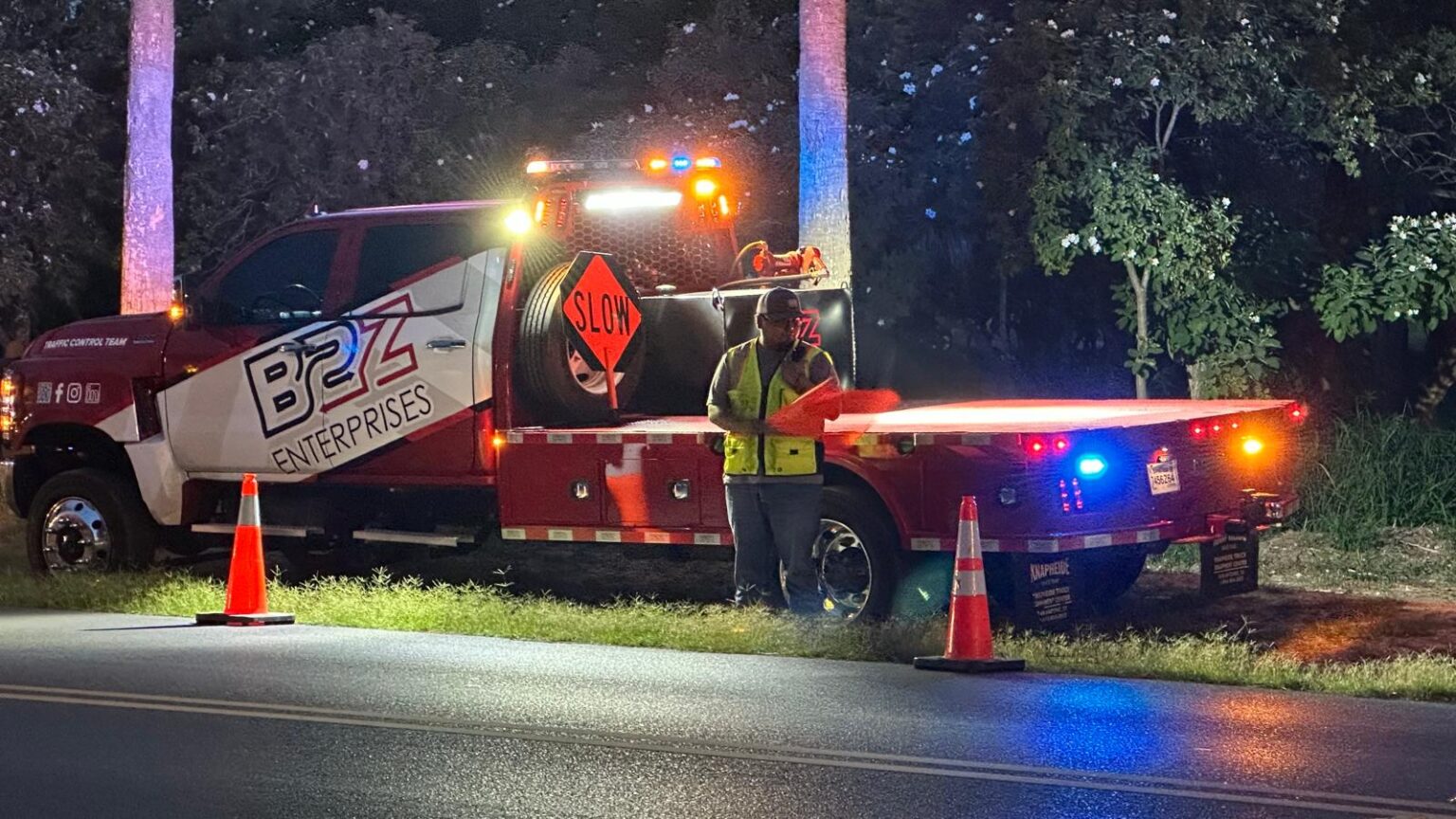
B2Z Enterprises provides certified flaggers for projects throughout the Rio Grande Valley: from Rio Grande City to San Benito, from Roma to La Joya. Our flaggers are trained in proper hand signals, radio communication, and emergency procedures. They also carry current certifications that satisfy TxDOT requirements. For large projects, we provide multiple flaggers coordinated by a lead who manages the overall traffic flow.
Flagging is especially important on two-lane roads where alternating traffic is the only option. On busy farm-to-market roads near Weslaco and Mercedes, our flaggers regularly handle peak commute times without causing excessive delays. We use a “traffic signal” flagging system where communication between flaggers is precise — no guesswork, no misunderstandings.
MOT Plans and TTCPs: Beyond the Basics
Maintenance of Traffic (MOT) plans and Temporary Traffic Control Plans are often used interchangeably, but they serve slightly different purposes. An MOT plan is the overarching strategy for keeping traffic moving throughout a project’s life, while a TTCP is the site-specific implementation for a particular phase. For utility projects, we typically prepare a TTCP for each distinct phase — excavation, pipe laying, backfill, and pavement restoration. Each phase may have different lane configurations and hazards.
At B2Z Enterprises, we coordinate the transition between phases seamlessly. If a contractor in Edinburg needs to switch from a west-side lane closure to an east-side closure, our crew adjusts the signs, cones, and flagger positions according to a pre-approved plan. No downtime, no confusion, no compliance gaps.
Lane Closure Services for Municipal Projects
Closing a lane on a municipal street requires more than putting out signs. It requires careful timing, public notification, and backup plans. Many Brownsville utility projects are permitted for off-peak hours: 9 a.m. to 3 p.m. or nighttime closures from 8 p.m. to 5 a.m. Our lane closure services include:
- Setup and removal of lane closures according to the approved TTCP.
- Portable sign boards with flashing lights for high-visibility warnings.
- Attention to pavement markings — temporary markings when permanent ones are removed.
- Monitoring of traffic conditions and adjustments if queues become excessive.
For major closures affecting multiple lanes, we coordinate with local media through the City of Brownsville’s public works department. We’ve learned from watching KRGV news reports how a poorly managed closure can become a community story. Our goal is to never be the reason traffic makes the evening news.
Construction Zone Safety: A Shared Responsibility
Utility projects often share road space with other construction work — building foundations, sidewalk repairs, or adjacent private developments. In downtown Brownsville, it’s not uncommon to see multiple permits on the same block. Traffic control plans must account for these overlapping activities. B2Z Enterprises routinely coordinates with other contractors and city inspectors to ensure that work zone safety isn’t compromised by competing closures or equipment.
We also emphasize the importance of driver awareness. Even the best TTCP can’t prevent every incident if drivers are distracted. That’s why we recommend that municipal contractors invest in public outreach: social media posts, flyers for nearby homes, and variable message boards. B2Z Enterprises can supply message boards as part of our service, helping to alert the public well before they reach the work zone.
Why Choose B2Z Enterprises as Your Traffic Control Partner?
We’re not just another traffic control company. We’re a local business rooted in the Rio Grande Valley, with deep ties to the communities we serve. Our team has experience on projects big and small, from highway maintenance on U.S. 83 to small utility cuts on residential streets in Alamo. We understand the permitting process in McAllen, the traffic patterns in Pharr, and the neighborhood concerns in San Juan.
Our certifications speak to our commitment: TxDOT-certified traffic control specialists, ATSSA-trained flaggers, and ongoing education in the latest MUTCD updates. We maintain a 5/5 rating from Google reviews because we deliver on our promises — safe, compliant, efficient traffic control that keeps projects on track.
When you work with B2Z Enterprises, you get more than a plan. You get a team that shows up early, stays late, and treats your project like our own. From the first site walk to the final sign removal, we’re there. That’s why municipal contractors in Harlingen, San Benito, Brownsville, and beyond trust us with their most critical work zone safety needs.
Frequently Asked Questions About TTCP Traffic Control Plans for Utility Projects
Don’t see your question? Ask B2Z Enterprises directly.
What is the difference between an MOT plan and a TTCP?
An MOT (Maintenance of Traffic) plan is the broad strategy for managing traffic over the entire life of a project. A TTCP (Temporary Traffic Control Plan) is a detailed, site-specific implementation for a particular phase of work — such as excavation or restoration. Municipal contractors in Brownsville typically need a TTCP for each phase submitted with permit applications.
How long does it take to get a TTCP approved by the City of Brownsville?
Approval time varies, but with a properly prepared plan that follows TxDOT standards, the City of Brownsville Engineering Department often reviews and approves within two to five business days. B2Z Enterprises helps expedite this by ensuring your TTCP is complete and accurate before submission, reducing the likelihood of rejections and resubmissions.
Do I need a separate TTCP for each utility cut on a street?
Generally, yes. Each distinct work zone — even if on the same street — requires its own TTCP because traffic conditions, setback distances, and access points may differ. However, if the cuts are part of a single contiguous project, one comprehensive TTCP with phasing may suffice. B2Z Enterprises will review your scope to determine the best approach.
What certifications should a traffic control company hold to work on municipal projects in Brownsville?
At minimum, the company should be TxDOT-certified and its flaggers should have current ATSSA or equivalent training. For municipal projects, familiarity with City of Brownsville-specific permitting requirements is also important. B2Z Enterprises meets all these criteria and our personnel are trained to the latest MUTCD standards.
Can you provide traffic control for night work?
Absolutely. Night work requires additional lighting, reflective signs, and high-visibility apparel. B2Z Enterprises has experience with nighttime closures on roads like International Boulevard and Boca Chica Boulevard. We use portable light towers and retroreflective devices to ensure work zone safety after dark.
What happens if a driver ignores traffic control devices and enters the work zone?
Our flaggers are trained to take immediate action: they use air horns and two-way radios to warn workers and the driver. We also document every intrusion for the contractor’s records. In extreme cases we stop work and coordinate with law enforcement. Our proactive planning minimizes the risk of intrusions by designing clear, unambiguous traffic control layouts that give drivers ample warning and decision time.