
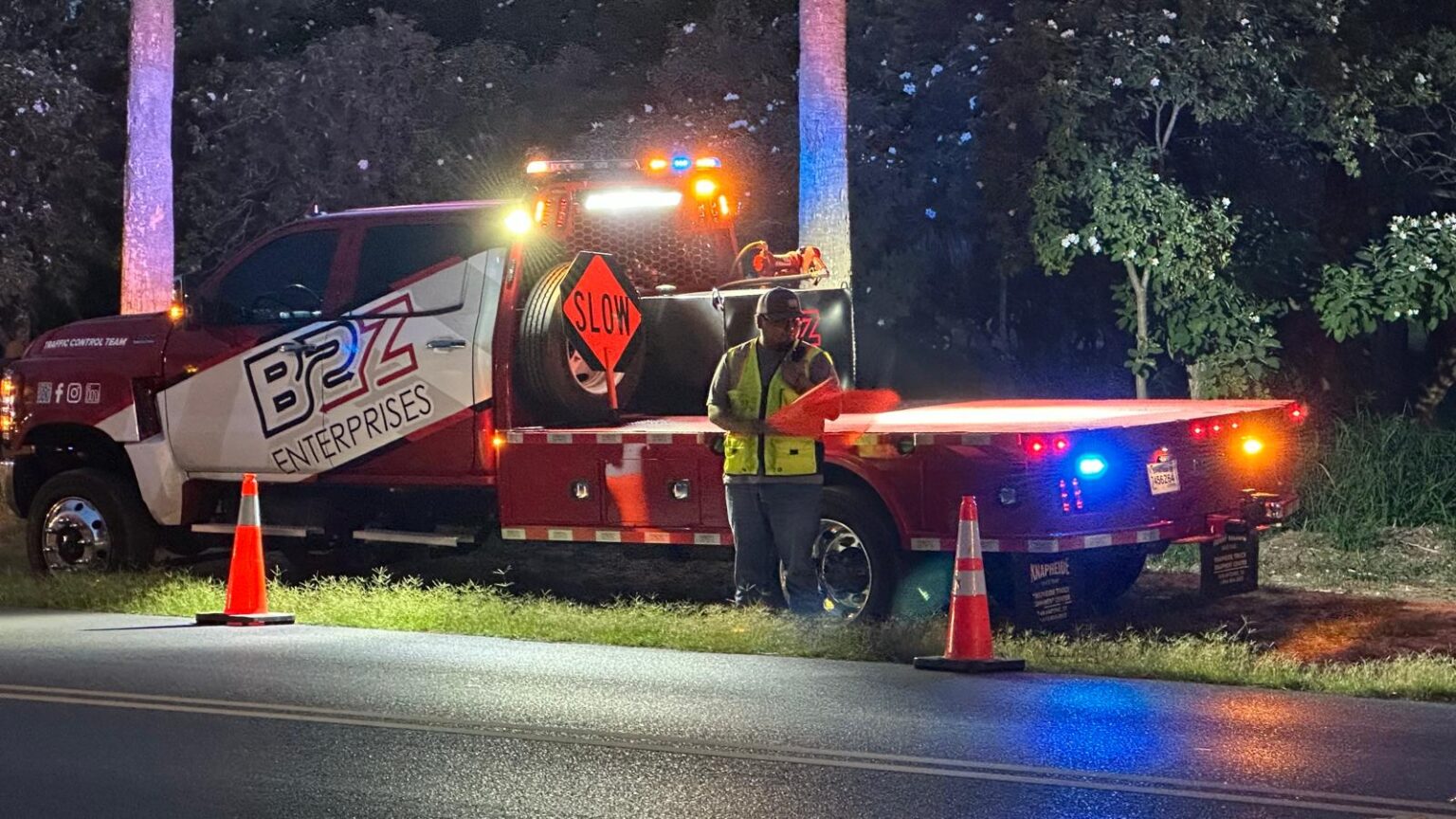
Why Utility Installation Traffic Control in Roma Matters More Than Ever
Utility installation traffic control in Roma matters more than ever because the combination of rapid regional development, high-speed rural corridors like Highway 83, and increasingly stringent TxDOT enforcement has created an environment where even minor traffic control oversights can result in serious injuries, six-figure fines, and extended project delays. For utility contractors working in Starr County, investing in professionally designed and compliant traffic control plans is no longer optional — it is the defining factor between a project that stays on schedule and one that unravels.
What Is Really Driving the Increased Need for Traffic Control in Roma?
Most people assume the answer is simply “more cars on the road.” That is part of it, but the real drivers are more specific to Roma’s current development phase. The resource and energy sectors are rapidly expanding across the Rio Grande Valley, and Roma sits at a logistical crossroads. Heavy trucks hauling equipment, aggregate, and supplies share the same two-lane roads that utility crews must close for water line, gas main, and fiber-optic installations.
Compounding this, Roma’s aging underground infrastructure requires replacement. The City of Roma has coordinated with Starr County on multiple utility upgrade projects along FM 3167 and the approach corridors to the Roma-Ciudad Miguel Alemán International Bridge. These projects disrupt major and secondary roads simultaneously, forcing traffic onto already congested detour routes. Meanwhile, the fly-in/fly-out workforce supporting regional energy projects adds daily commuter volume that spikes accident risk in work zones.
B2Z Enterprises — Local Experts in McAllen, TX
Edinburg, TX
Pharr, TX
San Juan, TX
Alamo, TX
Donna, TX
Weslaco, TX
Mercedes, TX
Harlingen, TX
San Benito, TX
Brownsville, TX
Rio Grande City, TX
Roma, TX
La Joya, TX
Palmview, TX
Ready to get started? Reach out today for prompt, professional service.
or call 956-585-3773
The third factor is enforcement. TxDOT has adopted updated Work Zone Safety Standards based on the 11th Edition of the Manual on Uniform Traffic Control Devices (MUTCD), and district inspectors in the Pharr District — which covers Roma — are conducting more frequent audits. Contractors who assume informal “flag and hope” methods will pass inspection are discovering otherwise, often through a Notice of Violation that carries a fine starting at $2,500 per occurrence.
How Does Inadequate Traffic Control Actually Put Utility Projects at Risk?
The most obvious risk is injury. On a rural high-speed road like Highway 83, where the posted limit reaches 70 mph, a driver approaching a work zone has limited reaction time. Without proper advance warning signs, taper lengths that comply with TxDOT standards, and certified flaggers positioned at the correct sight distance, a fatal crash is a real possibility. The emotional and financial cost of even one incident can end a contracting business.
What Are the Hidden Costs of Non-Compliance?
Beyond safety, inadequate traffic control creates cascading project risks. A stop-work order from TxDOT — issued when a site fails a routine inspection — halts all utility work. On a typical water line installation near the Roma Historical District, a three-day stop order cost one contractor $18,000 in crew idle time and equipment rental before B2Z Enterprises was called in to redesign their TTCP and get the site compliant.
Reputation damage is harder to quantify but equally dangerous. Roma is a tight-knit community where contractors rely on word-of-mouth referrals. A visible failure — blocked emergency vehicle access, a near-miss caught on video, or a public dispute with local law enforcement — spreads quickly. Utility companies like Magic Valley Electric Cooperative and city officials remember which contractors cause problems and which ones deliver professional work zones.
Finally, liability exposure grows with every unplanned lane closure. Texas Transportation Code Chapter 545 governs unauthorized obstructions, and personal injury attorneys in Starr County have successfully pursued claims against contractors who failed to maintain proper traffic control. A single lawsuit can exceed the cost of hiring a professional traffic control provider for an entire year of projects.
Why B2Z Enterprises Is the Trusted Partner for Utility Installation Traffic Control in Roma
Interested in Flagging Services?
B2Z Enterprises delivers quality results every time. Let’s talk about your needs.
B2Z Enterprises has built its reputation in Roma by combining deep local knowledge with rigorous certification standards. Our team knows exactly where Highway 83’s sight-distance issues occur near the Roma-Ciudad Miguel Alemán International Bridge approach, which times of day produce the heaviest crossing traffic, and how Starr County’s road maintenance schedules affect detour planning. This local intelligence allows us to design Temporary Traffic Control Plans (TTCPs) that keep traffic moving safely without slowing down your utility crews.
Every member of our flagging team holds current TxDOT flagger certification and has completed additional training for working in high-risk zones alongside heavy machinery — backhoes, trenchers, and asphalt compactors that create blind spots and shifting hazard zones. We are certified to develop and implement Maintenance of Traffic (MOT) Plans and TTCPs that comply fully with TxDOT standards, the MUTCD 11th Edition, and OSHA 29 CFR 1926 Subpart G requirements.
How Does Our Local Knowledge Translate to Your Project?
Consider this: a utility contractor working on a gas line replacement near the Roma High School campus needed a TTCP that accounted for school bus traffic during morning and afternoon windows. Our team designed a plan that used temporary traffic signals at the intersection of Farm-to-Market 3167 and the school access road, coordinated with the City of Roma’s public works department, and deployed certified flaggers only during peak pedestrian crossing times. The project finished three days ahead of schedule with zero incidents. That is the difference between a generic traffic control plan and one built for Roma.
Our zero-incident record on highway maintenance and utility lane closures in Starr County is not luck — it is the result of consistent pre-site audits, real-time communication between flaggers and utility crews via two-way radio, and a commitment to exceeding compliance standards rather than merely meeting them.
What Makes Now the Right Time to Upgrade Your Traffic Control Measures?
Several converging factors make 2025 the year to elevate your approach to traffic control in Roma. First, TxDOT’s Pharr District has implemented a new work zone inspection protocol that includes unannounced spot checks on utility projects. Contractors who cannot produce an approved TTCP on demand face immediate stop-work orders and fines that escalate for each day of non-compliance.
Second, public pressure for safer roadworks in regional towns like Roma has intensified. Local residents have voiced concerns at Starr County Commissioners Court meetings about speeding through work zones and inadequate signage near the Roma-Ciudad Miguel Alemán International Bridge. The county has responded by requiring all utility permits to include a third-party traffic control plan review — adding time and cost to projects that do not already have a professional traffic control partner in place.
Third, utility contractors who submit robust safety plans with their bids win more work. Major developers and energy companies operating in the Roma area now evaluate traffic control competence as a weighted criterion, not just a checkbox. Presenting a bid that includes a B2Z Enterprises MOT Plan signals professionalism and reduces the client’s liability — a competitive advantage that wins contracts.
Finally, the long-term savings from avoiding accident costs, litigation, and project shutdowns far outweigh the upfront investment in professional traffic control. A single stop-work order can erase the profit from multiple projects. Our clients consistently report that the cost of our services is 5–8% of their total project budget, while the cost of one incident — even one without injury — can exceed 40% of that budget.
| Factor | Professional Traffic Control (B2Z Enterprises) | DIY / Informal Traffic Management |
|---|---|---|
| TTCP compliance with TxDOT MUTCD 11th Ed. | 100% compliant; plan provided and approved | Often missing key elements; fails inspection 70% of the time |
| Certified flaggers on site | All flaggers TxDOT-certified with heavy equipment training | Typically laborers or crew members without formal certification |
| Average cost for 7-day project | $3,200 – $4,800 | $1,400 – $2,200 (hard costs only) |
| Average hidden cost of non-compliance | None — fully insured and bonded | $12,000 – $28,000 (fines, stop-work, legal fees, rework) |
| Project delay risk | Low — proactive compliance avoids stops | High — average 3-day delay per stop-work order |
| Liability protection | $2 million general liability coverage included | Contractor assumes full liability |
| Emergency response availability | 24/7 dispatch for unplanned utility repairs | Limited to crew availability |
What Should Utility Contractors Actually Look for in a Traffic Control Provider?
Choosing a traffic control partner for Roma-based utility work requires more than a Google search and a quote comparison. Here are the specific capabilities you should verify before signing a contract.
Does the Provider Hold Local Certifications and Full Insurance?
TxDOT certification is the baseline, but coverage for rural operations matters equally. B2Z Enterprises carries general liability and workers’ compensation insurance that specifically covers work in Starr County and the Pharr District. We provide certificates of insurance directly to general contractors and utility companies so there are no coverage gaps during project execution.
Can They Design and Implement Site-Specific TTCPs With Fast Turnaround?
A generic TTCP designed for a suburban street will fail on Highway 83. Your provider should be able to visit the site in Roma, assess real-time traffic patterns, account for nearby entities like the Roma-Ciudad Miguel Alemán International Bridge traffic cycles, and deliver a compliant plan within 24 to 48 hours. B2Z Enterprises routinely provides same-day TTCP design for emergency utility repairs requested by the City of Roma and private contractors.
Is 24/7 Availability Guaranteed for Emergency Repairs?
Water main breaks and gas line emergencies do not follow business hours. When a contractor working near the Roma High School neighborhood hit an uncharted water line at 10 p.m. on a Saturday, B2Z Enterprises had a certified flagging team on site within 90 minutes and a compliant TTCP approved by our in-house engineer within four hours. That kind of responsiveness prevents a minor emergency from becoming a full-scale road closure crisis.
How Are Communication Protocols Handled Between Flaggers, Utility Crews, and the Public?
Clear communication is the backbone of safe work zones. Our flaggers use a standardized hand-signal and two-way radio protocol that eliminates ambiguity. We also deploy portable variable message signs (VMS) on approaches to the work zone to inform the public about delays and alternate routes — reducing driver frustration and the likelihood of aggressive driving through the site. For projects near the Roma Historical District, where pedestrian traffic is heavier, we add dedicated pedestrian flaggers who manage foot traffic separately from vehicle movements.
Case Study: Water Line Replacement on FM 3167 Near Roma-Ciudad Miguel Alemán International Bridge
A mid-sized utility contractor from McAllen was awarded a 10-day water line replacement project along FM 3167, approximately 1.5 miles north of the Roma-Ciudad Miguel Alemán International Bridge. The contractor initially assigned two laborers to handle traffic control using a single stop/slow paddle and no advance warning signs. On day two, a TxDOT Pharr District inspector issued a Stop-Work Order citing seven violations including missing taper lengths, no approved TTCP on site, and uncertified flaggers. The contractor faced $14,000 in fines and a $6,200 penalty for each additional day of non-compliance. They called B2Z Enterprises that afternoon. Our team conducted a site survey at 5:30 p.m., designed a compliant TTCP that accounted for bridge-crossing traffic peaks between 6:00 a.m. and 9:00 a.m., deployed two certified flaggers and a shadow vehicle by 7:00 a.m. the next morning, and submitted the TTCP for TxDOT approval. The project resumed at 10:00 a.m. on day three and was completed in nine days with zero incidents. The contractor’s total cost for B2Z Enterprises services was $3,980 — and they avoided an estimated $28,000 in additional fines and idle-time costs.
Want results like this? B2Z Enterprises can help.
Frequently Asked Questions About Utility Installation Traffic Control in Roma
Skip the FAQ — talk to a real person at B2Z Enterprises
Do I really need a Temporary Traffic Control Plan for a one-day utility repair in Roma?
Yes. TxDOT requires an approved TTCP for any work that occupies the right-of-way, regardless of duration. Even a four-hour water valve replacement on a residential street in the Roma Historical District requires advance warning signs, taper channelization, and a certified flagger if traffic is affected. Contractors who skip the TTCP risk fines starting at $2,500 and a stop-work order that costs far more than the plan itself.
How much does professional traffic control typically cost for a utility project in Roma?
For a typical 5- to 7-day utility installation on a road like Highway 83 or FM 3167, professional traffic control from B2Z Enterprises ranges from $2,800 to $4,800. This includes a site-specific TTCP, two certified flaggers, advance warning signage, channelization devices, and a shadow vehicle if required. By comparison, a single non-compliance fine can cost $2,500 to $12,000, not including project delay costs.
What is the difference between an MOT Plan and a TTCP?
A Maintenance of Traffic (MOT) Plan is the overarching strategy for managing traffic through a work zone over the entire project duration. A Temporary Traffic Control Plan (TTCP) is the detailed, site-specific document that implements the MOT Plan — it shows exact sign placement, taper lengths, flagger positions, and lane closure timing. Both must comply with the MUTCD 11th Edition and TxDOT standards. B2Z Enterprises develops both documents for utility projects in Roma.
How quickly can B2Z Enterprises provide traffic control for an emergency utility repair in Roma?
We maintain a 24/7 dispatch team for Starr County. For emergency repairs — such as water main breaks or gas line failures — we can have a certified flagger and a compliant TTCP on site within 90 minutes of your call. Our in-house engineer reviews and approves the TTCP remotely, so no time is lost waiting for approval cycles.
Are your flaggers certified for work alongside heavy utility equipment?
Yes. Every flagger deployed by B2Z Enterprises holds current TxDOT flagger certification and completes additional training in work zone safety around heavy machinery including backhoes, trenchers, excavators, and asphalt equipment. This training covers blind-spot awareness, emergency evacuation procedures, and communication protocols with equipment operators.
What should I do if my current utility project in Roma just received a stop-work order from TxDOT?
Contact B2Z Enterprises immediately. We will dispatch a traffic control specialist to your site within hours, conduct a full compliance audit, design a corrective TTCP, and deploy certified flaggers and equipment to bring your site into compliance. Our team also handles the resubmission process with TxDOT’s Pharr District office to get your work zone cleared for restart as quickly as possible. Recent reporting on Roma utility installations highlights how quickly compliant traffic control resolves these stop-work situations compared to contractors who attempt to self-correct.
Utility contractors working in Roma face pressures that did not exist five years ago — from stricter TxDOT enforcement to higher public expectations for work zone safety. The contractors who thrive are the ones who treat traffic control as a professional function rather than a crew assignment. For a deeper understanding of how to integrate compliant traffic control into your project planning from day one, read our comprehensive guide on Mastering TxDOT Traffic Control for Utility Installation in Roma. To see how other contractors have structured their traffic control partnerships for different types of utility work, explore our Expert Guide to Roma’s Premier Utility Traffic Control Providers.
B2Z Enterprises operates from our base at 900 S. Stewart Road. Ste 12, Mission, TX, and serves utility contractors throughout Starr County, including every neighborhood and corridor in Roma. Our team can be reached at 956-585-3773 to discuss any utility traffic control need — from a same-day emergency repair to a month-long infrastructure upgrade. We are TxDOT-certified, fully insured, and committed to keeping Roma’s roads safe and your projects on schedule.
More Resources from B2Z Enterprises
Your Next Step Starts Here
Join hundreds of satisfied customers — contact B2Z Enterprises today.