
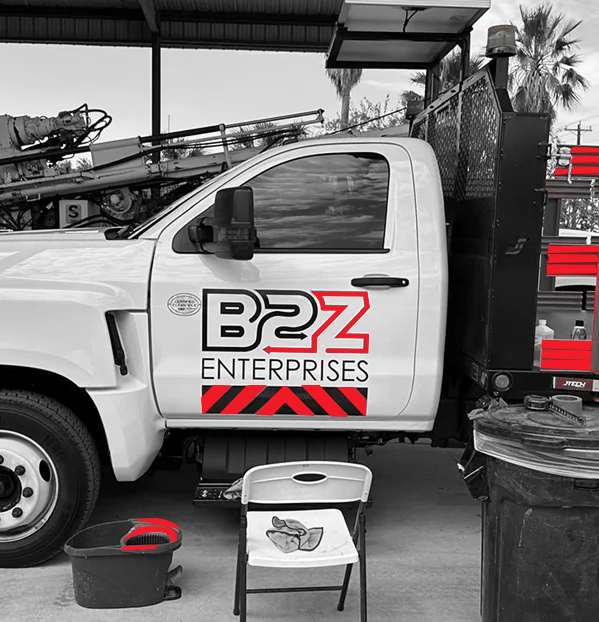
Flagging in Austin, Texas
If you see a crack forming, you’ve already waited too long.
If you’ve noticed a small crack in your driveway, a dip in the pavement near your garage, or water pooling where it shouldn’t, the clock is ticking. These aren’t cosmetic issues. They’re warning signs that the ground beneath your property is shifting, settling, or failing. And in Austin, Texas, that kind of movement doesn’t fix itself. It gets worse. Every rainstorm, every freeze-thaw cycle, every heavy truck that rolls over that spot pushes the problem deeper. What starts as a hairline fracture today becomes a trip hazard next month, a drainage disaster next season, and a foundation repair bill next year. That’s the real cost of delay.
Most people think flagging is about marking underground utilities before a dig. That’s one use. But flagging is also about marking surface problems before they become emergencies. It’s about using bright, visible markers to say “stop, look, fix this now.” When a section of your parking lot starts to settle, you flag it so nobody drives over it, nobody parks on it, and nobody forgets to repair it. Without that flag, the problem disappears into the background. You forget about it. Then a customer twists an ankle, or a delivery truck sinks into a soft spot, and suddenly you’re dealing with liability, not maintenance.
The consequences of ignoring those early signs are predictable. Water gets into the subgrade. The soil underneath expands and contracts with Austin’s weather. The crack widens. The pavement breaks apart. What could have been a simple patch job turns into a full replacement. That’s a difference of hundreds of dollars versus thousands. And the timeline? It compresses. You go from having months to act to having weeks. Once the structural integrity of the surface is compromised, every day you wait makes the repair more expensive and more invasive.
Here’s the part most people miss: flagging isn’t just about the physical marker. It’s about the decision to act. When you put a flag in the ground, you’re committing to a timeline. You’re saying “I see this, and I’m going to fix it.” That commitment is what separates properties that stay in good shape from properties that slowly fall apart. It’s the difference between proactive maintenance and reactive panic. And in a city like Austin, where growth is constant and property values are high, the cost of letting things slide adds up fast.
So if you see something wrong, don’t wait for it to become a headline. Call us. We’ll come out, assess the situation, and tell you exactly what needs to happen. No sales pitch. No pressure. Just straight talk about what’s broken and how to fix it. The longer you wait, the more you pay. That’s not a threat. That’s physics.
When Should You Schedule Flagging?
You need to schedule flagging when you see any of these signs. First, visible cracks in concrete or asphalt that are wider than a quarter of an inch. That’s not a surface crack. That’s a structural separation. Second, areas where water pools after a rain and doesn’t drain within a few hours. Standing water means the grade has failed and the surface is holding moisture against the subgrade. Third, any section of pavement that feels spongy or moves when you walk or drive over it. That means the base layer has washed out or rotted.
Fourth, after any major construction or utility work on your property. Even if the work was done cleanly, the soil underneath has been disturbed. It will settle unevenly over the next year. Flagging those areas now lets you monitor them before they become problems. Fifth, before the start of Austin’s rainy season, which runs from April to October. Six months of heavy rain will expose every weak spot in your pavement. Flagging ahead of that gives you time to make repairs before the water does its damage.
Sixth, after a freeze event. Austin doesn’t freeze often, but when it does, the damage is real. Water expands when it freezes. That expansion widens cracks and pushes pavement apart. If you had a hard freeze in January, schedule a walkthrough in February to flag any new damage. Seventh, if your property manager or tenants have reported tripping hazards. Even if you think it’s minor, flag it. A single trip-and-fall lawsuit can cost more than a full parking lot replacement.
Eighth, when you’re planning a resurfacing or sealcoating project. Any cracks or depressions must be flagged and repaired before the new surface goes down. If you seal over a problem, you’re just hiding it. The problem will push through the new surface within a year. Ninth, after any heavy equipment has been on site. Delivery trucks, cranes, or dumpsters can crack pavement even if they don’t leave visible damage. The stress on the subgrade is real. Flag and inspect after any heavy load event.
Tenth, and most importantly, if you can’t remember the last time you had your pavement inspected. If it’s been more than a year, schedule it now. Problems don’t announce themselves. They grow quietly until they become emergencies. Flagging is cheap. Ignoring is expensive.
Why Timing Matters for Austin, Texas Residents
Austin’s climate is a perfect storm for pavement problems. We get hot, dry summers that bake the ground and cause it to shrink. Then we get sudden, heavy rainstorms that saturate the soil and make it expand. That constant shrink-swell cycle is brutal on concrete and asphalt. It creates cracks, shifts slabs, and undermines foundations. The worst time to discover a problem is in the middle of a rain event. By then, the water has already done its damage.
Winter freezes, even mild ones, add another layer of risk. When water gets into a crack and freezes, it expands with enough force to split solid concrete. That’s why you see so many potholes appear in February and March. The freeze happened weeks ago, but the damage only becomes visible when the thaw comes and traffic breaks the weakened surface apart. Flagging in late fall, before the first freeze, lets you seal those cracks and prevent the freeze-thaw cycle from destroying your pavement.
Austin’s construction boom also matters. With so many new developments going up, heavy trucks and equipment are constantly moving through residential and commercial areas. That traffic stresses roads and parking lots that weren’t designed for that load. If you’re near a construction site, your pavement is aging faster than normal. Flagging quarterly instead of annually is smart in that situation. The timing isn’t arbitrary. It’s based on how Austin’s weather and development patterns actually affect your property.
The Long-Term Value of Quality Flagging
Flagging is like changing the oil in your car. Skip it, and the engine eventually seizes. Do it on schedule, and the car runs for hundreds of thousands of miles. The same logic applies to your property’s surfaces. A small investment in regular flagging and inspection prevents the kind of catastrophic failure that requires a full replacement. The ROI is simple: a few hundred dollars now saves you thousands later.
Think of it this way. A single crack, left unaddressed, turns into a pothole. That pothole collects water. The water softens the subgrade. The softened subgrade causes the surrounding pavement to crack. Within two years, a single crack can destroy a 10-foot section of your parking lot. The cost to repair that section is ten times what it would have cost to patch the original crack. And that’s just the direct cost. The indirect costs are higher: lost business from customers who don’t want to navigate a damaged lot, liability from trip hazards, and reduced property value.
Regular flagging also extends the life of your pavement. When you catch problems early, you can address them with surface-level repairs instead of full-depth reconstruction. That means your parking lot or driveway lasts 20 years instead of 10. For a commercial property, that’s a massive capital expense deferred. For a homeowner, it’s peace of mind and a better curb appeal when it’s time to sell.
Flagging also creates a documented history of your property’s condition. If you ever need to file an insurance claim or defend against a liability lawsuit, having a record of regular inspections and flagged repairs shows you were proactive. That can make the difference between a claim being paid or denied. It’s not just maintenance. It’s protection.
Why We Are the Preferred Choice in Northwest Austin
B2Z Enterprises has been serving the Greenville area since 2010, but our reputation for straight talk and solid work has followed us to Austin. We didn’t get here by accident. We got here by showing up when we said we would, communicating clearly, and delivering work that holds up. Our team knows the local market. We understand Austin’s building codes, permitting processes, and the subcontractor networks that get the job done right.
What sets us apart is simple. We don’t cut corners to save a dollar. We don’t pad timelines to protect our margins. When we say we’ll be there at 8 AM, we’re there at 8 AM. When we quote a price, that’s the price. No surprises. No excuses. That approach has earned us repeat business from developers, property managers, and business owners across the region. They call us because they know we’ll handle the problem without making it their problem.
Our portfolio spans commercial and residential projects. We’ve worked with national retail chains, local restaurant groups, and individual homeowners. Every client gets the same standard of workmanship, regardless of project size. We hold general contractor licenses and carry full insurance coverage. Our safety record speaks for itself. We stay focused on what matters: delivering quality work that stands up over time.
For flagging in Austin, that means we don’t just put a marker in the ground and walk away. We assess the situation, explain what’s happening, and give you a clear plan to fix it. We’re not interested in selling you services you don’t need. We’re interested in solving the problem so you can move on with your day.
🚩 When to Call for Help Immediately
- You see water pooling in a low spot after every rain, even light ones.
- Your pavement makes a hollow sound when you walk or drive over it.
- You’ve had a trip-and-fall incident reported on your property in the last 90 days.
- Your energy bill spiked for no reason, which can indicate a slab leak or foundation issue.
Find Us in Austin, Texas
Expert FAQ
When should I schedule flagging in Austin?
Schedule flagging at least twice a year: once in early spring before the rainy season, and once in late fall before any freeze events. If you’re near a construction site or have heavy traffic, do it quarterly. The cost is minimal compared to the repairs you’ll avoid.
How do I know if it’s urgent?
If you see any crack wider than a quarter inch, any area that holds water, or any section that feels spongy underfoot, it’s urgent. Those signs mean the subgrade is compromised. Every day you wait, the damage spreads. Call us immediately.
What happens if I wait?
Small cracks become large cracks. Large cracks become potholes. Potholes collect water and destroy the surrounding pavement. What could have been a $200 patch becomes a $5,000 replacement. And if someone gets hurt on the damaged surface, the liability cost can be astronomical. Waiting never saves money. It only costs more.
📍 Serving the Greater Austin, Texas Area and Northwest Austin neighborhood
B2Z Enterprises
📞 956-585-3773