
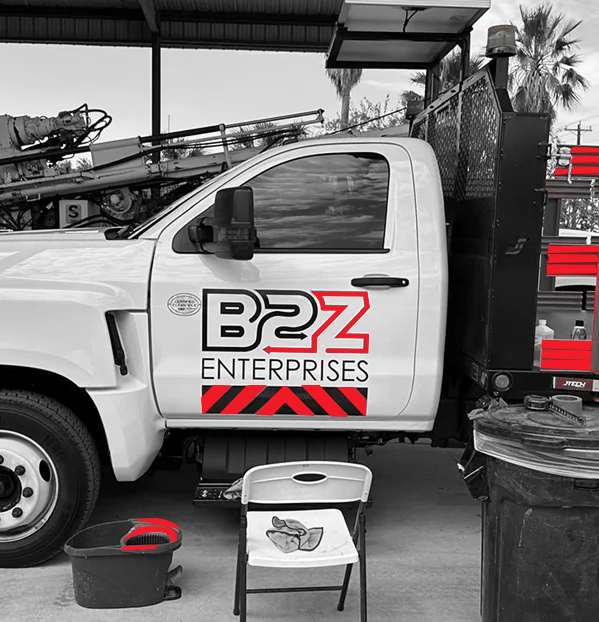
Flagging in Austin, Texas
Don’t wait until your property flags a real problem.
If you’ve noticed a small crack in your pavement, a patch of grass that refuses to grow, or a dip in your driveway that wasn’t there last month, the clock is ticking. These aren’t random quirks of your property. They are warning signs. And here’s the thing about warning signs: they almost always get worse.
Flagging in Austin, Texas isn’t just about marking an issue. It’s about catching a problem before it becomes a project. You see a crack today. In a month, that crack is a trip hazard. In three months, it’s a drainage nightmare. In six months, you’re looking at a full replacement. The difference between a small fix and a major expense is the time you waited.
Think of it like a slow leak in a tire. You can ignore it for a while. It’ll hold air for a few days. But eventually, you’re stuck on the side of the road. The same logic applies to your property. A small dip in the concrete, a crack in the foundation, a patch of soil that’s washing away — these are slow leaks. And the longer you wait, the more you pay.
The cost of delay is always higher than the cost of action. That’s not a sales pitch. It’s a simple fact. A small crack can be sealed for a few hundred dollars. A failed slab can cost thousands. A minor drainage issue can be fixed in a day. A flooded yard takes weeks to repair. The math is straightforward. But most people don’t do the math until it’s too late.
This is where flagging comes in. Flagging is the act of identifying and marking problem areas before they escalate. It’s the equivalent of a doctor catching a disease in its earliest stage. You don’t wait until you’re in the ER to get a checkup. You don’t wait until your driveway is a crater to call a professional. You flag the issue now, while it’s still manageable.
But here’s the catch: flagging only works if you do it at the right time. If you wait until the damage is obvious, you’ve already lost the advantage. The best time to flag a problem is when you first notice something off. Not when it becomes a hazard. Not when your insurance company gets involved. Not when your neighbor complains. Right now.
We see it all the time. A homeowner notices a small crack. They think, “I’ll get to it next month.” Next month comes, and the crack has doubled. They think, “I’ll get to it next season.” Next season, the crack is a hole. Suddenly, a simple repair becomes a full replacement. The cost triples. The timeline doubles. And the headache? That multiplies by ten.
Don’t let that be you. When you see something, say something. Call us. We’ll come out, take a look, and tell you exactly what you’re dealing with. No pressure. No sales pitch. Just straight talk about what needs to happen and when.
The alternative is waiting. And waiting costs more than you think.
When Should You Schedule Flagging?
The short answer is: as soon as you notice something. But let’s be more specific. There are clear triggers that tell you it’s time to call. You need to flag your property if you see any of the following: a crack in concrete that’s wider than a quarter-inch, a dip or depression in your driveway or walkway, water pooling in an area that used to drain fine, or soil erosion around your foundation. These are not cosmetic issues. They are structural signals.
You also need to schedule flagging if you hear things. A new creak in the floor. A door that suddenly sticks. A window that doesn’t close the way it used to. These are signs that your foundation is shifting. And shifting foundations don’t fix themselves. They only get worse.
Timing also matters by season. In Austin, the summer heat bakes the ground. That causes soil to shrink. When the soil shrinks, your foundation can settle unevenly. That’s when cracks appear. The best time to flag is before the summer heat hits, so you can address any existing issues before they’re amplified. Fall is another critical window. After the summer, the ground rehydrates and expands. That expansion can push on your foundation and widen existing cracks. Flagging in the fall catches the damage before winter rains make it worse.
Then there are the deadlines. If you’re planning to sell your home, flagging should happen at least 90 days before you list. That gives you time to fix any issues before the inspection. If you’re remodeling, flagging should happen before you start. You don’t want to pour money into a renovation only to find out your foundation is failing. If you’ve had a recent storm or freeze, flagging should happen within a week. Water damage shows up fast, and the sooner you catch it, the less it costs.
The bottom line is this: if you’re asking yourself “should I call?” the answer is yes. That hesitation is your gut telling you something is wrong. Trust it. Call us. We’ll flag the issue and give you a plan. It’s that simple.
Why Timing Matters for Austin, Texas Residents
Austin’s climate is unique. We get hot, dry summers followed by wet, cool winters. That cycle of expansion and contraction is brutal on concrete and foundations. The soil here is mostly clay. When it dries out, it shrinks. When it gets wet, it swells. That constant movement puts stress on every slab, every driveway, every sidewalk in the city.
The worst time to flag a problem is in the middle of a drought. The ground is at its driest, and cracks are at their widest. But that’s also when water damage is hiding. The real damage happens when the rain returns. Water seeps into those cracks, the soil expands, and the crack becomes a gap. That’s when you get foundation shifts, slab heaving, and drainage failures.
The best time to flag is in the spring, before the summer heat sets in, and in the fall, before the winter rains arrive. That gives you a window to fix issues when the ground is stable and the weather is cooperative. Flagging in Austin isn’t just about the problem itself. It’s about the timing of the problem. And in this city, timing is everything.
The Long-Term Value of Quality Flagging
Flagging is one of those services that pays for itself many times over. It’s like changing the oil in your car or going to the dentist for a cleaning. It’s a small, routine expense that prevents a massive, unexpected one. The cost of flagging is a fraction of the cost of a foundation repair. And the cost of a foundation repair is a fraction of the cost of a full replacement.
Think of it as an insurance policy. You pay a little now to avoid paying a lot later. But unlike insurance, flagging actually fixes the problem. It doesn’t just reimburse you after the damage is done. It prevents the damage from happening in the first place.
The ROI is straightforward. A small crack that costs $200 to flag and seal today could turn into a $5,000 slab repair in a year. A minor drainage issue that costs $300 to fix now could become a $15,000 landscaping and foundation project in two years. The numbers don’t lie. Flagging is the cheapest fix you’ll ever make.
There’s also the peace of mind. When you know your property is flagged and monitored, you sleep better. You don’t worry about every new crack or every patch of wet soil. You know you’ve got a plan. And that’s worth more than the money you save.
Why We Are the Preferred Choice in Windsor Park
B2Z Enterprises isn’t a big corporate outfit. We’re a local team that’s been serving the Austin area for years. We know the neighborhoods, the soil, and the common problems that come with this climate. We’ve worked on hundreds of properties in Windsor Park and the surrounding areas. We know what to look for, and we know how to fix it.
Our reputation is built on trust. We show up when we say we will. We give you a straight answer, not a sales pitch. We do the job right the first time. That’s why our clients come back to us year after year. They know we care about their property as much as they do.
We’re also deeply rooted in the community. We employ local people. We support local causes. We reinvest in the neighborhoods we serve. When you hire us, you’re not just getting a service. You’re supporting a local business that gives back.
Our team has the experience to handle any flagging job, from a small residential driveway to a large commercial lot. We use the best tools and techniques. We stay up to date on industry standards. And we always put the client first. That’s the B2Z promise.
🚩 When to Call for Help Immediately
- You see water pooling where it shouldn’t, especially after a light rain.
- Your driveway or sidewalk has a crack that’s wider than a quarter-inch.
- Your energy bill spiked for no reason, which can indicate foundation gaps.
- A small crack has grown noticeably over the course of a week.
Find Us in Austin, Texas
Expert FAQ
When should I schedule flagging?
As soon as you notice a crack, dip, or drainage issue. The best windows are spring and fall, but any time you see