
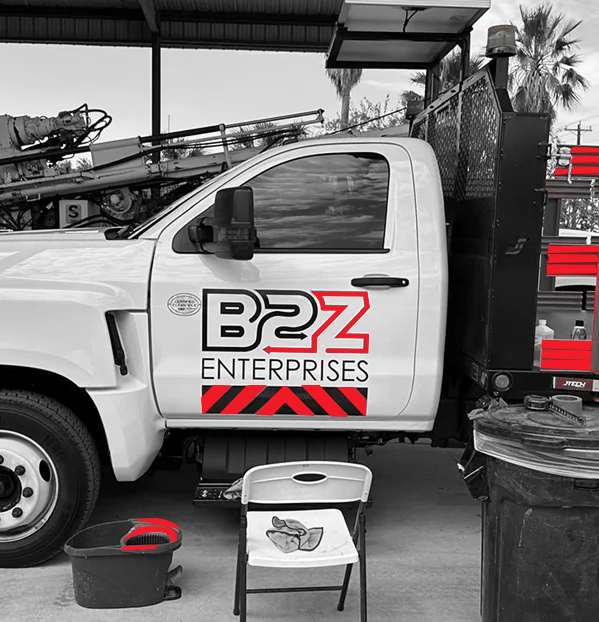
Flagging in Austin, Texas
See the warning signs? Don’t wait until the damage is done.
If you see a crack spreading across your driveway or a dip forming in your parking lot, the clock is ticking. That small surface issue is not just cosmetic. It is a sign that the ground underneath is shifting, water is finding a path, and the structure is losing its support. Every day you wait, that crack gets wider. The cost to fix it goes up. And the problem you could have solved with a simple flagging service turns into a full excavation and replacement job.
Flagging is not a luxury service. It is a maintenance step that prevents small problems from becoming expensive disasters. Think of it like changing the oil in your truck. Skip it long enough, and you are not just looking at a dirty filter. You are looking at a seized engine. The same logic applies to your property. A small area of settling concrete or a low spot that collects water might not seem like a big deal today. But that water seeps into the base layer, erodes the soil, and creates a void. That void is where your slab cracks, your foundation shifts, and your repair bill hits five figures.
The mistake most people make is waiting until they see the big problem. They wait until the crack is wide enough to trip over. They wait until the water is pooling against the foundation. They wait until the pavement is broken into pieces. By then, the window for flagging has closed. Flagging works best when the damage is still small. It lifts the concrete back into place and fills the void underneath before the structure fails completely. It is a straightforward process that takes hours, not days. But it only works if you call before the damage becomes structural.
Here is the hard truth. Flagging is not the kind of service you think about until you need it. And by the time you need it, you have probably already waited too long. That is why we are writing this. We want you to know the signs now, before the cost goes up and the options shrink. If you own a home, a business, or any property in Austin with concrete surfaces, you have a ticking clock. The freeze-thaw cycles, the summer heat, the clay soil that expands and contracts like a sponge — all of it is working against your pavement every single day.
Do not wait until you are scheduling an emergency repair. Call now, while the damage is still small, and let us handle the flagging before it becomes a crisis. The difference between a two-hour fix and a two-week rebuild is just a phone call.
When you work with B2Z Enterprises, you get straight talk and real results. We do not try to sell you services you do not need. We tell you what is happening, what the options are, and what will happen if you wait. That is it. No pressure, no fluff. Just the fix, so you can move on.
When Should You Schedule Flagging?
Timing is everything with flagging. The best time to schedule is before you see the problem. But since most people do not think about it until something goes wrong, here are the specific triggers that mean you need to call now.
You need to schedule flagging if you see cracks wider than a quarter-inch. That is the threshold where surface damage becomes structural. A hairline crack is cosmetic. A crack you can fit a finger into is a problem that is already getting worse. You also need to call if you notice that one side of a concrete slab is higher than the other. That is called a lip, and it means the soil underneath has shifted. Every time you drive over it or walk across it, the slab rocks and the crack gets worse.
You should schedule flagging if you see water pooling on your concrete after rain. That low spot is not just an annoyance. It is a sign that the base has settled. The water sits there, seeps into the crack, and accelerates the erosion underneath. The same goes for drainage that used to work but now flows the wrong way. If water is running toward your foundation instead of away from it, flagging can redirect the slab and fix the problem before the water finds a way inside.
You need to call if your concrete has been in place for more than five years and has never been flagged. The soil underneath any concrete slab settles over time. It is not a matter of if. It is a matter of when. Flagging resets that process and extends the life of the concrete by years. If you have a driveway, a patio, a sidewalk, or a parking lot that is more than five years old and has never been serviced, you are overdue.
You should schedule flagging if you are planning to sell your property. A cracked, uneven driveway or walkway is a red flag to buyers. It makes them wonder what else is wrong. Getting the flagging done before you list is a cheap way to remove that objection and increase the value of your property. It is one less thing for a home inspector to flag on a report.
You need to call if you hear a hollow sound when you walk on your concrete. That means the base underneath has eroded and there is a void. That void is a collapse waiting to happen. The next heavy truck or a hard freeze could be the thing that pushes it over the edge. Do not wait until it breaks. Call now.
Why Timing Matters for Austin, Texas Residents
Austin has a climate that is uniquely hard on concrete. The soil here is mostly clay. It expands when it gets wet and contracts when it dries out. That constant movement puts stress on every slab, every sidewalk, and every driveway in the city. The problem is worst in the spring and fall, when rainfall is heavy and the ground goes through repeated cycles of soaking and drying. That is when the soil shifts the most and when cracks appear fastest.
The summer heat makes it worse. When the ground dries out completely, the clay shrinks and pulls away from the concrete. That creates voids under the slab. The first hard rain then fills those voids with water, which softens the soil and causes the slab to settle. It is a cycle that repeats every year. Flagging breaks that cycle by filling the voids and restoring the support before the next season of movement.
Winter freezes are another factor. Even a mild freeze in Austin can push moisture under a slab and lift it. When it thaws, the slab settles into a new position, often lower than before. That is why spring is the most common time for flagging calls. The damage from winter shows up as soon as the ground thaws. If you schedule flagging in late fall, before the first freeze, you avoid that damage entirely. The timing is everything.
The Long-Term Value of Quality Flagging
Flagging is one of those services that pays for itself many times over. It is like getting your teeth cleaned. It costs a little now, but it saves you from a root canal later. The same principle applies to your concrete. A small investment in flagging today prevents a full replacement tomorrow. And replacement is expensive. We are talking about tearing out the old slab, hauling it away, grading the base, pouring new concrete, and waiting for it to cure. That process takes days and costs thousands of dollars. Flagging takes a few hours and costs a fraction of that.
The return on investment is not just financial. It is also about safety. An uneven slab is a tripping hazard. A cracked driveway can damage your car’s suspension. A settled sidewalk can catch a stroller wheel or a walker. Flagging eliminates those hazards and makes your property safe for everyone who uses it. That peace of mind is worth something.
There is also the question of appearance. A property with smooth, level concrete looks well-maintained. It signals that the owner cares about the details. That matters whether you are running a business, renting out a property, or just want your home to look its best. Flagging restores the original grade and makes everything look new again. It is a cheap way to improve curb appeal without a full renovation.
The key is to act before the damage gets serious. Flagging is not a magic wand. It cannot fix concrete that has already broken into pieces. But it can fix concrete that has settled, shifted, or developed small cracks. The window is wide open for most properties. You just have to walk through it before it closes. Call B2Z Enterprises and let us take a look. We will tell you exactly what you need and what it will cost. No surprises. Just the fix.
Why We Are the Preferred Choice in North Loop
B2Z Enterprises is not a fly-by-night operation. We have been serving the Austin area for years, building a reputation one job at a time. Our clients are not just numbers. They are neighbors, local business owners, and property managers who trust us to handle their concrete work because we show up, we do the job right, and we communicate clearly. That is not a marketing line. That is how we operate every single day.
We started with a simple idea. People deserve partners who treat their property like it matters. Not every company does that. Some try to upsell services you do not need. Others cut corners to save a few bucks. We do not work that way. We assess the situation, explain what is happening, and give you a straight plan to fix it. If flagging is the right solution, we tell you. If it is not, we tell you that too. You get the truth, not a sales pitch.
Our team brings years of experience in concrete repair, logistics, and operations. We know the soil in Austin. We know how the climate affects your pavement. And we know the right techniques to get the job done efficiently. When we flag a slab, it stays flagged. We do not have to come back and redo it six months later. That is the standard we hold ourselves to.
The North Loop neighborhood trusts us because we are part of the community. We live here. We work here. We know the streets, the traffic patterns, and the specific challenges that local properties face. When you call B2Z Enterprises, you are not getting a faceless contractor. You are getting a local team that cares about the work and the people it serves. That is why repeat clients refer us. That is why our reputation keeps growing. Give us a call and see the difference for yourself.
🚩 When to Call for Help Immediately
- You see water pooling on your concrete after a light rain.
- Your driveway or sidewalk has a crack wide enough to fit a coin into.
- You feel a noticeable dip or rise when you walk or drive across a slab.
- Your energy bill has spiked for no reason, possibly from foundation gaps.
Find Us in Austin, Texas
Expert FAQ
When should I schedule flagging for my property?
The best time is before you see damage. But if you notice cracks wider than a quarter-inch, uneven slabs, or water pooling, call immediately. For maintenance, schedule every five years or after a heavy freeze.
How do I know if the problem is urgent?
If you can feel the slab move when you walk on it, or if water is flowing toward your foundation, it is urgent. Those are signs of a void underneath that is getting worse fast. Do not wait.
What happens if I wait too long to schedule flagging?
The crack gets wider, the slab settles further, and the repair goes from a simple flagging job to a full replacement. The cost multiplies by ten, and the downtime goes from hours to days. Act now to avoid that.
📍 Serving the Greater Austin, Texas Area and North Loop neighborhood
B2Z Enterprises
📞 956-585-3773