B2Z Enterprises
Why Flagging Services in San Benito Matter More Than Ever
Here are the 5 biggest mistakes people make with flagging services in McAllen, TX, Edinburg, TX, Pharr, TX, San Juan, TX, Alamo, TX, Donna, TX, Weslaco, TX, Mercedes, TX, Harlingen, TX, San Benito, TX, Brownsville, TX, Rio Grande City, TX, Roma, TX, La Joya, TX, Palmview, TX — and how to avoid every one of them.
If you’re managing road construction, utility work, or any activity that disrupts traffic across the Rio Grande Valley, you’ve seen how fast a simple lane closure can turn into a safety nightmare. We’ve worked these streets for years — from the busy intersections in McAllen to the rural routes near Roma — and we know exactly what goes wrong when flagging is treated as an afterthought. That’s why we’re writing this: flagging services in San Benito and every community we serve are more critical today than ever. New developments, TxDOT compliance updates, and rising traffic volumes mean that cutting corners on work zone safety isn’t just risky — it’s expensive and dangerous.
The Growing Need for Professional Flagging Services
San Benito sits at a crossroads of growth. New housing subdivisions, commercial projects, and infrastructure upgrades are popping up along US 77, FM 2061, and local arterials. Every construction zone that intrudes on a traveled way requires a qualified flagger. The FHWA Manual on Uniform Traffic Control Devices (MUTCD) Chapter 6E spells out exactly what flaggers must do. Caltrans flagging guidelines reinforce the same principles, and TxDOT enforces them across Texas. Without certified flaggers, your project risks fines, liability, and — worst of all — injury or death.
We’ve seen a spike in citations for improper flagging in Hidalgo and Cameron counties over the last two years. Local permitting offices like the one in San Benito now demand proof of TxDOT-compliant traffic control plans before issuing work permits. ATSSA safety resources underscore that flagging isn’t just waving a sign — it’s a skilled role requiring training, situational awareness, and split-second decision-making. OSHA model plans for flagging\ also highlight the need for proper uniforms, signs, and communication equipment.
Step 1: Find Your Expert in McAllen, TX
Edinburg, TX
Pharr, TX
San Juan, TX
Alamo, TX
Donna, TX
Weslaco, TX
Mercedes, TX
Harlingen, TX
San Benito, TX
Brownsville, TX
Rio Grande City, TX
Roma, TX
La Joya, TX
Palmview, TX
B2Z Enterprises is your local resource. Here’s how to get started.
The 5 Biggest Mistakes (and How to Avoid Them)
Mistake #1: Using Untrained or Uncertified Flaggers
The biggest error we see: grabbing a laborer from the crew and handing them a stop/slow sign. That person likely has no idea about MUTCD flagger procedures — proper hand signals, safe positioning, or how to handle an emergency vehicle. In San Benito, one contractor tried that near the intersection of US 77 and FM 732. A driver didn’t understand the hand signal and nearly hit the flagger. The project was shut down by TxDOT for two days. Avoid it: always use trained, certified flaggers. Our crew at B2Z Enterprises completes OSHA- and ATSSA-approved training, so we’re ready for any situation.
Mistake #2: Ignoring Local Traffic Patterns
Traffic volume changes drastically between 7:30 AM and 5:00 PM. In places like McAllen’s 10th Street or Roma’s retail corridor along US 83, flagging during peak hours requires careful planning. Many companies treat every lane closure the same, but a project near the San Benito High School zone needs a different approach than work on a quiet residential street. Local news coverage in San Benito recently highlighted a utility installation that caused three-mile backups because the flagging crew didn’t coordinate with school bus schedules. Avoid it: we review traffic studies and adjust flagging plans for each time of day.
Mistake #3: Incomplete or Outdated Traffic Control Plans
TxDOT requires a Temporary Traffic Control Plan (TTCP) before any work begins on a state highway or local road. A generic plan won’t cut it. We’ve had a client in Palmview who tried to use a plan from a previous project in Edinburg — it didn’t account for the bike lane and the narrow shoulder near Conway Avenue. TxDOT rejected it, delaying their utility installation by two weeks. Avoid it: work with a TxDOT-certified traffic control company like B2Z Enterprises that creates custom MOT plans and TTCPs for each site. We handle the paperwork and ensure compliance.
Mistake #4: Poor Communication Between Flaggers and Crew
Flagging isn’t a solo job. It requires a coordinated team — radio contact between flaggers, spotters, and equipment operators. On one project in Harlingen near Loop 499, a contractor had flaggers without two-way radios. A dump truck backed up into a lane where the flagger hadn’t stopped traffic. Luckily no one was hurt, but the near-miss triggered an OSHA investigation. Avoid it: equip every flagger with reliable communication tools and pre-shift briefings. Our crews use radios and standardized hand signals monitored by a lead flagger.
Mistake #5: Skimping on Signage and Channelizing Devices
Even the best flagger can’t control traffic if drivers don’t see the work zone in time. Missing advance warning signs, improper taper lengths, or faded cones create confusion. In La Joya, a contractor placed the “Road Work Ahead” sign only 50 feet from the work zone instead of the required 500 feet on a 45-mph road. A driver plowed through the cone zone. San Benito County traffic control guidelines mirror national standards — and we follow them to the letter. Avoid it: always use fresh, high-contrast signage and enough cones, drums, or barriers to clearly guide traffic. We bring a full inventory on every job.
B2Z Enterprises: Your Local Flagging Experts
Step 2: Learn About Utility Installation Traffic Control
B2Z Enterprises can guide you through every detail. Reach out with questions.
We’re not just another traffic control company. B2Z Enterprises is a TxDOT-certified firm based at 900 S. Stewart Road. Ste 12, Mission, TX. Our team has deep roots in the Rio Grande Valley. We understand the quirks of local roads — like the way traffic builds up near the San Benito Historical Museum during events, or the afternoon congestion on Roma’s Grant Street when agricultural trucks are moving. We’ve been doing this for years and we’re proud to serve communities from Brownsville to Rio Grande City.
Our crews hold current certifications, and we maintain a 5/5 rating from Google reviews because clients trust us to show up on time, follow the plan, and keep everyone safe. We’re members of ATSSA and our training aligns with FHWA, OSHA, and TxDOT standards. When you call 956-585-3773, you talk to someone who knows the local permitting process and can have a TTCP ready within hours.
Want results like this? B2Z Enterprises can help.
Why Flagging in San Benito (and the RGV) Matters More Than Ever
Let’s connect the dots. The Rio Grande Valley is one of the fastest-growing regions in Texas. More people, more cars, more construction. Every new strip mall, road widening, or water line installation touches a public roadway. Without professional flagging, those work zones become hazards. The OSHA flagging resources note that struck-by incidents are a leading cause of construction fatalities — and many happen in work zones where flagging was inadequate. TxDOT has been increasing enforcement; we’ve seen more site inspections and stop-work orders in the last 12 months than in the previous three years combined.
Flagging services in San Benito directly impact public safety and project efficiency. When we flag, drivers slow down predictably, workers stay in the protected zone, and the job gets done faster because there are fewer surprises. That’s why local news outlets have called flagging services essential for keeping the community safe during construction. It’s not overhead — it’s the backbone of any traffic control plan.
Work Zone Safety Isn’t Optional
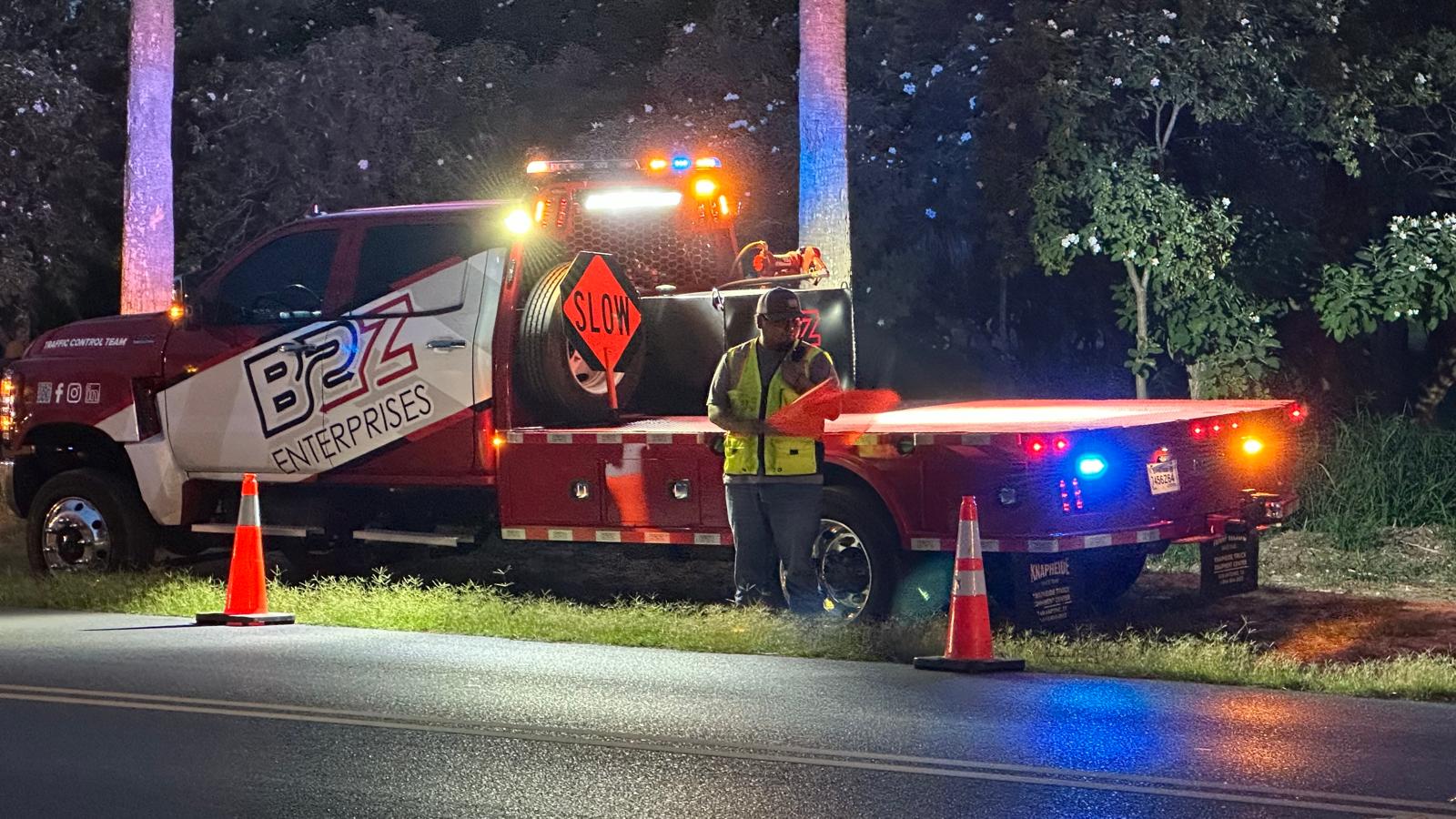
We’ve been on sites where the crew thought flagging was just “a guy with a sign.” Then a near-miss happens, a driver honks, a child crosses the street — and suddenly everyone realizes the stakes. You can’t rely on luck. MUTCD Chapter 6E exists because flaggers save lives. We make sure every one of our flaggers knows the regulations, practices the signals, and stays alert. Whether you’re working on a highway maintenance project near Harlingen or a residential utility installation in Weslaco, the same standard applies: only trained, certified flaggers.
FAQ: Your Questions About Flagging Services Answered
What qualifications do flaggers need in Texas?
Flaggers must complete a training program that meets TxDOT, FHWA, and OSHA standards. They need to know proper hand signals, sign placement, communication protocols, and emergency procedures. B2Z Enterprises provides flaggers who hold current certifications and have passed background checks.
How far in advance should I schedule flagging services for a project?
Ideally, at least 48 to 72 hours before work begins. That gives us time to review your site, create a TTCP if needed, and assign the right number of flaggers. We can often accommodate same-day requests for emergencies — just call 956-585-3773.
Do I need a separate TTCP for flagging in San Benito?
Yes. Any work that changes traffic flow requires a Temporary Traffic Control Plan. For flagging operations, the TTCP must specify flagger locations, advance warning signs, and taper lengths. We handle the plan as part of our service.
What’s the difference between a flagger and a traffic controller?
The terms are often used interchangeably, but a flagger specifically uses hand signals and a stop/slow sign to direct traffic. A traffic controller may also manage signals, signs, and road closures. Both require certification, but flagging is a focused role within the broader traffic control plan.
Can flagging services help reduce project delays?
Absolutely. Professional flaggers keep traffic moving safely and efficiently, reducing the chance of accidents that cause shutdowns. With a clear plan and experienced flaggers, you’ll spend less time dealing with irate drivers, police calls, or regulatory issues. We’ve helped contractors finish days ahead of schedule simply by avoiding work zone incidents.
How many flaggers do I need for a lane closure?
It depends on the road type, speed limit, and traffic volume. A two-lane road with a single lane closure typically requires at least two flaggers — one at each end. For intersection work or high-speed roads, additional flaggers and advance warning devices are needed. We assess your site and recommend the right crew size.
Flagging services in San Benito and across the Rio Grande Valley are the difference between a safe, successful project and a costly, dangerous one. When you work with B2Z Enterprises, you get more than flaggers — you get a partner who knows the roads, the regulations, and the local communities. From the streets of downtown Roma to the busy corridors of McAllen, we keep your work zone compliant and your team protected. That’s why flagging matters more than ever — and why we’re here to help.
Your Path to Success With B2Z Enterprises
Research
Compare
Contact
Get Started
Ready to Take the Next Step?
Now that you’re informed, let B2Z Enterprises put this knowledge to work for you.