Hello from B2Z Enterprises! 👋
Ensuring Work Zone Safety Across the Rio Grande Valley: How MOT Plans by B2Z Enterprises Reduce Risks During Highway Maintenance
Picture this: You’re driving north on Business 83 through McAllen during the middle of a Wednesday afternoon. Traffic is already heavy, and suddenly you see orange cones, a lane merge sign, and a crew working just feet from active traffic. Your heart rate ticks up as you try to navigate the temporary lane shift while a dump truck pulls out from a side street. For anyone who has driven through construction zones in McAllen, Edinburg, Pharr, or any of the growing cities between Mission and Brownsville, that scenario feels all too familiar. The reality is that work zones are high-risk environments—not just for crews but for drivers and pedestrians too. Without a properly designed Maintenance of Traffic (MOT) plan, a routine road repair can turn into a nightmare of delays, close calls, or worse.
At B2Z Enterprises, we’ve built our reputation on changing that reality. Based in Mission, Texas, at 900 S. Stewart Road. Ste 12, our team has spent years refining how traffic control plans protect both workers and the public on everything from highway resurfacing to utility installations. We’re not just another flagging company—we’re a TxDOT-certified traffic control provider that brings a technical, data-driven approach to work zone safety across the Rio Grande Valley.
What Exactly Is a Maintenance of Traffic (MOT) Plan?
A Maintenance of Traffic plan—often called an MOT plan—is the blueprint for how traffic will be managed through a construction or maintenance work zone. It’s more than just a drawing of cones and signs; it’s a detailed engineering document that specifies lane closures, temporary traffic signals, flagger stations, detour routes, and pedestrian accommodations. In Texas, any project that impacts a public roadway—whether it’s a state highway maintained by TxDOT or a city street in Alamo or San Juan—must comply with the Texas Manual on Uniform Traffic Control Devices (TxMUTCD) and FHWA guidelines.
The heart of every MOT plan is risk reduction. We analyze traffic volumes, speed limits, sight distances, and work zone geometry to design a system that keeps everyone moving safely. For instance, on a high-speed stretch like Expressway 83 in Harlingen, our temporary traffic control plans (TTCPs) might include advanced warning signs a full half-mile before the taper, a gradual lane reduction, and a dedicated buffer space between workers and traffic.
📞
Hey there! Need help in McAllen, TX
Edinburg, TX
Pharr, TX
San Juan, TX
Alamo, TX
Donna, TX
Weslaco, TX
Mercedes, TX
Harlingen, TX
San Benito, TX
Brownsville, TX
Rio Grande City, TX
Roma, TX
La Joya, TX
Palmview, TX?
We’re your neighbors at B2Z Enterprises — always happy to chat!
A common misconception is that flagging services alone are enough. In reality, flaggers are one component of a comprehensive plan. Without proper signage, channelizing devices, and a documented TTCP, crews and motorists are exposed to unnecessary risk. That’s why B2Z Enterprises emphasizes the “systems approach” to work zone safety—every element, from the first orange cone to the final “End Road Work” sign, must be coordinated.
Why TxDOT Compliance Matters More Than You Think
TxDOT doesn’t just recommend compliance; it requires it. Every contractor working on a state-maintained road in Texas must submit a TTCP that has been reviewed and approved by TxDOT before work begins. In cities like Donna, Weslaco, and Mercedes, many municipal projects also adopt TxDOT standards to ensure consistency. Failing to follow an approved MOT plan can result in work stoppages, fines, and increased liability if an incident occurs.
B2Z Enterprises is a TxDOT-certified traffic control company, which means our plans and crews meet the agency’s rigorous training and equipment standards. Our team stays current with the latest updates to the TxMUTCD, including the 2023 revisions that placed greater emphasis on temporary traffic control for pedestrian and bicycle safety. When we deploy a work zone, we’re not guessing—we’re following a documented, audited procedure that has been vetted by the state.
One of the less obvious benefits of TxDOT compliance is reduced project delays. When a plan is properly designed upfront, there are fewer last-minute adjustments, fewer crashes, and fewer traffic jams caused by poorly marked lane closures. That translates directly into cost savings for the contractor and less frustration for drivers in places like Pharr and San Benito, where construction season is nearly year-round.
Our Comprehensive Approach to Work Zone Safety
📞
Got questions about Utility Installation Traffic Control?
No worries! B2Z Enterprises is just a call away. We love helping our neighbors.
Work zone safety isn’t a one-size-fits-all proposition. The traffic control needs for a minor utility installation on a quiet street in La Joya are vastly different from those for a highway maintenance project on I-2 through Palmview. At B2Z Enterprises, we tailor every MOT plan, flagging service, and lane closure service to the specific site conditions. Here’s how we break it down:
1. Site Assessment and Data Collection
Before we draw a single line on a plan, our team visits the site. We measure road widths, note existing signage, evaluate sight lines, and document nearby driveways, intersections, and pedestrian routes. We also review traffic count data from TxDOT or local agencies to understand peak hour volumes. For example, a project on 2nd Street in Rio Grande City might have very different traffic patterns than a highway project in Roma, even though they are only 20 miles apart.
2. Engineering the TTCP
Using our knowledge of the TxMUTCD and FHWA guidance, we design a temporary traffic control plan that addresses every phase of the work. This includes the advance warning area, transition area, buffer space, work zone, and termination area. We specify the types and placement of signs (e.g., “Road Work Ahead,” “Lane Closed,” “Flagger Ahead”), channelizing devices (cones, drums, barricades), and any temporary traffic signals or flagger stations. Each plan is reviewed for internal consistency and regulatory compliance.
3. Deployment and Training
Once the plan is approved, our certified crews install the traffic control setup. Every member of our team undergoes rigorous training in flagger certification, work zone safety, and OSHA standards. We understand that conditions can change on the job site—a utility cut may be deeper than expected, or a nearby school event may increase pedestrian traffic—so we train our crews to adapt within the framework of the approved plan. Communication is key: our flaggers use two-way radios and standardized hand signals to coordinate lane closures and releases.
4. Monitoring and Adjustments
A work zone is a living environment. Traffic patterns shift, weather changes, and construction phases progress. We monitor the site throughout the project and make small adjustments as needed, always staying within the guardrails of the approved TTCP. If a major change is required, we coordinate with TxDOT or the local municipality to amend the plan. This proactive approach helps prevent the kind of “this sign was moved by a windstorm” issues that often lead to confusion or accidents.
Local Focus: How We Serve the Mercedes Community
Mercedes, Texas, may be known for its annual Citrus Festival and as the home of the Rio Grande Valley Livestock Show, but its road infrastructure is just as critical to the region’s economy. The City of Mercedes Public Works Department regularly schedules street improvements, utility upgrades, and drainage projects that require temporary traffic control. In 2024, for example, the city undertook a major water line replacement project along Mile 2 West Road—a busy local thoroughfare connecting Mercedes to Weslaco.
For a project like that, our team at B2Z Enterprises developed a temporary traffic control plan that minimized disruption while keeping residents and workers safe. Because Mile 2 West runs near the Mercedes Independent School District’s Main Elementary School, we had to account for school bus drop-off and pick-up times. Our solution: a phased closure that allowed one lane to remain open during morning and afternoon hours, with flaggers stationed at key intersections. The City of Mercedes has since used our plans for several other projects on Business 83 and 1st Street. It’s this kind of local knowledge—knowing which streets carry the morning commute from the Valley Vista neighborhood, or where the weekend farmer’s market traffic peaks—that makes our work more than just technical compliance.
Want results like this? B2Z Enterprises can help.
The Nuts and Bolts: Key Components of a Safe Work Zone
Every effective work zone safety plan relies on a handful of critical elements. When these are executed correctly, the risk of crashes involving workers or drivers drops dramatically. Here’s what we focus on at B2Z Enterprises:
Advance Warning Area
Drivers need time to react. On highways, advance warning signs should begin at least 1,500 feet before the first cone—farther if the speed limit is 65 mph or higher. For city streets, the distance is shorter but must still give drivers time to merge or slow down. We use a series of signs that gradually inform drivers of the upcoming condition: “Road Work Ahead,” then “Lane Closed 1 Mile,” then “Lane Closed Ahead,” and finally a sign directing the merge. Too often, we see construction zones that skip these intermediate signs, leaving drivers to panic-merge at the last second.
Transition and Taper Area
The taper is where drivers physically move from one lane to another. The length of the taper depends on the speed limit—for a 45 mph road, the taper should be at least 450 feet long. This gives drivers a gentle, predictable path. We use a “tangential” taper rather than a “parallel” taper in most situations because it forces drivers to steer gradually rather than jolt sideways.
Buffer Space
This is the empty area between the taper and the work zone. It provides a margin of error—if a driver drifts, they hit a cone rather than a worker. The buffer space should be a minimum of 50 feet in low-speed zones and up to 200 feet on highways. We always add extra buffer when heavy equipment is moving within the work zone.
Work Zone
This is where the actual work takes place. Barriers, cones, or drums separate workers from traffic. If the project lasts more than a few days, we often recommend concrete barriers or crash cushions for high-speed applications. For shorter-duration jobs, plastic drums with reflective sheeting are sufficient.
Termination Area
Drivers need to know when they can resume normal driving. A simple “End Road Work” sign is required, but we also ensure that any temporary pavement markings or channelizing devices are removed promptly when the work zone is taken down.
Flagging Services: The Human Factor in Traffic Control
No matter how good the signs and cones are, there are times when a live human presence is the safest option. Flaggers are essential for one-lane, two-way traffic operations, especially on narrow roads like those found in older neighborhoods in San Juan or Alamo. At B2Z Enterprises, our flaggers are certified through the American Traffic Safety Services Association (ATSSA) and receive ongoing training in communication and hazard recognition.
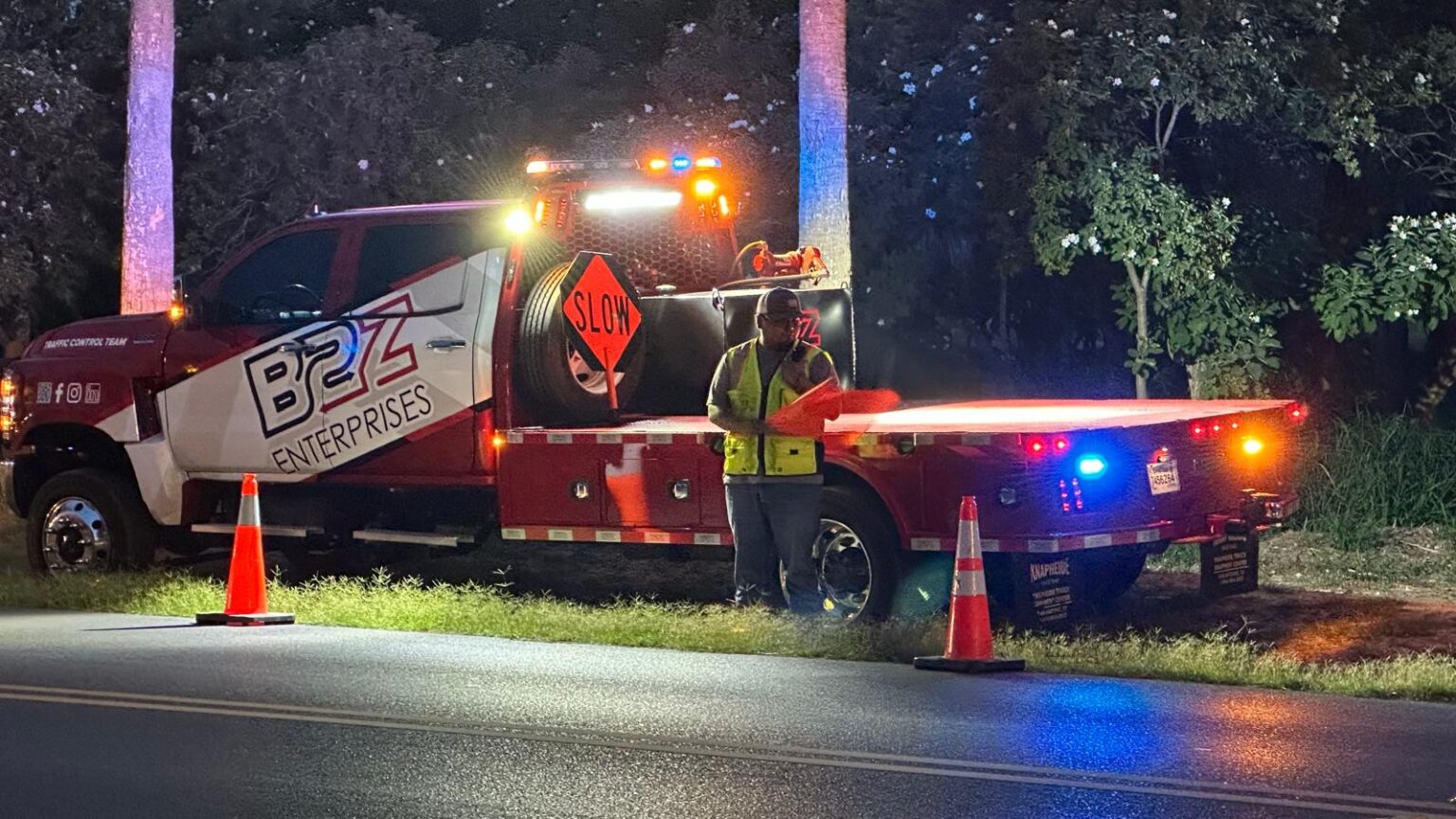
A good flagger does more than hold a sign—they monitor traffic flow, watch for aggressive drivers, and communicate with the work crew to coordinate safe entry and exit for vehicles. They also serve as the public face of the project, often answering questions from frustrated motorists. We equip our flaggers with high-visibility apparel that meets ANSI 107 Class 3 standards, two-way radios, and emergency stop/slow paddles with illuminated sleeves for nighttime work.
Frequently Asked Questions About Work Zone Safety and MOT Plans
- Do I need a TxDOT-approved TTCP for a small road project in my neighborhood?
It depends on the jurisdiction. In most cases, any work that affects traffic on a public street—even a residential street in, say, Palmview—requires a traffic control plan. Cities like McAllen and Brownsville have their own permitting processes that often mirror TxDOT requirements. The safest approach is to call us for a quick assessment. - How much advance notice is needed to implement a lane closure for a typical highway maintenance job?
Under TxDOT’s guidelines, lane closures on interstate highways require at least two weeks’ notice to allow for public notification and approval. For lower-volume roads in cities like Donna or Mercedes, a week may be sufficient. Our team handles all coordination with TxDOT and municipal public works departments to ensure timely approvals. - What happens if traffic control devices are damaged or moved during the project?
Our crews conduct daily inspections of every work zone. If a sign is knocked over or a cone displaced, we fix it immediately. We also use weighted bases and sandbags to prevent devices from being blown over by wind or debris from passing trucks. - Can you provide flagging services for a planned event like a community parade or 5K run?
Yes. Many of the same principles of temporary traffic control apply to special events. We have provided flagging and lane closure services for events in Rio Grande City and Roma. Our plans ensure that emergency vehicles can still navigate the course and that intersection blockages are legally posted. - How do you account for pedestrians and bicyclists in your MOT plans?
The TxMUTCD emphasizes that pedestrian and bicycle accommodations must be included. We ensure that there is a clear, accessible path around the work zone, with detectable warnings and proper signage. In areas like Weslaco’s downtown district, we often coordinate with the city to provide safe crossing points. - What is the cost range for developing a TTCP for a typical highway maintenance project?
Costs vary based on project complexity, duration, and the number of phases. A simple road maintenance closure might start around $500 for plan development, while a multi-phase interstate project with temporary signals can run several thousand dollars. At B2Z Enterprises, we provide competitive pricing and itemized quotes. You can reach us at 956-585-3773 for a project-specific estimate.
Work zone safety isn’t just about compliance—it’s about protecting lives and keeping our roads moving. Whether you’re managing a utility installation in Harlingen or a highway overlay in Brownsville, having a reliable traffic control partner makes all the difference. Our team at B2Z Enterprises is proud to serve communities across the Rio Grande Valley with customized MOT plans, flagging services, and lane closure services that meet the highest standards. From our base at 900 S. Stewart Road. Ste 12, Mission, TX, we work daily to ensure that every work zone is as safe as it is efficient.
🤝
Let’s Work Together!
B2Z Enterprises is ready to help. Find us at 900 S. Stewart Road. Ste 12, Mission, TX, 78572 or give us a shout!