
5 Lane Closure Service Mistakes to Avoid in Roma, TX — And How B2Z Enterprises Keeps Your Project TxDOT Compliant
If you’re planning a lane closure in Roma, TX, assuming any traffic control plan will pass TxDOT inspection is a costly gamble. The Texas Department of Transportation enforces strict standards under the Texas Manual on Uniform Traffic Control Devices (TMUTCD), and Roma’s unique border location adds layers of complexity most contractors don’t anticipate. Failure to comply can mean stop-work orders, fines up to $10,000 per violation, and serious safety risks. B2Z Enterprises ensures every lane closure we manage meets TxDOT requirements from day one, keeping your project on schedule and fully compliant.
Mistake #1: What happens if you neglect TxDOT-specific MOT plan requirements in Roma?
A Maintenance of Traffic (MOT) plan isn’t just a formality—it’s a legally binding document that dictates every sign, cone, barrel, and flagger position in your work zone. TxDOT requires MOT plans to follow the TMUTCD, which goes beyond the federal MUTCD in several key areas. In Roma, the proximity to the Roma-Camargo International Bridge means your plan must account for international truck traffic, border patrol activity, and tourists unfamiliar with local roads.
Step 1: Find Your Expert in McAllen, TX
Edinburg, TX
Pharr, TX
San Juan, TX
Alamo, TX
Donna, TX
Weslaco, TX
Mercedes, TX
Harlingen, TX
San Benito, TX
Brownsville, TX
Rio Grande City, TX
Roma, TX
La Joya, TX
Palmview, TX
B2Z Enterprises is your local resource. Here’s how to get started.
Call 956-585-3773
Common failures we see include:
- Missing advanced warning signs on rural highways like US 83 and FM 650, where drivers approach work zones at higher speeds.
- Inadequate taper lengths for lane closures on two-lane roads, creating dangerous merge points.
- No consideration for school zones near Roma High School or Roma Elementary, where reduced speed limits must be factored into the plan.
The penalty for an improper MOT plan is severe: TxDOT can issue a stop-work order and assess fines of up to $10,000 per violation. We’ve seen projects delayed for weeks while contractors scramble to revise and resubmit. B2Z Enterprises ensures every MOT plan is pre-reviewed by TxDOT-certified engineers before it reaches the Pharr District office, so you never have to guess whether your plan will pass.
Mistake #2: Why is using outdated or non-compliant traffic control devices a critical error?
Your MOT plan is only as good as the hardware you put in the field. TxDOT maintains an Approved Product List (APL) for cones, drums, barricades, temporary signs, and channelizing devices. Using equipment that isn’t on the APL—even if it looks similar—can result in immediate non-compliance citations.
Roma’s weather adds another layer of risk. Summer heat regularly exceeds 100°F, and strong winds off the Rio Grande can knock over lightweight cones and barrels. Non-compliant or unweighted devices create drifting hazards that confuse drivers and expose you to liability. The MUTCD requires all traffic control devices to meet retro-reflectivity standards—faded signs or dirty drums that don’t reflect headlights at night are a violation, regardless of whether they were compliant when purchased.
Our team at B2Z Enterprises uses only TxDOT-approved equipment from the APL, and we conduct daily inspection logs to verify every device remains in good condition. This includes checking for fading, damage, and proper weighting for wind resistance. When we install a work zone in Roma, every cone and sign is accounted for and compliant before the first car passes through.
Mistake #3: How can ignoring local traffic flow and pedestrian zones endanger your project?
Step 2: Learn About Utility Installation Traffic Control
B2Z Enterprises can guide you through every detail. Reach out with questions.
Roma isn’t just a highway town—it has a vibrant downtown plaza area, multiple schools, and pedestrian crossings near the border that see heavy foot traffic. Lane closures that block access to Plaza Principal or disrupt pedestrian routes to the Roma High School campus create safety hazards and public frustration. TxDOT and Roma city officials expect your plan to account for these local patterns.
Key considerations we build into every plan:
- School bus routes—Lane closures near Roma Elementary or Roma High School must allow buses to pass safely during pick-up and drop-off hours.
- Church traffic—Several churches in the Los Saenz area and near downtown Roma see heavy congestion on Sunday mornings and Wednesday evenings. Closures during these times require special detour plans.
- Pedestrian detours—Must be ADA-compliant, with accessible routes, clear signage, and barrier protection where pedestrians walk near active work zones.
B2Z Enterprises conducts site-specific traffic studies for every Roma project, documenting peak flow times, pedestrian patterns, and special event schedules. We coordinate directly with Roma city officials and the TxDOT Pharr District to ensure our plans align with local ordinances and school schedules. This upfront work eliminates surprises and keeps your project moving.
Mistake #4: What are the risks of poor flagging coordination on narrow Roma roads?
Many roads in Roma are two-lane with no shoulder—think FM 650 or the rural stretches of US 83 outside town. When you close one lane, flaggers must manage bidirectional traffic flow on a single lane, often with limited sight distance due to curves or terrain. One miscommunication between flaggers can result in a head-on conflict or mile-long traffic backups that draw complaints from residents and law enforcement.
TxDOT requires flaggers to hold ATSSA (American Traffic Safety Services Association) certification and use standardized hand signals and paddle signs. Uncertified flaggers are a direct violation of your MOT plan and can trigger a work stoppage. Furthermore, without proper coordination tools, flaggers on long road segments often lose communication, leading to inconsistent traffic direction.
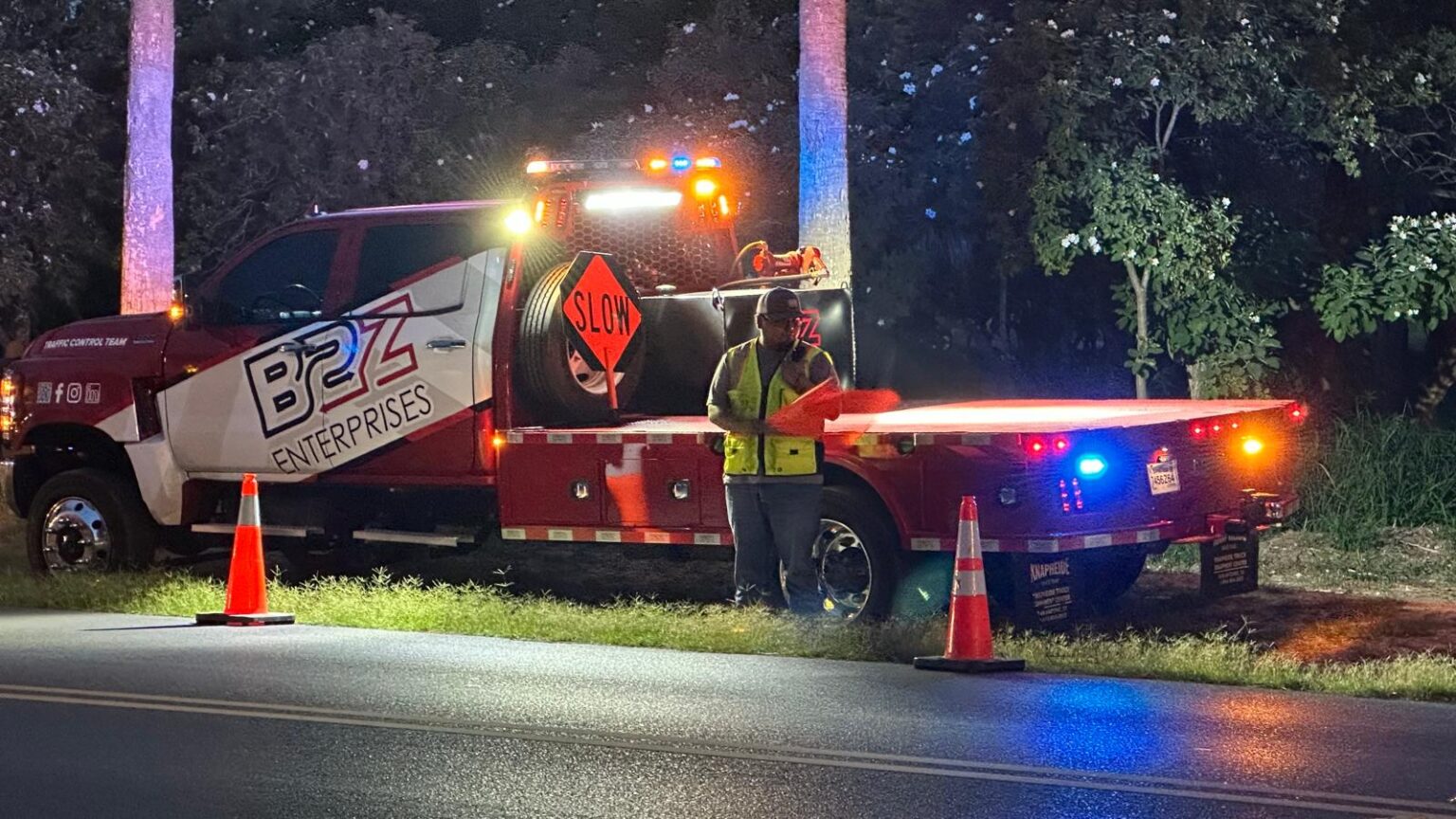
B2Z Enterprises provides ATSSA-certified flaggers equipped with two-way radios for real-time coordination. On a recent project near the Roma-Camargo Bridge approach, our flaggers managed alternating traffic through a single-lane closure for three weeks without a single incident or complaint. We train our crews specifically for narrow-road scenarios, emphasizing clear communication and driver courtesy to minimize delays.
| Factor | ATSSA-Certified Flaggers (B2Z Enterprises) | Uncertified or Untrained Flaggers |
|---|---|---|
| Training standard | ATSSA-certified, OSHA-compliant | Often minimal or no formal training |
| Communication tools | Two-way radios, standardized hand signals | Shouting, improvised signals, cell phones |
| TxDOT compliance | Fully meets TMUTCD requirements | High risk of citation and stop-work orders |
| Safety record | Proven incident reduction | Inconsistent, higher liability exposure |
| Traffic delay management | Proactive flow control, minimal backups | Frequent delays and driver frustration |
| Cost per day (average) | Competitive, with full compliance guarantee | Lower upfront, but fines and delays raise total cost |
Case Study: Utility contractor near Los Saenz, Roma, TX
A municipal utility contractor came to B2Z Enterprises because their in-house flagging crew was causing 30-minute traffic backups on a narrow county road near Los Saenz. Roma residents were filing complaints, and TxDOT had issued a warning about uncertified flaggers. Our team deployed two ATSSA-certified flaggers with two-way radios, redesigned the taper length for the closure, and implemented a pilot car operation to manage bidirectional flow. Within 48 hours, traffic delays dropped to under 5 minutes, and the project finished on schedule without any further TxDOT action.
Want results like this? B2Z Enterprises can help.
Mistake #5: Why does failing to update lane closure plans for changing work zones cause project delays?
Construction phases change—what starts as a shoulder closure may become a full lane closure, then shift to the opposite side of the road as work progresses. Each phase requires a revised Temporary Traffic Control Plan (TTCP) submitted to TxDOT for approval. Failing to update your plan before changing the work zone layout is one of the fastest ways to void your permits and halt work.
Night work versus day work introduces additional variables. Night operations require higher-visibility lighting, illuminated signs, and reflective devices that are different from daytime setups. If your approved plan says “day work” but your crew shows up at 8 PM, you’re operating without a valid permit. Similarly, weekend closures near downtown Roma or the Plaza Principal require special coordination with local businesses and emergency services.
B2Z Enterprises offers dynamic plan updates with 24-hour notice to TxDOT. We monitor every phase of your project and proactively submit revised TTCPs whenever the work zone configuration changes. Our on-site supervisors carry copies of the approved plan at all times and verify that field conditions match the permit. When a Roma contractor needed to switch from day to night work on a US 83 resurfacing project, we had the revised plan submitted and approved within 24 hours—keeping the project running without a gap.
How does B2Z Enterprises keep your Roma project fully TxDOT compliant?
We don’t just sell traffic control services—we provide end-to-end compliance solutions for lane closures in Roma. Our team includes TxDOT-certified professionals who understand the Pharr District’s expectations because we work with them regularly. From plan development to on-site installation, removal, and daily compliance audits, we handle every detail so you can focus on construction.
For example, we coordinate with Roma city officials to align our plans with local events, school schedules, and emergency services. When a project requires closing a lane near Plaza Principal during a festival weekend, we adjust the schedule and notify all stakeholders in advance. Our daily compliance logs document every device, sign, and flagger position, giving you a verifiable record that your site meets TxDOT standards at all times.
We also understand that every project is different. Whether you need a temporary lane closure for utility installation or a multi-phase TTCP for highway maintenance, we tailor our approach to your specific requirements. Our proven track record with utility, highway maintenance, and construction clients in Roma speaks to our commitment to safety and compliance. As the Texas A&M Transportation Institute (TTI) emphasizes in its work zone safety research, proper traffic control reduces crashes by up to 30%—and that’s a standard we take seriously.
We also ensure every worker on our crew meets OSHA construction safety standards, including site-specific hazard training and proper personal protective equipment. This dual commitment to TxDOT and OSHA compliance means your project is protected from multiple regulatory angles.
If you’re managing a lane closure in Roma, the safest and most efficient path to compliance starts with a conversation. We offer a free initial consultation and quote for any lane closure project in Roma, and we’ll show you exactly how we keep your work zone safe, compliant, and on schedule.
Frequently Asked Questions About Lane Closure Services in Roma, TX
What is the difference between an MOT plan and a TTCP?
An MOT (Maintenance of Traffic) plan is the overarching strategy for managing traffic through a work zone, while a TTCP (Temporary Traffic Control Plan) is the site-specific, phasing plan that details signs, devices, and flagger positions for each stage of construction. In Roma, TxDOT requires both documents for any lane closure on state-maintained roads like US 83 or FM 650.
How long does it take to get a lane closure permit approved in Roma?
Typical approval from the TxDOT Pharr District takes 5 to 10 business days for standard plans, but complex projects or those involving international border traffic may take longer. B2Z Enterprises handles the entire submission process and can often expedite reviews by ensuring complete, compliant documentation upfront.
Can I use my own traffic control equipment if it’s in good condition?
Possibly, but only if every device is on TxDOT’s Approved Product List and meets current retro-reflectivity standards. Many contractors in Roma have learned the hard way that older equipment doesn’t pass inspection. We recommend a pre-project audit of your inventory before relying on it for compliance.
What happens if TxDOT issues a stop-work order during my project?
A stop-work order halts all construction activity immediately. You must correct the violations and pay any associated fines before work can resume. This can add days or weeks to your schedule and increase costs significantly. B2Z Enterprises prevents stop-work orders through daily compliance audits and proactive plan updates.
Do I need a separate permit for night work in Roma?
Yes. Night work permits require a revised TTCP that specifies lighting, illuminated signage, and high-visibility devices. Operating at night under a daytime permit is a violation. We submit updated plans with 24-hour notice to TxDOT whenever your work schedule changes.
How do you handle lane closures near Roma schools during the school year?
We coordinate directly with Roma ISD to avoid pick-up and drop-off times, and we ensure pedestrian detours near schools are ADA-compliant and clearly marked. Our plans include reduced speed limits and enhanced flagging near school zones to protect children and buses.
Your Path to Success With B2Z Enterprises
Ready to Take the Next Step?
Now that you’re informed, let B2Z Enterprises put this knowledge to work for you.